



Yes, running is an incredibly effective way to burn belly fat, especially the deep visceral fat that wraps around your organs. However, you cannot choose exactly where your body loses fat first, so running will help you trim down all over. To get the best results, you must combine your runs with a healthy diet, strength training, and plenty of rest.
Picture this scenario. You stand in front of your bedroom mirror and pull on your favorite pair of jeans. They feel a bit tighter around your waist than they did last month. You pinch your midsection and sigh. It is a moment many of us know all too well. When we want to trim down and feel lighter, our minds often go straight to the road. We think about buying a pair of sneakers and hitting the pavement. But does running burn belly fat, or is that just wishful thinking? Let us take a close look at the facts behind running and weight loss.
In this guide, we will explore how your body burns fat. We will discuss the science behind abdominal fat and why running is such a powerful tool. You will also learn about the best running workouts to try. Finally, we will share simple lifestyle tips to help you see great results quickly. Whether you are a total beginner or looking to improve your routine, this article has everything you need to know.
Key Takeaways
- Target Visceral Fat: Running is excellent for reducing deep, dangerous abdominal fat.
- No Spot Reduction: You cannot lose fat from just your stomach; running burns fat across your entire body.
- Vary Your Runs: Mixing slow runs with high-intensity interval training burns the most calories.
- Nutrition is Key: You must combine running with a calorie deficit to lose belly fat.
- Build Consistency: Running three to four times a week is ideal for long-term weight loss.
📑 Table of Contents
Understanding the Science: Does Running Burn Belly Fat?
To answer the big question, we first need to look at what belly fat actually is. Not all fat is the same. Your body stores fat in two main ways. The first is subcutaneous fat, which sits just under your skin. This is the soft fat you can pinch with your fingers. The second is visceral fat, which sits deep inside your abdomen. Visceral fat wraps around your liver, kidneys, and intestines. This deep fat is dangerous because it is linked to heart disease and diabetes.
So, does running burn belly fat of both types? Yes, it does. In fact, running is one of the best exercises for targeting visceral fat. When you run, your heart rate goes up and your body releases hormones like adrenaline. These hormones tell your fat cells to release stored energy. Research published in the National Institutes of Health database shows that regular aerobic exercise like running significantly reduces abdominal fat, even if you do not see a massive drop on the scale. Running helps clear out that hidden, dangerous fat first, making you much healthier from the inside out.
The Spot Reduction Myth
We often see ads online that promise to melt fat from your stomach in a week. They tell you to do hundreds of crunches or wear special belts. But science tells us that spot reduction is a myth. You cannot choose where your body burns fat first. When you run, your body burns fat from your face, arms, chest, and legs, as well as your belly. Over time, as your overall body fat percentage goes down, your stomach will naturally become flatter and firmer.
How to Start Running for Weight Loss
If you are new to running, you do not need to run a marathon on your first day. In fact, doing too much too soon can lead to injury. The key is to start slow and build up your stamina. Many experts recommend a run-walk method. This involves running for one minute, walking for two minutes, and repeating the cycle for twenty minutes. Over a few weeks, you can increase your running time and decrease your walking time.
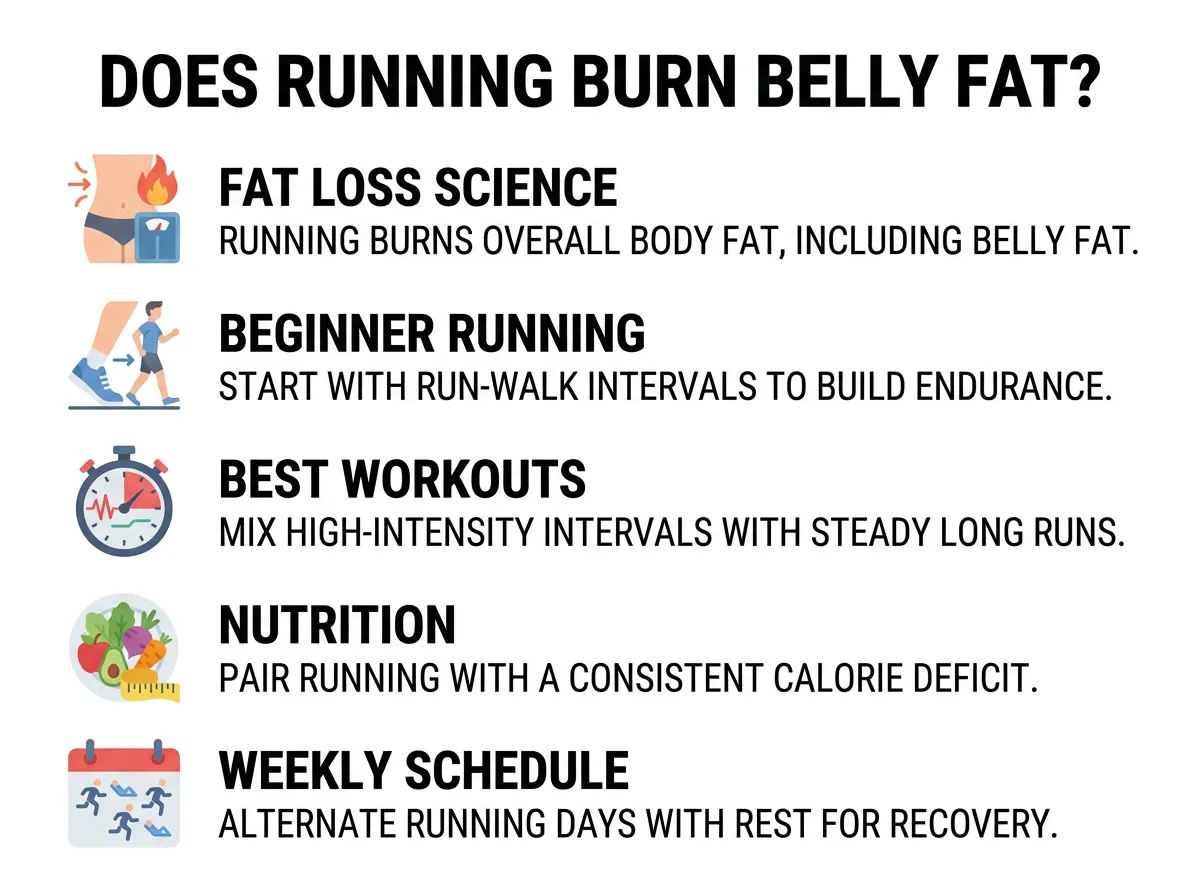
Does Running Burn Belly Fat? — key points at a glance
To make running a habit, try to run at the same time each day. Some people love the quiet energy of a morning run. Others prefer to burn off stress after work. Choose a time that fits your life. To learn more about how running helps with weight, you can read this guide on running for weight loss which covers the basics of calorie burn and safety.
The Best Running Workouts to Burn Belly Fat
To get the most out of your training, you should mix up your workouts. Doing the exact same run every day can cause your progress to stall. Your body adapts to routine, so you must challenge it in different ways. Here are three highly effective running workouts to try.
1. Slow and Steady Runs
These are also called aerobic runs. During a steady run, you keep a comfortable pace where you can still talk in full sentences. These runs should make up the majority of your weekly routine. They build your endurance, strengthen your heart, and teach your body to burn fat as fuel. Aim for thirty to sixty minutes of comfortable running.
2. High-Intensity Interval Training (HIIT)
If you are short on time, interval training is your best friend. HIIT involves short bursts of maximum effort followed by periods of rest. For example, you can sprint for thirty seconds, then walk for one minute. Repeat this ten times. HIIT boosts your metabolism and causes your body to burn calories long after your workout is over. This is often called the afterburn effect.
3. Hill Sprints
Running uphill is tough, but it is amazing for fat loss. Hill sprints build leg strength and raise your heart rate very quickly. Find a moderate hill near your home. Sprint up the hill for twenty seconds, then walk back down to recover. Repeat this six to eight times. It is a quick workout that delivers powerful results. For more details on these routines, check out this guide on how to lose belly fat by running effectively.
Why Diet Matters Just as Much as Running
You may have heard the phrase, “You cannot outrun a bad diet.” This is absolutely true. Does running burn belly fat if you eat junk food all day? Unfortunately, no. Running burns calories, but it is easy to eat those calories right back. A single slice of pizza can easily undo the calories you burned during a thirty-minute run.
To lose belly fat, you must be in a calorie deficit. This means you burn more calories than you take in. Focus on eating whole foods. Fill your plate with lean proteins like chicken and fish. Eat plenty of colorful vegetables, fruits, and whole grains. Avoid sugary drinks, sodas, and highly processed snacks. Drinking plenty of water is also vital, as it keeps your metabolism running smoothly and helps prevent false hunger cues.
A Sample Weekly Running Schedule
To help you get started, here is a simple weekly plan. It balances hard work with proper rest so your body can recover and burn fat efficiently.
- Monday: Rest day or light walking.
- Tuesday: 25-minute easy run (steady pace).
- Wednesday: Strength training (focus on core and legs).
- Thursday: 20-minute interval run (sprint/walk cycles).
- Friday: Rest day.
- Saturday: 40-minute long, slow run.
- Sunday: Active recovery (gentle yoga or walking).
Other Key Factors for Losing Belly Fat
While running and diet are the main pillars of fat loss, other daily habits play a major role. If you neglect these, your weight loss journey will be much harder.
Get Quality Sleep
When you do not get enough sleep, your body produces more cortisol. Cortisol is a stress hormone that encourages your body to store fat around your stomach. Aim for seven to nine hours of quality sleep every night. Good sleep also helps your muscles recover from your runs.
Add Strength Training
Running is great for burning calories, but building muscle is great for keeping them off. Muscle tissue burns more calories at rest than fat tissue. Doing bodyweight exercises like squats, lunges, and planks twice a week will support your running and help you tone your body.
Reduce Stress
Chronic stress is another major trigger for belly fat. High stress levels lead to emotional eating and cravings for sugary foods. Try to find daily activities that help you unwind. Walking in nature, reading, or meditating can help keep your stress hormones in check.
Conclusion
So, does running burn belly fat? The answer is a clear yes. Running is one of the most effective, accessible, and healthy ways to reduce fat and improve your overall well-being. By combining steady runs, intense intervals, and a healthy diet, you will start to notice a difference in how your clothes fit and how you feel. Remember to be patient with yourself. Real, lasting change takes time. Put on your shoes, take that first step out the door, and enjoy the journey to a healthier, happier you.
Frequently Asked Questions
How long does it take to lose belly fat by running?
Most people start to see noticeable changes in their body shape within four to six weeks of regular running. However, significant belly fat loss usually takes two to three months of consistent training and healthy eating. Patience and consistency are key to lasting results.
Should I run every day to lose belly fat?
No, running every day is not recommended, especially for beginners. Your muscles and joints need time to rest, recover, and rebuild. Running three to four times a week is highly effective and helps prevent common overuse injuries.
Is it better to run on a treadmill or outside for fat loss?
Both options are excellent for burning calories and fat. Running outside often burns slightly more calories because of wind resistance and uneven terrain. However, a treadmill allows you to control your pace and incline easily, making it a highly convenient option.
Does running burn more belly fat than walking?
Yes, running burns more calories per minute than walking because it requires more energy and effort. However, walking is still a fantastic exercise, especially for beginners or those recovering from injuries. Combining both is a great way to stay active.
Can I lose stomach fat by running 20 minutes a day?
Yes, running for 20 minutes a day can help you lose stomach fat, provided you are also eating a healthy diet. High-intensity interval running for 20 minutes can burn a high number of calories and keep your metabolism elevated for hours afterward.
Should I run on an empty stomach to burn more fat?
Some people prefer fasted runs, but it is not necessary for fat loss. While some studies suggest it may burn slightly more fat during the run, it can also lead to lower energy levels. It is best to do what feels most comfortable and sustainable for your body.
