



Yes, cardio exercises burn fat by helping you create a calorie deficit where your body uses stored fat for fuel. While cardio is highly effective for burning calories during your workout, pairing it with strength training and a healthy diet will yield the best long-term results. Consistency and a balanced approach are the ultimate keys to successful fat loss.
Have you ever stood on a treadmill? Did you stare at the small screen? You watch the numbers climb. You sweat. Your heart pumps fast. In that moment, you might ask yourself a very common question. Do cardio exercises burn fat? It is a question that millions of people ask every day. We want to know if our hard work is paying off. We want to know if that morning run is actually helping us get leaner.
If you want to shed some extra weight, you are not alone. Gyms are full of people doing the exact same thing. But there is a lot of confusing advice out there. Some people say cardio is the only way to lose weight. Others say it is a waste of time and that you should only lift weights. This can make you want to give up before you even start.
In this article, we will break down the science. We will look at how your body burns energy. We will explore different types of cardio. Finally, we will help you build a plan that works for you. Let us dive in and find the truth about cardio and fat loss.
Key Takeaways
- Calorie Deficit is Crucial: Cardio helps you burn calories, which is essential to create the energy deficit needed to lose fat.
- The Fat-Burning Zone: Lower-intensity cardio burns a higher percentage of fat, but higher-intensity cardio burns more total calories overall.
- Consistency Over Intensity: Doing moderate cardio regularly is far better than doing high-intensity workouts only once in a while.
- Combine with Strength Training: Pairing cardio with weightlifting helps preserve muscle mass and boosts your resting metabolism.
- Diet is Still Key: You cannot out-exercise a poor diet; keeping your nutrition in check is vital for fat loss.
📑 Table of Contents
How Your Body Uses Energy During Exercise
To understand fat loss, we must look at energy. Your body is like a car. A car needs fuel to run. Your body also needs fuel to move. It gets this fuel from the food you eat. Your body uses two main types of fuel. These are carbohydrates and fats.
The Glycogen vs. Fat Equation
Your body stores carbohydrates in your muscles and liver. This stored fuel is called glycogen. Glycogen is very easy for your body to reach. When you start to jog or bike, your body uses glycogen first. It is like the quick cash in your pocket. You can grab it fast. Fat is different. Fat is like money stored in a bank account. It takes a little more effort to get it out. Your body only starts to burn fat when your workout continues. As you keep moving, your body shifts from burning glycogen to burning fat. This is why longer cardio sessions are so popular.
What Happens to Burned Fat?
Many people wonder where the fat goes when they lose weight. It does not just turn into sweat or heat. In fact, most of it leaves your body through your lungs. When you burn fat, your body breaks it down. It turns into carbon dioxide and water. You breathe out the carbon dioxide. You lose the water through sweat and urine. So, every time you breathe heavily during a workout, you are literally exhaling fat!
Why Daily Movement Matters
You do not just burn energy when you exercise. Your body burns energy all day long. This is called your metabolic rate. Even when you sit, your heart pumps. Your brain thinks. Your lungs breathe. All of these actions need energy. When you add cardio to your day, you increase this energy need. This makes it easier to burn stored fat.
The Science of the “Fat-Burning Zone”
You might have seen a chart on gym machines. It shows a special range called the fat-burning zone. This zone usually sits at a moderate heart rate. But does this mean you should always exercise slowly? Let us look closer at how heart rate affects fat loss.
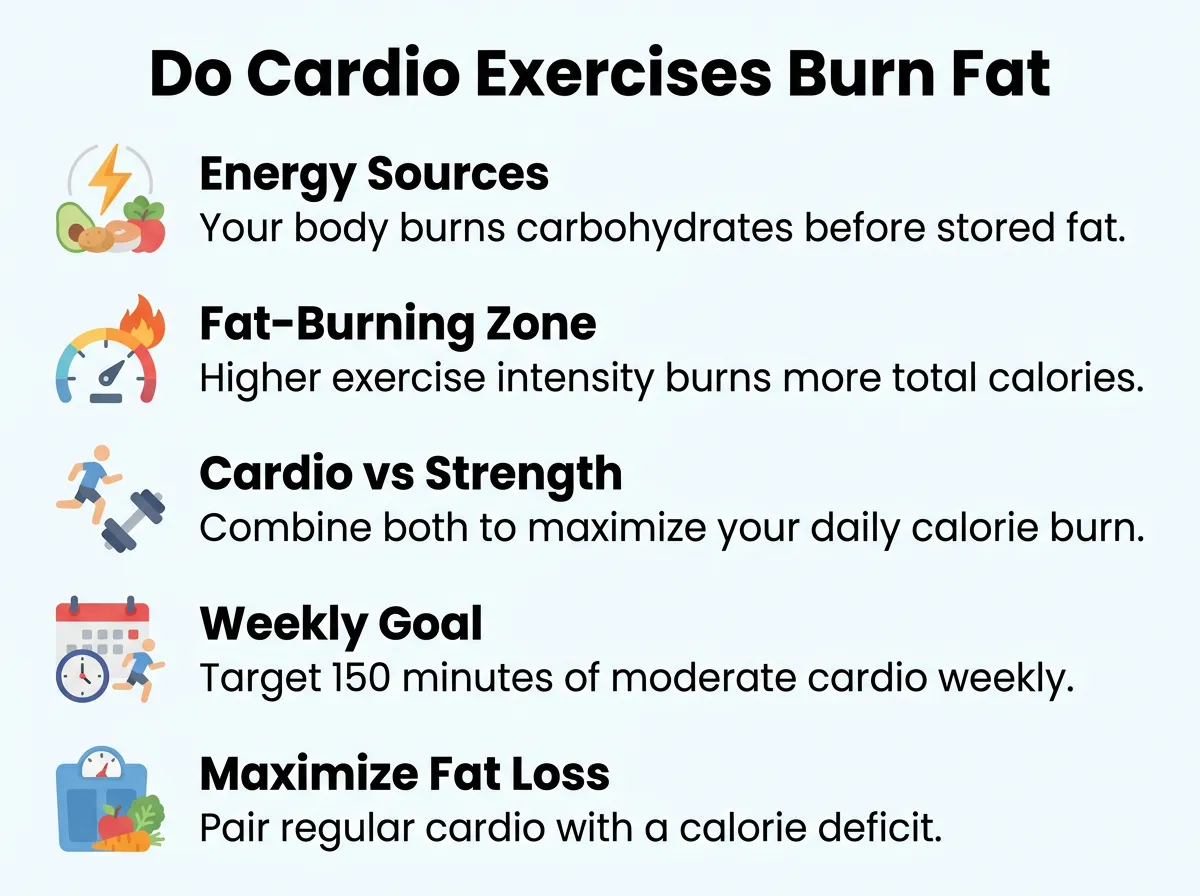
Do Cardio Exercises Burn Fat? — key points at a glance
Low-Intensity Steady State (LISS)
Low-intensity steady state cardio is also called LISS. It includes easy activities. Walking or easy cycling are good examples. When you do LISS, your body uses a higher percentage of fat for fuel. This is because your body has plenty of oxygen. Oxygen helps process fat. Understanding heart rate zones for fat burning can help you plan these easy sessions. However, there is a catch. LISS burns fewer total calories per minute. If you walk for thirty minutes, you might burn mostly fat, but the total number of calories is low.
High-Intensity Interval Training (HIIT)
High-intensity interval training is also called HIIT. It is the opposite of LISS. With HIIT, you go all out for a short time, then rest. An example is sprinting for thirty seconds, then walking for a minute. HIIT burns a lower percentage of fat during the workout. Instead, it burns a lot of glycogen. But HIIT burns a huge number of total calories in a short time. Even better, HIIT creates an “afterburn” effect. Your body continues to burn extra calories for hours after you finish your workout. This is because your body has to work hard to recover.
Which One Should You Choose?
Both LISS and HIIT have benefits. LISS is easy on your joints. You can do it every day. HIIT is fast. It is great if you do not have much time. A good plan uses both. You can do one HIIT session and two LISS sessions each week. This keeps your workouts fun and helps you avoid getting hurt.
Comparing Cardio to Other Workouts
Now, let us look at another big debate. Should you do cardio, or should you lift weights? The truth is that both are excellent, but they do different things.
Cardio vs. Weight Training
Cardio exercises are great for burning calories right now. When you run for an hour, you burn more calories than if you lift weights for an hour. But weight training does something cardio cannot do. It builds muscle. If you compare cardio vs weights for weight loss, you will see that weights help you keep your muscle while you lose fat. This is very important for your long-term success.
Why Muscle is Your Secret Weapon
Muscle tissue is very active. It takes energy just to maintain muscle. The more muscle you have, the more calories you burn every day. Even when you are sleeping, muscle burns calories. Cardio burns calories during the workout, but weight training helps you burn more calories all day long. This is why a mix of both is the best path to success.
How Much Cardio Do You Actually Need?
You do not need to spend hours at the gym every day to see results. In fact, too much cardio can actually backfire. It can make you very hungry and lead to injury.
Official Guidelines for Health and Weight Loss
Health experts have clear guidelines for physical activity. To stay healthy, you should get at least 150 minutes of moderate cardio each week. If you want to use cardio to lose weight effectively, you might need to increase this time slightly. You can split this into thirty minutes, five days a week. This is very easy to do.
Creating a Realistic Schedule
A good routine should fit your life. Do not try to do too much at once. Start with three days of moderate cardio. This could be a brisk walk or a bike ride. You can add one or two days of light weight training. This mix keeps your body strong. It helps you burn fat without getting too tired.
Practical Tips to Maximize Fat Loss
Do cardio exercises burn fat on their own? Yes, they do. But you can speed up your results with a few simple habits.
Watch Your Diet
You cannot out-run a bad diet. If you burn 500 calories on the treadmill, but then eat a large slice of cake, you will not lose fat. To lose weight, you must be in a calorie deficit. This means you eat fewer calories than your body burns. Focus on eating whole foods. Eat plenty of lean protein, vegetables, and whole grains. These foods keep you full and give you energy.
Track Your Progress Wisely
Do not just rely on the bathroom scale. The scale only tells you your total weight. It does not tell you if you lost fat or muscle. Sometimes, you might lose fat but gain muscle. The scale might not move, but your body is changing. Take photos of yourself. Pay attention to how your clothes fit. These are much better ways to track your success.
Conclusion: Finding Your Perfect Balance
So, do cardio exercises burn fat? The simple answer is yes, they absolutely do. Cardio is a fantastic tool to burn calories and improve your health. But it is not a magic cure. For the best results, mix cardio with weight training and eat a healthy diet.
Find an activity that you truly enjoy. If you hate running, do not run. Go for a swim, ride a bike, or join a dance class. The best exercise is the one that you will actually do week after week. Stay consistent, eat well, and enjoy the journey to a healthier you.
Frequently Asked Questions
Does cardio burn belly fat first?
No, you cannot choose where you lose fat. Cardio burns fat from your entire body, and genetics determine where the fat comes off first. Consistent exercise will eventually reduce belly fat over time.
Is HIIT better than running for fat loss?
Both are highly effective, but they work in different ways. HIIT burns more calories in a shorter amount of time and triggers an afterburn effect, while steady running is great for endurance and burns steady calories over a longer period.
Can I lose weight by only doing cardio?
Yes, you can lose weight with cardio alone if you stay in a calorie deficit. However, combining cardio with strength training is much better because it helps preserve your muscle tissue and keeps your metabolism high.
Should I do cardio before or after lifting weights?
It is usually best to lift weights first when your energy levels are highest. This allows you to build muscle effectively, and you can finish your session with cardio to burn extra calories.
How long does it take for cardio to burn fat?
Your body starts burning a mix of glycogen and fat as soon as you start moving. However, after about twenty to thirty minutes of continuous moderate exercise, your body shifts to burning a higher percentage of fat for fuel.
Does cardio burn muscle instead of fat?
Cardio will not burn muscle as long as you eat enough protein and do not overdo your workouts. To protect your muscle, limit high-impact cardio sessions to under an hour and include regular strength training in your routine.
