


Sweating is your body’s natural cooling system and does not directly burn fat. Any immediate weight lost through sweating is temporary water weight that returns once you rehydrate. To achieve actual fat loss, you must create a caloric deficit through physical activity and a balanced diet.
Imagine walking out of a hot exercise class. Your shirt is wet. Your skin is warm. You feel tired but happy. You step onto the bathroom scale. The scale shows you are two pounds lighter than you were an hour ago! It is easy to feel a rush of joy. Many of us look at that wet shirt as a badge of honor. We think of sweat as fat melting away from our bodies.
We see sweat as a sign of hard work. The more we drip, the more we feel we have done. But is this true? Does sweating burn fat? Today, we will look deep into how your body works. We will find out what sweat really is. We will also learn how fat loss actually happens. Knowing the truth will help you make better choices for your health.
Key Takeaways
- Sweat is for cooling: Sweat is mostly water and salt released to cool your body down, not melted fat.
- Water weight is temporary: Weight lost from heavy sweating returns as soon as you drink water.
- Fat leaves via respiration: When you burn fat, most of it leaves your body as carbon dioxide when you breathe out.
- Sweat does not equal effort: You can burn a high number of calories without sweating, such as during swimming.
- Saunas do not burn fat: Sitting in a hot room causes you to lose water, not body fat.
- Dehydration is a risk: Forcing yourself to sweat too much can lead to dangerous dehydration.
📑 Table of Contents
Understanding Sweat: Your Body’s Thermostat
To answer our main question, we first need to know what sweat is. Your body is very smart. It always wants to keep you safe. One way it does this is by keeping your temperature steady. Your body likes to stay at about 98.6 degrees Fahrenheit. When you work out, your muscles generate heat. This makes your inner temperature go up. Being too hot can be dangerous for your organs.
Your brain senses this rise in heat. It quickly acts to save you. It sends a message to your skin. This message tells your sweat glands to start working. You have millions of these tiny glands all over your body. They act like a built-in air conditioning system.
The Role of Your Glands
Your body has two main types of sweat glands. The first type is the eccrine glands. These are all over your body. They open directly onto the surface of your skin. When you get hot, these glands release water and salt. As this water sits on your skin, it starts to dry. This drying process is called evaporation. Evaporation pulls heat away from your skin. It cools you down fast.
The second type is the apocrine glands. These are found in areas with more hair, like your underarms. These glands release a thicker fluid when you feel stressed or scared. This fluid can smell when it mixes with bacteria on your skin. Neither of these glands has anything to do with your body fat.
Does Sweating Burn Fat? The Real Science
Let us look at the big question. Does sweating burn fat? The short answer is no. Sweating itself does not burn fat. Sweating is just a water loss process. When you sweat, you are losing water, salt, and small amounts of minerals. You are not losing fat cells.
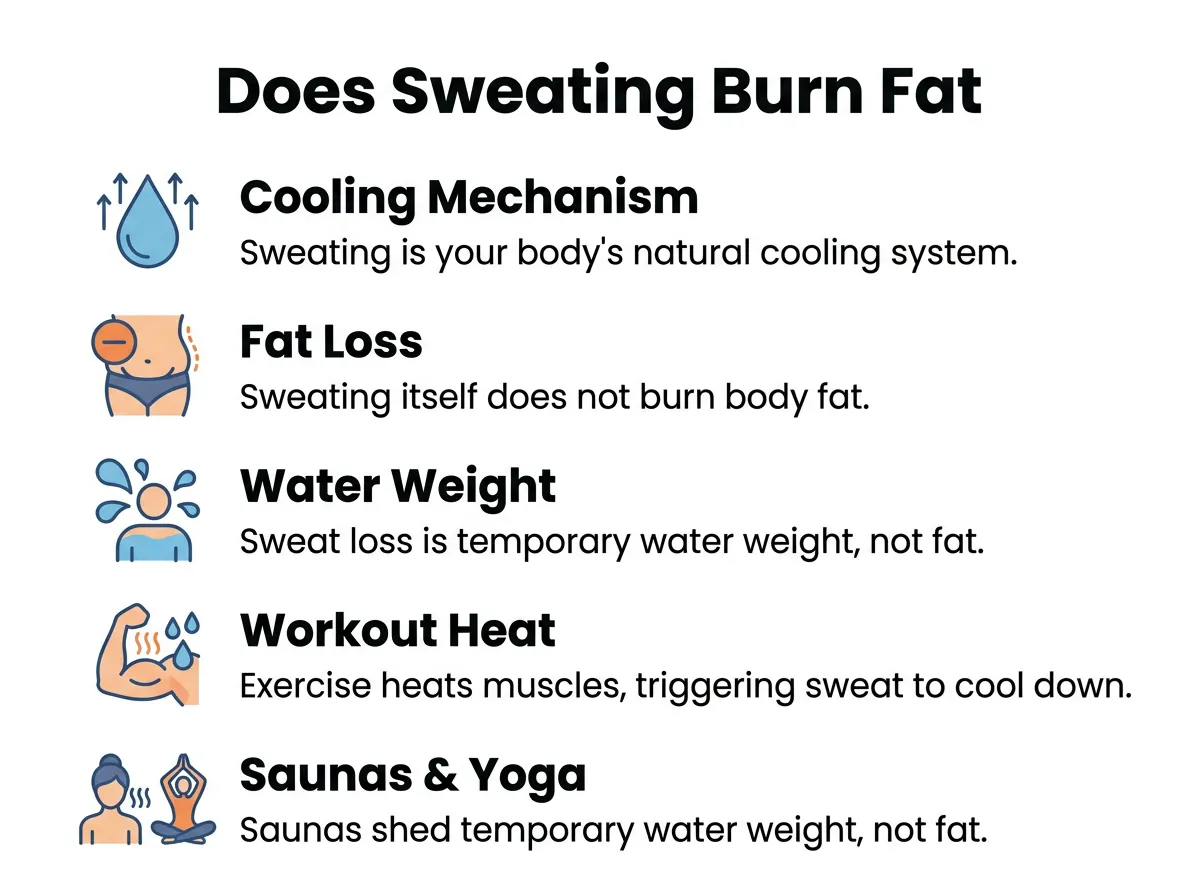
Does Sweating Burn Fat? — key points at a glance
Many people get confused because of the scale. It is true that you might weigh less after a very sweaty workout. But that weight loss is not fat loss. It is just water loss. Once you drink a glass of water, that weight will return. This is why wrestlers and fighters try to sweat a lot before a weigh-in. They want to lose water weight quickly. But they know it is not permanent. They will gain it back as soon as they eat and drink.
If you want to know more about the link between heat and calorie burn, you can read about how does sweating burn calories to understand the actual math behind it. Sweating is just a sign that your body is hot, not that you are burning fat.
The Difference Between Fat Loss and Water Loss
To lose weight for good, you need to lose fat, not just water. These two things are very different. Let us look at how they compare. This will help you plan your fitness journey better.
How Fat Loss Actually Works
Fat loss is a chemical process. When you eat, you take in energy. Your body stores extra energy as fat. If you want to lose fat, you must use more energy than you take in. This is called a caloric deficit. When you are in a deficit, your body goes to your fat cells for fuel. It breaks down these cells to use their energy.
The waste products of this process are water and carbon dioxide. You actually breathe out most of the fat you lose! You do not sweat it out. When you exercise, you breathe harder. This is how the fat leaves your body. Only a tiny fraction of fat is lost through sweat or urine.
How Water Loss Works
Water weight shifts very quickly. Your body is made of about 60 percent water. This water is stored in your blood, muscles, and organs. When you sweat, you pull water from these areas. It is easy to lose two or three pounds of water in an hour. But this is not healthy fat loss. In fact, losing too much water can make you feel weak. It can also make your muscles cramp.
To keep your body safe, you must replace this water. Some people worry that drinking water will make them gain weight. But drinking water does not make you gain fat. It just keeps you hydrated. In fact, drinking enough water is key to losing fat. Some articles suggest that sweating is good for weight loss only because it shows you are moving, but the sweat itself is not the cause of the fat loss.
Why Do We Sweat So Much During Exercise?
If sweat does not burn fat, why do we sweat so much during a hard workout? The answer is simple. Hard workouts require a lot of muscle movement. When your muscles work, they burn fuel. This burning of fuel creates heat. The harder you work, the more heat your body makes. To keep you cool, your body must sweat.
So, a sweaty workout does burn calories. But it is the movement of your muscles that burns the calories, not the sweat. The sweat is just a side effect of the heat. You can burn a lot of calories without sweating at all. For example, think about swimming in a cool pool. Your muscles are working hard. You are burning many calories. But you do not feel sweaty. The cool water keeps your body temperature down. You are still burning fat, even though you do not see any sweat.
On the flip side, you can sweat without burning many calories. Think about sitting in a hot car on a summer day. You will sweat a lot. But you are not burning fat. Your heart rate is low. Your muscles are not working. You are just hot. If you want to see how this works, you can read more about how you burn calories through sweating versus physical exercise.
The Truth About Saunas and Hot Yoga
Many people use saunas, steam rooms, or hot yoga to lose weight. They sit in the heat and sweat for an hour. They feel lighter afterward. They believe they have found a shortcut to fat loss. But is this true?
No, it is not. Sitting in a hot room does not burn a significant amount of fat. It does make you sweat. It does make the scale go down. But again, this is just water weight. The moment you drink water, the weight will return. Saunas can be great for relaxation. They can help soothe sore muscles. But they are not a tool for fat loss.
Using sweat suits or garbage bags while working out is also a bad idea. Some people wear heavy clothes in the summer to sweat more. This does not increase fat loss. It only increases your risk of heat stroke and severe dehydration. It is much better to wear light, breathable clothes. This keeps you cool so you can work out longer and harder. Working out longer is what actually helps you burn more fat.
Practical Tips for Safe and Real Fat Loss
Now you know the truth. Sweating is not the key to fat loss. So, what should you do instead? Here are some simple, practical tips to help you burn real fat safely.
- Focus on a Caloric Deficit: Eat a diet rich in whole foods. Focus on vegetables, fruits, and lean proteins. Try to eat slightly fewer calories than your body burns each day.
- Do Strength Training: Lifting weights builds muscle. Muscle burns more calories than fat, even when you are resting. This helps you burn fat over time.
- Include Cardio: Walk, run, bike, or swim. These activities get your heart rate up. They help you burn calories during your workout.
- Stay Hydrated: Drink plenty of water before, during, and after your workouts. Do not avoid water just to see a lower number on the scale.
- Get Enough Sleep: Your body needs rest to burn fat. Aim for seven to eight hours of sleep each night. Lack of sleep can make you crave unhealthy foods.
Conclusion
Sweating is a wonderful thing. It keeps us cool when we exercise. It shows that our bodies are working hard to protect us. But it is not a sign of fat loss. The sweat on your skin is just water and salt. It is not melted fat.
To lose fat, you must focus on the basics. Move your body, eat healthy foods, and drink plenty of water. Do not worry if you do not sweat as much as the person next to you. Your body is unique. Focus on how you feel, your strength, and your energy. Those are the real signs of a healthy body!
Frequently Asked Questions
Does sweating a lot mean you are burning more fat?
No, sweating more does not mean you are burning more fat. Sweating is simply your body’s way of cooling itself down when you get hot. Real fat loss comes from burning calories through physical movement, not from the amount of sweat you produce.
Can sitting in a sauna help me lose weight?
Sitting in a sauna can help you lose water weight quickly, but it will not burn body fat. Any weight you lose in a sauna is just water from sweat. This weight will return as soon as you drink water or have a meal.
Is water weight loss permanent?
No, water weight loss is very temporary. Your body needs water to function safely and will hold onto it once you rehydrate. To achieve permanent weight loss, you must focus on losing body fat through a healthy diet and exercise.
Why do I sweat more than other people during the same workout?
Everyone sweats differently based on genetics, fitness level, weight, and the climate. People who are more fit actually tend to sweat sooner and more copiously because their bodies have become highly efficient at cooling down.
Can wearing extra clothes during a workout help me burn more fat?
No, wearing heavy clothes or sweat suits will not help you burn more fat. It will only make you lose more water weight and increase your risk of dangerous overheating and dehydration. It is best to wear light, breathable clothing.
How does fat actually leave the body when you lose weight?
When you burn fat, it is broken down into energy for your cells. The waste products of this process are carbon dioxide and water. You actually breathe out most of the fat you lose as carbon dioxide, while a small amount leaves through urine and sweat.
