


Yes, lifting weights is an incredibly effective way to burn body fat and transform your shape. While cardio burns more calories during your actual workout, weight training builds muscle, which increases your resting metabolic rate. This means your body will continue to burn more calories and fat even when you are resting.
Imagine walking into a busy gym. You see two main areas. On one side, people run on treadmills. They sweat a lot and look very tired. On the other side, people lift heavy dumbbells. They lift, rest, and lift again. It looks slower, but they look strong and lean. You might ask yourself a simple question. Does Weight Lift Burn Fat? This is a very common question for anyone who wants to lose weight.
Many people think that cardio is the only way to shed pounds. They spend hours on stationary bikes or elliptical machines. But is that the best path? Or can lifting heavy weights actually help you get lean faster? Many beginners feel confused by the conflicting advice they hear online.
In this guide, we will explore the truth behind strength training. We will look at how your body burns energy. We will show you how lifting weights changes your metabolism. By the end, you will know exactly how to use weights to reach your fitness goals. Let us dive in and look at the facts.
Key Takeaways
- Metabolic Boost: Strength training builds lean muscle, which naturally increases your daily resting metabolism.
- The Afterburn Effect: Weight lifting keeps your body burning calories for hours or even days after your workout ends.
- Body Composition: Lifting helps you lose pure fat while keeping your valuable, healthy muscle mass.
- Belly Fat Reduction: Resistance training is highly effective at reducing harmful visceral fat around your organs.
- Better Overall Health: Stronger muscles protect your joints, improve bone density, and give you more daily energy.
📑 Table of Contents
How Does Weight Lift Burn Fat? The Science of Muscle
To understand how this works, we must look at how our bodies use energy. Every day, your body burns calories just to keep you alive. This is called your resting metabolic rate. If you have more muscle, your body burns more calories. Muscle is active tissue. It needs energy to maintain itself. Fat, on the other hand, does not need much energy at all.
When you lift weights, you create tiny tears in your muscle fibers. Do not worry, because this is a good thing. Your body must work hard to repair these fibers. This repair process requires a lot of energy. By building more muscle, you turn your body into a natural fat-burning machine. You will burn more calories even when you sit on the couch.
This is one of the main benefits of lifting weights for health. You are not just burning calories during the exercise. You are changing how your body works. This is why many fitness experts recommend lifting. It helps you manage your weight for the long term. It stops the cycle of gaining back the weight you lost.
The Afterburn Effect: Burning Calories While You Sleep
Have you ever heard of the afterburn effect? The scientific name is excess post-exercise oxygen consumption, or EPOC. This is a key reason why weight training is so powerful for fat loss.
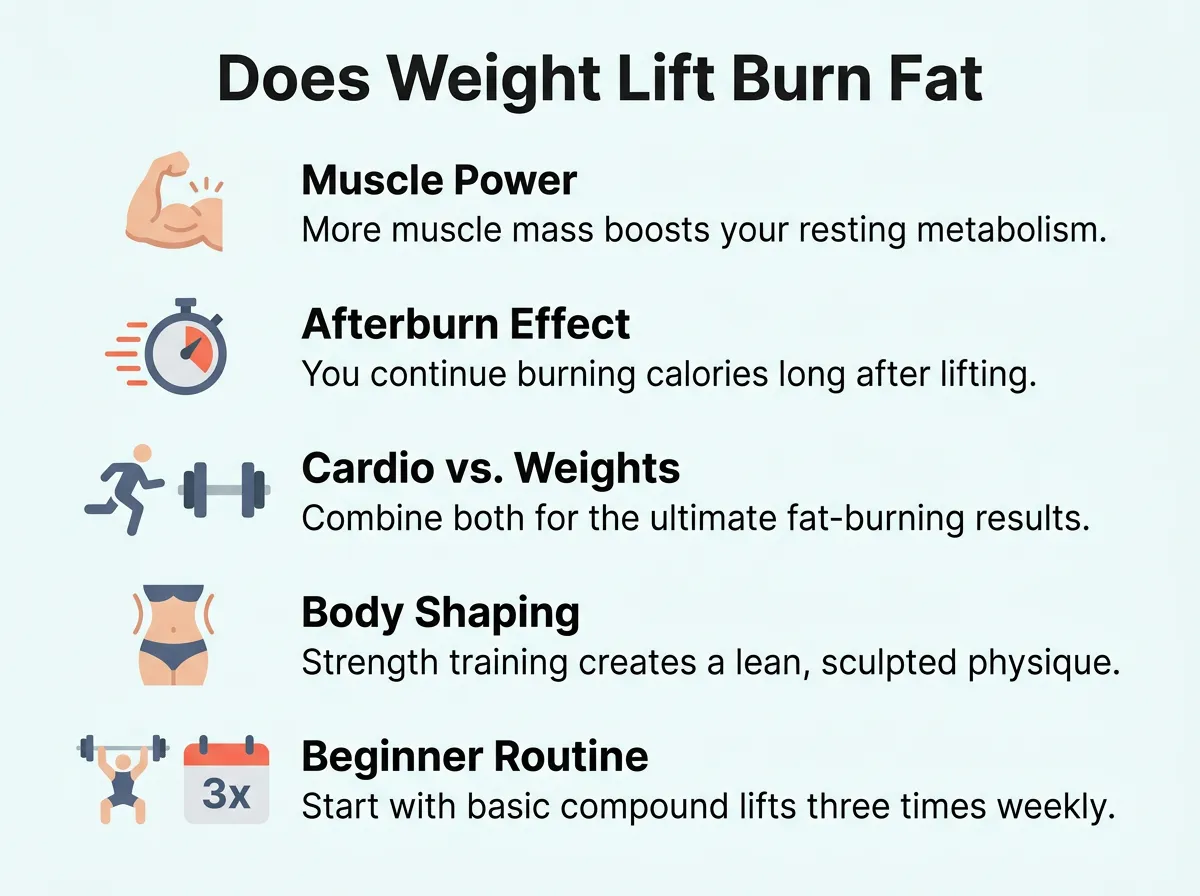
Does Weight Lift Burn Fat? — key points at a glance
When you do a hard workout, your body needs to recover. It has to take in more oxygen. It must cool down and repair tissues. This extra work requires a lot of energy. According to Nike’s guide on lifting and fat loss, this afterburn effect can last for up to 24 to 72 hours.
This means you are still burning extra calories long after you leave the gym. You could be eating dinner, watching television, or sleeping, and your body is still working. Cardio workouts do not have a strong afterburn effect. Once you stop running, the calorie burn stops quickly. But with lifting, the fat-burning process goes on and on.
Cardio vs. Weight Lifting: Which is Better for Fat Loss?
People often debate which workout is best. Let us compare them. Cardio is great for burning calories right now. If you run for thirty minutes, you will burn a good number of calories. If you still wonder, does weight lift burn fat as well as running does, the answer is in the long-term results.
Weight lifting does something cardio cannot do. It builds muscle. If you only do cardio, you might lose weight, but some of that weight will be muscle. This can actually slow down your metabolism over time. You might end up looking smaller but still soft.
For the best results, you do not have to choose just one. You can combine them. You can read about the differences between cardio and weight training to see how they work together. Many people do weights three days a week and light cardio on other days. This gives you the best of both worlds. You burn calories today and build a faster metabolism for tomorrow.
How Strength Training Shapes Your Body
When you start lifting, the scale might not move much. Do not let this discourage you. The scale does not tell the whole story. It only tells you your total weight. It does not tell you what that weight is made of.
Muscle is denser than fat. It takes up less space. This means you can lose size and look leaner, even if your weight stays the same. This is called body composition. You are losing fat and gaining muscle at the same time.
Focus on how your clothes fit. Focus on how you look in the mirror. You will notice your waist getting smaller. Your arms and legs will look more toned and firm. This is the power of strength training. It reshapes your body in a way that cardio alone cannot do. It helps you lose the right kind of weight. You can read more about strength training for weight loss benefits to understand this shift.
A Simple Weight Lifting Routine for Beginners
Starting a new routine can feel scary. You do not need to lift huge weights right away. You just need to start simple and stay consistent.
Choose Compound Movements
Compound movements are exercises that use more than one joint at a time. Examples include squats, lunges, chest presses, and rows. These moves use many large muscles at once. This means they burn more calories and build more strength in less time. They are great for busy people.
Use Progressive Overload
To keep getting results, you must challenge your muscles. This is called progressive overload. If you lift the same weight every week, your body will stop changing. Try to add a little weight or do one more repetition each week. Keep track of your progress in a notebook.
Give Your Body Time to Rest
Your muscles do not grow while you are lifting. They grow when you are resting. Make sure to sleep at least seven hours a night. Do not lift weights with the same muscles two days in a row. Give them forty-eight hours to heal. Rest is just as important as the workout.
Conclusion: Start Your Strength Journey Today
To wrap it up, does weight lift burn fat? Yes, it absolutely does. It is one of the most effective tools for long-term fat loss. Lifting weights helps you build lean muscle. This muscle boosts your daily metabolism. It also triggers the afterburn effect, so you burn energy even while resting.
Do not fear the weight room. Start with simple moves and light weights. Be consistent. Eat healthy foods and get plenty of rest. Over time, you will see your body change. You will feel stronger, have more energy, and burn fat more easily. Grab some weights and start your journey today!
Frequently Asked Questions
How many times a week should I lift weights to lose fat?
For great results, try to lift weights three to four times per week. This gives your muscles enough stimulation to grow while allowing time for recovery. Be sure to rest your muscles between sessions.
Can lifting weights reduce belly fat specifically?
Yes, lifting weights helps reduce belly fat. Strength training targets visceral fat, which is the harmful fat stored around your organs. Combined with a good diet, lifting will slim your waistline.
Is cardio or weight lifting better for burning calories?
Cardio burns more calories during the actual workout. However, weight lifting burns more calories over time by boosting your resting metabolism. A mix of both is the best approach for fat loss.
Should I lift light weights or heavy weights to burn fat?
Heavy weights are generally better for building muscle and burning fat. Lifting heavier weights challenges your body more, leading to a higher afterburn effect. However, you should always start with a weight you can lift safely.
Do I need to go to a gym to lift weights?
No, you do not need a gym membership. You can use resistance bands, dumbbells, or even your own body weight at home. Exercises like push-ups and squats are highly effective anywhere.
How long does it take to see results from lifting weights?
You may start to feel stronger and have more energy within two to three weeks. Noticeable changes in your body shape usually take six to eight weeks of consistent lifting. Consistency and proper nutrition are key to seeing these changes.
