


Yes, walking is a highly effective way to burn fat and lose weight. It keeps you in the “fat-burning zone” where your body relies on fat stores for fuel. By walking consistently and eating a balanced diet, you can easily slim down without intense workouts.
Imagine this scenario. You come home after a long, busy day at work. Your feet are tired. Your brain is exhausted. The last thing you want to do is put on tight workout clothes. You do not want to drive to a crowded gym. You do not want to lift heavy weights. You do not want to run on a treadmill until you gasp for air. But you still want to stay fit. You still want to lose some weight.
This is a very common feeling. Many people think they must sweat and strain to get in shape. They think fitness has to be hard. But what if the best exercise is something you already do every single day? We are talking about walking. It is free, simple, and requires no special gear. But does walking burn fat?
In this guide, we will explore the science of how your body uses energy. We will look at how walking affects your scale weight and body composition. We will also share easy tips to help you get the most out of every step you take.
Key Takeaways
- Low-intensity cardio works: Walking keeps your heart rate in the fat-burning zone.
- Consistency is key: Daily steps add up quickly to create a calorie deficit.
- Easy on the joints: It is a safe, sustainable exercise for all fitness levels.
- Boosts metabolism: Regular walks help maintain lean muscle mass while burning calories.
- Reduces stress: Lower stress levels mean less cortisol, which helps reduce belly fat.
- Highly adaptable: You can easily increase intensity with hills, hand weights, or a faster pace.
📑 Table of Contents
How Walking Burns Body Fat
To understand if walking can burn fat, we have to look at how the body burns energy. Your body needs fuel all the time. It needs fuel when you sleep, eat, and move. This fuel comes from two main places. It comes from carbohydrates and from stored fat.
Understanding the Fat-Burning Zone
When you do very intense exercise, your body needs energy fast. It burns carbohydrates because they are quick to break down. But when you do light exercise, your body takes its time. It uses oxygen to break down stored fat for fuel. This state is often called the “fat-burning zone.”
Walking is the perfect light exercise. It keeps your heart rate in this sweet spot. Your body can comfortably use its fat stores to keep you moving. This is why walking is so great for long-term fat loss. It targets the fat you want to lose without draining your energy.
The Role of Calories In vs. Calories Out
Of course, fat loss also comes down to simple math. You must burn more calories than you eat. This is called a calorie deficit. Walking helps you burn extra calories every day. Over time, these daily calorie burns add up.
For example, a study published in the National Institutes of Health database shows that increasing daily steps can significantly reduce body fat over time. Every extra step you take helps widen your calorie deficit. This makes it much easier to lose weight without feeling starved.
Why Walking is a Secret Weight Loss Weapon
Many people ask, does walking burn fat effectively compared to running? The answer lies in how easy it is to keep doing. Many people overlook walking because it seems too simple. They think if it does not hurt, it does not work. But this ease is actually its greatest strength.
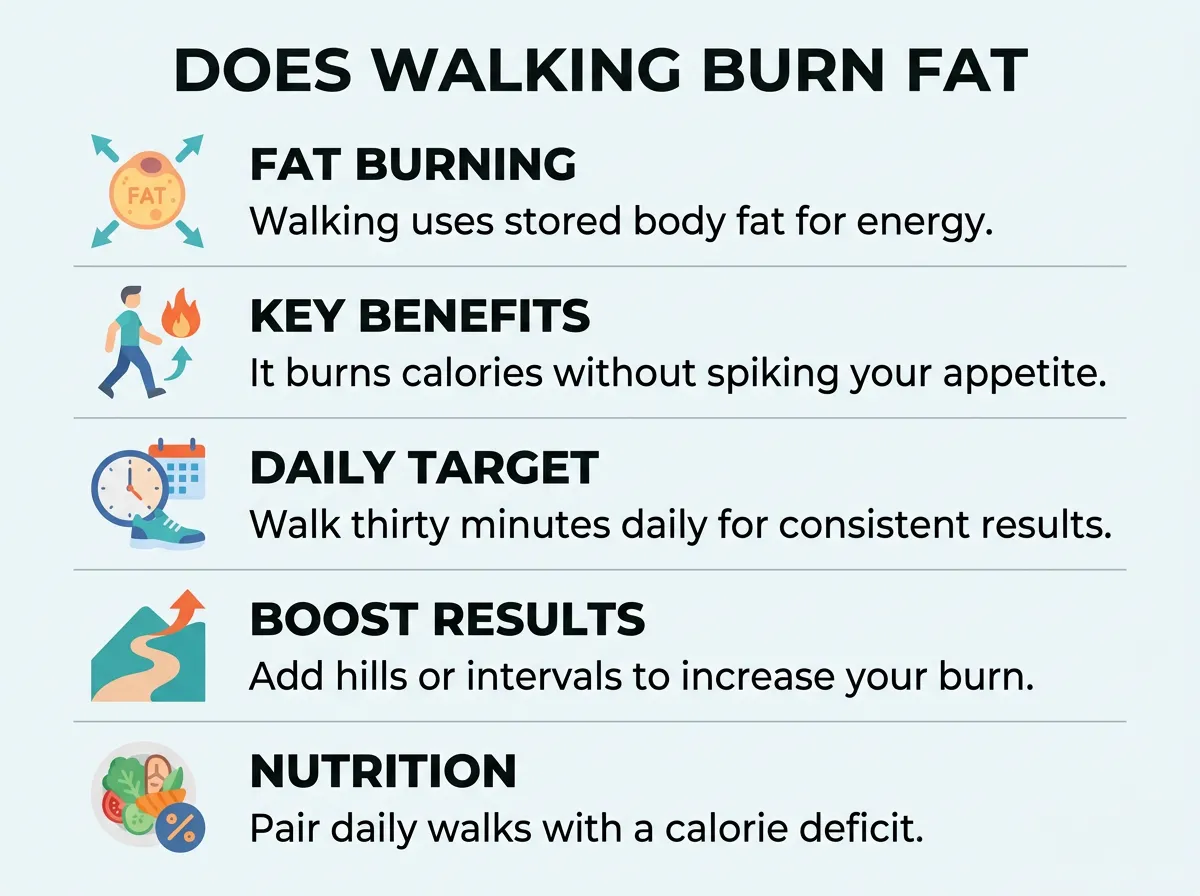
Does Walking Burn Fat? — key points at a glance
It is Easy on Your Joints
Running and high-impact workouts are tough on the body. They can hurt your knees, hips, and back. If you are carrying extra weight, this stress is even worse. Walking is a low-impact exercise. It is very gentle on your joints. This means you can do it every day without getting hurt. According to the Cleveland Clinic’s weight loss experts, walking is one of the safest activities for long-term health.
It Keeps Hunger in Check
Have you ever gone for a hard run and felt starving afterward? Intense workouts trigger hunger hormones. You might end up eating more food than you just burned. Walking is different. It burns calories but does not spike your appetite. You get the benefits of exercise without the intense cravings afterward.
You Can Do It Anywhere
You do not need a gym membership to walk. You do not need to wait for sunny weather. You can walk around your neighborhood. You can walk in a local mall. You can even walk in place while watching your favorite television show. It fits into any lifestyle.
How Much Should You Walk to See Results?
When asking yourself, “does walking burn fat?”, you have to look at how regular movement affects your body. Now you might wonder how much you actually need to walk. Is there a magic number?
The Truth About the 10,000 Steps Goal
You have probably heard that you need 10,000 steps a day. This is a great goal, but it is not a strict rule. It actually started as a marketing campaign for a Japanese pedometer in 1965! Do not feel bad if you cannot hit this number right away.
Any increase in your daily steps will help. If you currently take 3,000 steps, try to aim for 5,000. Once that feels easy, aim for 7,000. According to the Mayo Clinic’s guide on walking, even regular, moderate walks can help you manage your weight and lower your risk of heart disease.
Focusing on Time and Consistency
If counting steps is too stressful, focus on time instead. Try to walk for 30 minutes a day. You can even split this into three ten-minute walks. Walk for ten minutes after breakfast, ten minutes after lunch, and ten minutes after dinner. This is very easy to do and keeps your metabolism active all day long.
Smart Ways to Burn More Fat While Walking
If you want to speed up your results, you can make your walks a bit more challenging. Here are some simple ways to boost your fat burn.
Pick Up the Pace
Walking faster burns more calories. You do not have to run. Just try power walking. Act like you are late for an important meeting. This increases your heart rate and helps you burn more energy in less time.
Find Some Hills
Walking on flat ground is great. Walking up a hill is even better. Hills force your muscles to work harder. They tone your glutes, calves, and thighs. They also burn up to 50 percent more calories than walking on a flat path. If you use a treadmill, increase the incline to mimic outdoor hills.
Add Some Light Weights
You can wear a weighted vest or carry light hand weights. This adds resistance to your workout. Your body has to work harder to move the extra weight. This helps you build strength and burn more fat. Just make sure the weights are not too heavy, as you do not want to strain your joints.
Combining Walking with a Healthy Diet
Walking is a powerful tool, but it cannot do all the work alone. To get the best results, you must look at what you eat.
You Cannot Outrun a Poor Diet
It is easy to overestimate how many calories you burn. A 30-minute walk might burn around 150 calories. A single slice of pizza can have 300 calories or more. If you eat junk food, you can easily erase the hard work from your walk. Using walking for weight loss is most effective when you also focus on eating whole, nutritious foods.
Simple Eating Tips for Success
You do not need to go on a crash diet. Just make small, smart changes.
- Drink plenty of water before and after your walks.
- Eat more lean proteins like chicken, fish, and tofu.
- Fill half your plate with colorful vegetables.
- Choose whole grains like brown rice and oats over white bread.
- Limit sweet drinks and processed snacks.
Conclusion
So, does walking burn fat? The answer is a clear and simple yes. Walking is one of the most natural, healthy, and sustainable ways to lose weight. It keeps you in the fat-burning zone, protects your joints, and does not leave you starving.
You do not need an expensive gym or extreme workouts to change your body. All you need is a good pair of shoes and a little bit of time. Start where you are today. Take a short walk down your street. Tomorrow, go a little bit further. Every single step brings you closer to your fitness goals.
Frequently Asked Questions
How many calories do you burn by walking?
The number of calories you burn depends on your weight and walking speed. On average, a person can burn between 100 to 150 calories during a brisk 30-minute walk. Walking up hills or increasing your pace will increase this number significantly.
Can you lose belly fat by walking?
Yes, regular walking can help you lose overall body fat, including stubborn belly fat. Walking reduces stress hormones like cortisol, which are directly linked to fat storage around the stomach. Combining daily walks with a healthy diet is key for targeting this area.
Is it better to walk fast or walk long?
Both methods offer great benefits for fat loss. Fast walking burns more calories per minute, while longer walks burn more total calories over time. A mix of both, such as adding quick intervals to a long walk, is the most effective approach.
Should you walk before or after eating?
Walking after meals is excellent for digestion and helps lower your blood sugar levels. However, walking on an empty stomach in the morning can sometimes help tap into fat stores faster. Choose the time that fits best into your daily schedule and routine.
Is walking better than running for fat loss?
Walking is often better for long-term fat loss because it is easier to do consistently. Running burns more calories in a shorter time, but it also increases your appetite and risk of injury. Walking keeps you in the fat-burning zone without putting strain on your body.
How long does it take to see results from walking?
Most people start to notice changes in their energy and fitness levels within two to four weeks of daily walking. Visible fat loss and weight reduction usually become noticeable after eight to twelve weeks. Consistency and a balanced diet are essential for seeing these results.
