


Yes, muscle does burn fat, but perhaps not as dramatically as popular fitness myths claim. Muscle tissue is metabolically active and burns calories even at rest, which indirectly helps your body burn fat. By building more muscle through strength training, you raise your resting metabolic rate and create a body that is highly efficient at managing weight.
Imagine you are standing in a crowded gym. You see people running on treadmills. You see others lifting heavy weights. Both groups have the same goal in mind. They want to shed body fat, gain energy, and feel better in their own skin. If you have ever tried to lose weight, you have likely heard a lot of advice. One very common claim is that gaining muscle is the ultimate key to melting away unwanted fat.
But is this advice actually true, or is it just another fitness myth? It is easy to get lost in all the conflicting information online. You might wonder if you should spend your time on the cardio machines or head straight to the weight rack. Understanding how your body works is the first step to making your workouts count.
In this article, we will dive deep into the science of body composition. We will look at how your tissues use energy. We will clear up the myths about caloric burn. Finally, we will give you a clear, practical plan to help you reach your health goals. Let us look at the facts behind this common fitness question.
Key Takeaways
- Active Tissue: Muscle tissue burns more calories than fat tissue, even when you are completely at rest.
- Metabolic Boost: Building lean muscle increases your resting metabolic rate, helping with long-term weight management.
- The Reality Check: While muscle burns calories, the exact resting number is modest, around six calories per pound of muscle daily.
- Strength Training: Lifting weights is essential to preserve muscle mass when you are cutting calories.
- Afterburn Effect: Intense workouts keep your body burning extra calories for hours after you finish training.
- Full Picture: True fat loss requires combining muscle-building exercises with a healthy, balanced diet.
📑 Table of Contents
Understanding Muscle and Metabolism
To answer the question, Does Muscle Burn Fat?, we must first look at how our bodies use energy. Every single day, your body needs fuel to keep you alive. Your heart needs to beat. Your lungs need to take in air. Your brain needs to think. This basic energy use is called your metabolism.
What is Basal Metabolic Rate?
Your Basal Metabolic Rate, or BMR, is the number of calories your body burns just to stay alive. Even if you lie in bed all day and do not move a single muscle, your body still burns fuel. According to the Mayo Clinic guide on metabolism, several factors influence this rate. These include your age, your biological sex, and your body size. But one of the most important factors you can actually control is your body composition. This refers to how much muscle and fat you have on your frame.
Muscle vs. Fat Tissue
Your body has different types of tissue. The two we focus on most during weight loss are muscle and fat. Muscle tissue is highly active. It needs a constant supply of energy to repair and maintain itself. On the other hand, fat tissue is mostly storage. It does not need much energy to just sit there. Because of this difference, having more muscle naturally increases the amount of energy your body uses. When you have more muscle, your BMR goes up. This means you burn more calories around the clock.
The Truth About Calories Burned by Muscle
For many years, fitness magazines shared an exciting statistic. They claimed that one pound of muscle burns fifty extra calories per day. This sounds amazing. If you gained ten pounds of muscle, you would burn an extra five hundred calories daily without lifting a finger. Sadly, this is a myth. The reality is a bit more modest, but it is still very important.
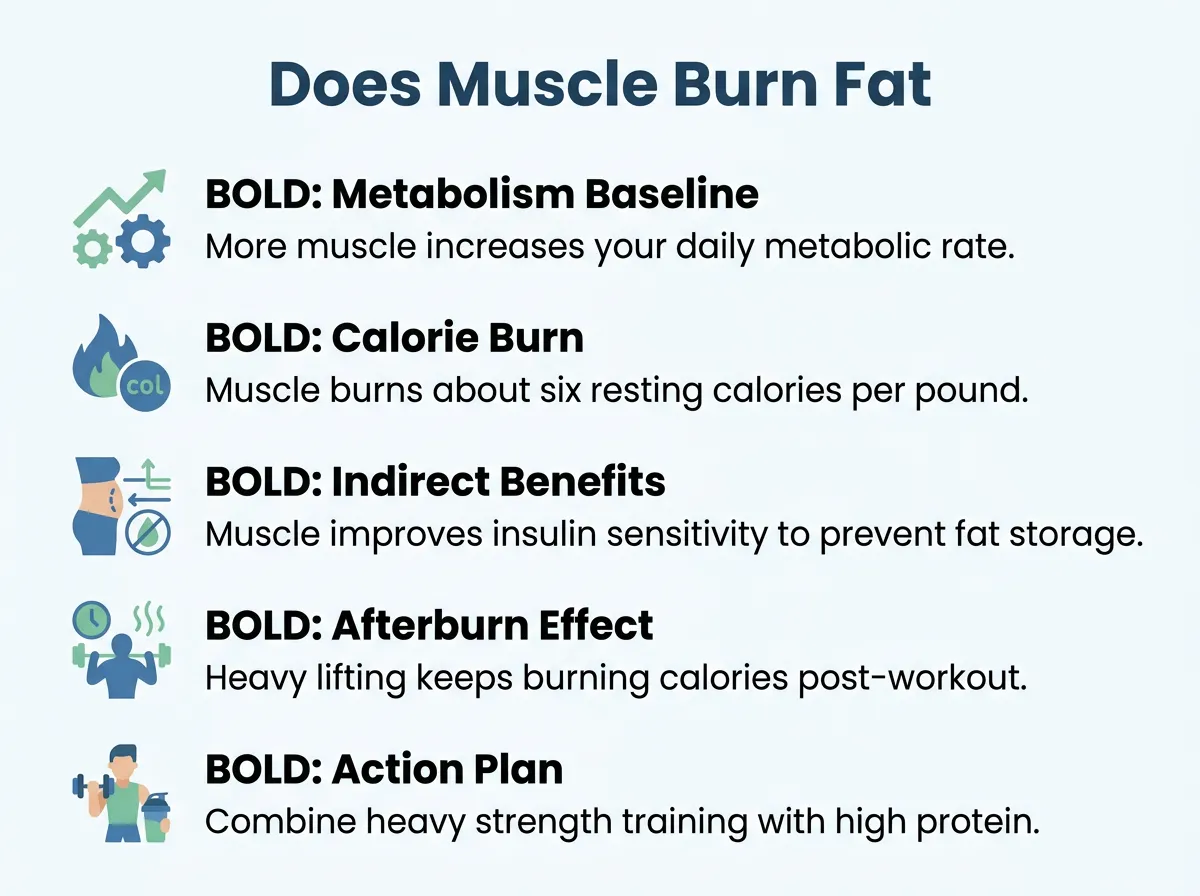
Does Muscle Burn Fat? — key points at a glance
Busting the 50-Calorie Myth
The idea that muscle burns fifty calories per pound daily is simply not true. Experts have studied this closely. As explained in a detailed article on how many calories muscle really burns, the actual number is much lower. If we believe the old myth, we will set ourselves up for disappointment. It is vital to use real numbers when planning your weight loss journey.
The Real Numbers
So, what is the real number? Science shows that one pound of muscle burns about six calories per day at rest. In contrast, one pound of fat tissue burns about two calories per day. This means muscle tissue burns three times more calories than fat tissue. While six calories may not sound like much, it adds up over time. Plus, this is just the energy used at rest. When you actually move that muscle, the calorie burn jumps up dramatically. Therefore, when people ask, “Does Muscle Burn Fat?”, the answer is yes, because muscle keeps your daily energy expenditure higher.
How Muscle Indirectly Promotes Fat Loss
Muscle does not directly grab fat cells and burn them. Instead, muscle acts as a metabolic engine. It helps create the right environment in your body for fat loss to happen. When you have more muscle, you have a larger engine that requires more fuel.
The Power of Strength Training
When you want to lose weight, you must eat fewer calories than you burn. This is called a calorie deficit. But when you are in a deficit, your body may try to burn muscle for energy instead of fat. This is where strength training comes in. A study published in PubMed Central regarding resistance training shows that lifting weights tells your body to keep its muscle. This forces your body to target fat stores for energy instead. This process keeps your metabolism from slowing down too much while you lose weight.
Cellular Communication and Fat Cells
There is also exciting science about how muscles talk to fat. Researchers have found that working muscles release tiny bubbles of information. These are called extracellular vesicles. According to research from the University of Kentucky on lifting weights and fat cells, these bubbles tell fat cells to start burning fat. This means that muscle does not just burn calories. It actually sends chemical signals that help your fat cells shrink. This is a game-changer for how we view exercise.
The Afterburn Effect (EPOC)
When you lift weights, you do not just burn calories while you are at the gym. You also burn calories long after you go home. This process is known as the afterburn effect. It is a key reason why building muscle is so helpful for fat loss.
What is EPOC?
EPOC stands for Excess Post-Exercise Oxygen Consumption. When you do intense exercise, like lifting weights or sprinting, your body uses a lot of oxygen. After you stop, your body has to work hard to recover. It needs to repair muscle fibers, restore oxygen levels, and clear out waste. This recovery process requires extra energy. As a result, your metabolism stays elevated for hours, or even days, after a tough workout.
Maximizing Your Workouts
To get the most out of EPOC, you need to challenge yourself. Light cardio is great for health, but it does not cause a big afterburn effect. Heavy resistance training or high-intensity interval training (HIIT) are much better. These workouts create micro-tears in your muscles. Repairing these tears takes energy, which helps you burn more calories even while you sleep. So, does muscle burn fat? Yes, especially through the recovery process after hard work.
Practical Tips to Build Muscle and Lose Fat
Now that you know the science, you might wonder how to put this into practice. Building muscle while losing fat is often called body recomposition. It requires a balanced approach to exercise and nutrition. Here are some simple, practical tips to help you succeed.
Pick Up the Weights
Do not rely only on cardio. Try to lift weights at least three to four times per week. Focus on compound movements. These are exercises that work multiple muscles at once. Examples include squats, lunges, push-ups, and rows. These exercises give you the best bang for your buck. They build the most muscle and burn the most calories.
Eat Enough Protein
Protein is the building block of muscle. If you do not eat enough protein, your body cannot build or repair muscle tissue. Aim to include a source of protein in every meal. Good choices include chicken, fish, tofu, beans, eggs, and Greek yogurt. Eating protein also helps you feel full, which makes it easier to stick to your diet.
Prioritize Sleep and Recovery
Muscles do not grow when you are working out. They grow when you are resting. Make sure you get seven to eight hours of quality sleep each night. Sleep is when your body releases growth hormones. These hormones are vital for muscle repair and fat loss. If you do not sleep enough, your stress hormones will rise, which can make fat loss much harder.
Conclusion
So, does muscle burn fat? The simple answer is yes, but it happens in a few different ways. Muscle tissue is metabolically active. It burns more calories than fat tissue, even when you are resting. While the daily calorie burn of resting muscle is modest, the real magic happens when you move. Strength training builds muscle, signals your fat cells to shrink, and creates a powerful afterburn effect.
If you want to lose weight and keep it off, do not just focus on the scale. Focus on building a strong, muscular body. Combine regular strength training with a high-protein diet and good sleep. By doing this, you will turn your body into an efficient, fat-burning machine. Start small, stay consistent, and enjoy the journey to a stronger you.
Frequently Asked Questions
How many calories does a pound of muscle burn?
A pound of muscle burns about six calories per day at rest. While this number is modest, it is still three times more than the calories burned by a pound of fat tissue. When you active your muscles during exercise, the calorie burn increases significantly.
Can you burn fat without building muscle?
Yes, you can burn fat simply by eating fewer calories than you expend. However, without strength training, a large portion of the weight you lose may come from muscle tissue rather than fat. Building muscle helps ensure you lose pure fat while keeping your metabolic rate high.
Does cardio burn more fat than lifting weights?
Cardio generally burns more calories per minute during the actual workout than lifting weights. However, lifting weights builds muscle, which raises your resting metabolism and burns calories long after the workout is over. A combination of both is best for overall fat loss.
How long does the afterburn effect last?
The afterburn effect, or EPOC, can last anywhere from 12 to 38 hours after an intense workout. The exact duration depends on the intensity and length of your training session. Heavy lifting and high-intensity interval training produce the longest-lasting afterburn effects.
Do you need to eat protein to burn fat?
You do not need protein to burn fat directly, but it is essential for keeping your muscle mass while losing weight. Protein also keeps you feeling full longer, which makes it easier to stick to a calorie deficit. Eating enough protein support your muscle tissues so your body burns fat instead.
Can you turn fat into muscle?
No, you cannot directly turn fat into muscle because they are two entirely different types of tissue. Fat is made of lipids, while muscle is made of protein. However, you can lose fat and gain muscle at the same time through a process called body recomposition.
