


Sweating itself does not burn fat directly, as it is merely your body’s natural way of cooling down by releasing water and salt. Any weight you lose immediately after a sweaty workout is temporary water weight, which returns once you rehydrate. To truly burn fat, you must create a calorie deficit through consistent exercise and a balanced nutrition plan.
Imagine this scenario. You just finished a killer workout. Your t-shirt is soaked. You are breathing hard, and sweat is dripping from your forehead. You step onto the scale and see that you are a whole pound lighter. It feels amazing, right? You might think that all that hard work literally melted your fat away. But is that what actually happened?
The link between sweating and weight loss is a hot topic. Many people believe that the more you sweat, the more fat you burn. This belief drives people to wear heavy layers in the summer, sit in hot saunas for hours, or turn up the heat during yoga. They want to squeeze out every drop of moisture possible. If you are asking yourself, can sweat burn fat, you must understand how the body operates. We need to look closer at how the human body regulates itself.
In this article, we will dive deep into the science of sweating. We will explore how your body regulates temperature and how it actually burns fat. You will learn the difference between losing water weight and losing real fat. Plus, we will give you some safe, practical tips to help you reach your fitness goals. Let us get started!
Key Takeaways
- Sweat is water weight: The immediate drop on the scale after sweating is just lost fluids, not fat loss.
- Cooling mechanism: Sweating is your body’s built-in cooling system designed to regulate temperature, not melt fat tissue.
- Calorie burn vs. sweat: You can burn calories and fat without sweating, just as you can sweat heavily without burning many calories.
- Intensity matters: High-intensity workouts cause you to sweat and burn more calories because your muscles are working harder.
- Hydration is key: Replacing lost fluids is crucial for overall health and keeps your metabolism running smoothly.
- Sustainable fat loss: True fat loss requires a calorie deficit achieved through proper nutrition and regular physical activity.
📑 Table of Contents
What is Sweat and Why Do We Do It?
To answer our main question, we first need to understand what sweat is. Sweat is mostly made of water. It also contains small amounts of salt, proteins, and urea. Your body has millions of tiny sweat glands spread across your skin. These glands act like a natural cooling system.
The Body’s Natural Thermostat
Think of sweat as your body’s built-in air conditioning system. When you exercise, your muscles generate a lot of heat. Your internal temperature starts to rise. To keep you safe, your brain sends a signal to your sweat glands. These glands release water onto your skin. As the air evaporates this water, it cools your skin and lowers your body temperature.
Without this system, your body would overheat quickly. This means sweating is a survival tool. It is not a fat-burning mechanism. The amount you sweat depends on many things. These include your genetics, the weather, your fitness level, and even how many sweat glands you have.
The Core Question: Can Sweat Burn Fat?
Now, let us tackle the big question: can sweat burn fat? The short answer is no. Sweating does not directly burn fat.
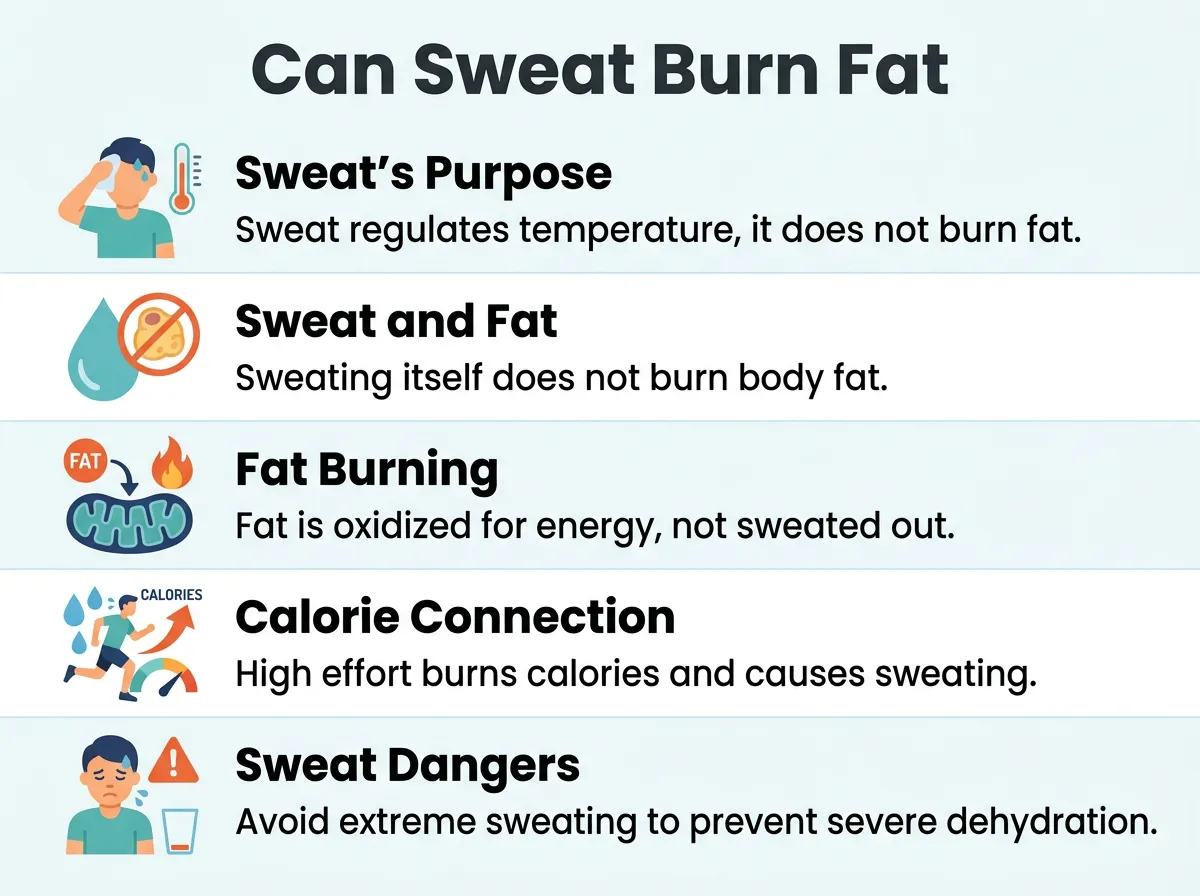
Can Sweat Burn Fat? — key points at a glance
When you step on the scale after a very sweaty workout, you might notice you weigh less. It is easy to celebrate this quick win. However, this weight loss is temporary. You have only lost water weight, not fat. According to a helpful GoodRx guide on sweating for weight loss, the scale drops because you are losing fluids, not fat tissue. Once you drink a glass of water or eat a meal, that weight will return.
Water Weight vs. Fat Loss
It is important to understand the difference between water weight and fat loss. Water weight can change very quickly. You can lose a few pounds of water in an hour of heavy sweating. But fat loss is a much slower process. It requires chemical reactions in your body to break down stored fat cells for energy. So, can sweat burn fat when you are sitting in a sauna? No, because you are only losing water, not fat cells.
If you sit in a hot room without moving, you will sweat a lot. But you will burn very few calories. This proves that sweating and fat burning are two completely different processes. To truly answer “can sweat burn fat?” we need to look at how the body uses energy.
The Science of Fat Burning (Lipolysis)
So, how does the body actually burn fat? This process is called lipolysis. It is a chemical process, not a thermal one.
How Your Body Actually Burns Fat
When you eat food, your body uses what it needs for energy. The extra energy is stored as fat in adipose tissue. To burn this fat, you must create a calorie deficit. This means you need to use more energy than you take in.
When your body needs extra energy, it breaks down these stored fat cells. They are turned into usable energy, carbon dioxide, and water. You actually breathe out most of the fat you lose as carbon dioxide! The rest leaves your body through urine and sweat. This Healthline resource on sweating and calories points out that while sweating itself does not use much energy, the activities that make you sweat do.
Sweating vs. Calorie Burning: What is the Connection?
When people ask, can sweat burn fat, they often confuse sweat with effort. The connection lies in the effort you put into your workouts.
When you work out hard, your muscles need a lot of energy. Your heart pumps faster, and you burn more calories. This intense activity also generates a lot of heat, which causes you to sweat. So, sweating is a byproduct of a hard workout, not the cause of fat loss.
Sweating Without Burning Fat
Consider this example. You sit in a hot sauna for thirty minutes. You are dripping sweat, and your heart rate might even rise slightly. You feel exhausted. However, you are burning very few calories because your muscles are not working. You are mostly just losing water. This is why we can confidently say that sweating alone does not burn fat.
Burning Fat Without Sweating
Now, consider another example. You go for a brisk walk on a cold winter day. You do not sweat at all because the cold air keeps you cool. Yet, your body is still burning calories and fat to keep you moving. As detailed in a Medical News Today article on sweating, your actual energy expenditure depends on how hard your muscles work, not how much fluid leaves your pores.
This shows that you do not need to sweat to burn fat. Sweat is simply a poor indicator of how effective your workout is. You can build muscle and lose fat in a cool, air-conditioned room without ever dripping sweat.
The Dangers of Chasing the Sweat
Some people try to force themselves to sweat more. They wear heavy clothing, use plastic suits, or turn off the fans in the gym. This can be very dangerous.
The Risk of Dehydration
When you sweat excessively without drinking water, you risk dehydration. Dehydration can cause dizziness, headaches, muscle cramps, and extreme fatigue. It also slows down your workouts, which means you will burn fewer calories in the long run.
Heat Illnesses
Forcing your body to overheat can lead to heat exhaustion or even heat stroke. These are serious medical emergencies. Your body needs to cool down to function properly. Trying to stop this process by trapping heat does not help you lose weight. It only puts your health at risk.
Practical Tips for Healthy Fat Loss
If you want to lose fat safely and effectively, stop focusing on how much you sweat. Instead, focus on these proven strategies:
1. Monitor Your Heart Rate
Instead of checking how wet your shirt is, track your heart rate. Working in your target heart rate zone ensures you are burning calories efficiently. A fitness tracker can help you monitor this.
2. Focus on Strength Training
Building muscle is one of the best ways to burn fat. Muscle tissue burns more calories than fat tissue, even when you are resting. Lifting weights might not make you sweat as much as running, but it is highly effective for long-term fat loss.
3. Hydrate Properly
Drink water before, during, and after your workouts. Staying hydrated keeps your energy levels high. It also helps your kidneys and liver process fat more efficiently.
4. Focus on Nutrition
You cannot out-exercise a bad diet. To lose fat, eat a balanced diet rich in whole foods, lean proteins, vegetables, and healthy fats. This creates the necessary calorie deficit naturally.
Conclusion
In summary, while sweating is a sign that your body is working hard, it is not the magic key to fat loss. Ultimately, can sweat burn fat? No, because sweat is just water weight leaving your body to keep you cool. It is a temperature control system, not a fat-melting system.
True fat loss comes from a healthy lifestyle. Focus on consistent exercise, strength training, and a balanced diet. Do not worry about how dry your t-shirt is at the end of the day. As long as you are moving your body and eating well, you are on the right path to achieving your goals. Stay safe, stay hydrated, and keep moving!
Frequently Asked Questions
Is sweating a sign of a good workout?
Sweating is a sign that your body temperature has risen, which often happens during hard work. However, you can still have an excellent, fat-burning workout in a cool room without sweating much at all.
Does wearing a sweat suit burn more fat?
No, wearing a sweat suit only increases water loss through excessive sweating, which can lead to dangerous dehydration. It does not increase the amount of fat your body burns during exercise.
How can I tell if I am burning fat?
You can tell you are burning fat by tracking your body measurements, checking how your clothes fit, and monitoring your body fat percentage over time. A scale alone cannot distinguish between fat loss and water loss.
Why do some people sweat more than others?
Sweat rates vary based on genetics, gender, fitness level, and the environment. People who are highly fit often sweat sooner and more copiously because their bodies have become highly efficient at cooling down.
Can you lose weight just by sweating in a sauna?
You will lose weight in a sauna, but it is entirely water weight. Once you rehydrate by drinking water, you will immediately regain the weight you lost.
Does sweating detox your body?
Sweat is made of 99% water and small amounts of salt. Your liver and kidneys are the primary organs responsible for filtering and removing toxins from your body, not your sweat glands.
