


Yes, cold showers can help burn fat, but the effect is indirect and modest. Cold exposure activates brown adipose tissue (brown fat), which burns calories to generate body heat. While this boost in metabolism supports weight management, cold showers must be paired with a healthy diet and regular exercise to produce noticeable, long-term weight loss results.
Imagine waking up, walking into the bathroom, and turning the shower dial all the way to blue. The freezing water hits your skin. Your breath catches, and your heart races. You might wonder why anyone would willingly put themselves through this torture. Yet, in recent years, biohackers and fitness enthusiasts have praised icy showers as a secret weapon for melting away stubborn body fat. But is this trend too good to be true?
Many people trying to slim down find themselves asking: Do Cold Showers Burn Fat? While the idea of freezing your fat away sounds like a dream, the truth is a bit more complex. In this article, we will dive deep into the real science behind cold exposure, how it affects your metabolism, and whether taking the plunge can actually help you achieve your weight loss goals.
Key Takeaways
- Brown fat activation: Cold temperatures stimulate brown adipose tissue, which burns energy to keep you warm.
- Modest calorie burn: The metabolic boost from a cold shower is real but relatively small on its own.
- Better insulin sensitivity: Regular cold exposure may help regulate blood sugar levels and fat storage.
- Mental discipline and energy: Shivering in cold water releases endorphins, boosting mood and workout focus.
- Not a magic cure: Cold showers support fat loss but cannot replace a healthy diet and active lifestyle.
- Safety first: Start slowly with cool water to avoid cold shock and protect your heart.
📑 Table of Contents
- Understanding the Science of Cold Exposure
- Do Cold Showers Burn Fat? The Direct and Indirect Impacts
- How Many Calories Do You Actually Burn?
- Additional Health Benefits of Shivering in the Shower
- How to Start a Cold Shower Routine for Fat Loss
- Safety Tips and Who Should Avoid Cold Showers
- Conclusion: The Bottom Line on Cold Water Therapy
Understanding the Science of Cold Exposure
To understand how cold water affects the body, we have to look closely at our fat cells. Most people think of body fat as a single, unwanted tissue. In reality, our bodies contain different types of fat, and they act in completely different ways.
White Fat vs. Brown Fat
White adipose tissue, or white fat, is the type of fat we are most familiar with. It stores excess energy and sits around our belly, hips, and thighs. Having too much white fat is linked to health issues. On the other hand, brown adipose tissue, or brown fat, is very different. It is packed with mitochondria, which are the powerhouses of your cells. Brown fat’s main job is to generate heat to keep your body warm. It does this by burning calories, including the energy stored in white fat.
What is Thermogenesis?
When you get cold, your body wants to maintain its core temperature of 98.6°F. To do this, it triggers a process called thermogenesis. Your body can produce heat by shivering, which is rapid muscle contraction. However, it also uses non-shivering thermogenesis, where brown fat burns stored fat to create heat directly. This process turns your body into a temporary furnace.
Do Cold Showers Burn Fat? The Direct and Indirect Impacts
So, let us answer the big question: Do Cold Showers Burn Fat? The short answer is yes, but not in the way most people think. A cold shower does not magically wash away fat cells. Instead, the cold water acts as a mild stressor that triggers your body’s survival mechanisms.
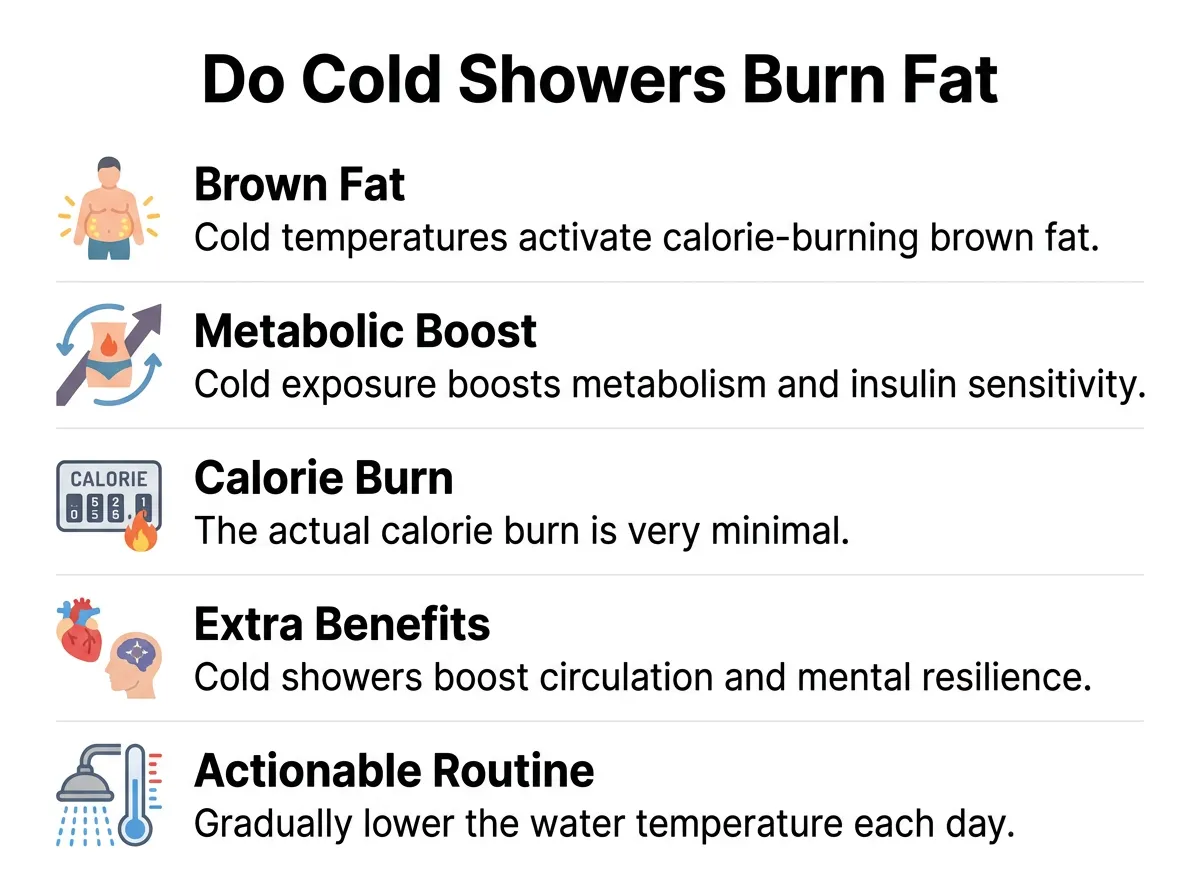
Do Cold Showers Burn Fat? — key points at a glance
According to the GoodRx guide on cold showers, the primary way cold exposure helps with fat loss is by activating your brown fat. When brown fat is activated by cold water, it starts burning glucose and lipids to produce heat. This means you are actively burning fat just to stay warm. Additionally, recent clinical studies on cold exposure show that regular cold therapy can improve insulin sensitivity. This means your body becomes better at handling glucose, which reduces insulin spikes and helps prevent your body from storing extra sugar as white fat.
Cold vs. Hot Showers for Weight Loss
When comparing the two, hot showers have their own benefits, like muscle relaxation and stress relief. However, when we look at a cold shower vs hot shower comparison, cold showers are the clear winner for metabolic health. Hot water does not activate brown fat or trigger thermogenesis, meaning it has zero direct impact on your calorie burn.
How Many Calories Do You Actually Burn?
It is important to keep our expectations realistic. Some fitness influencers claim that a simple cold shower can burn hundreds of extra calories. Unfortunately, the real numbers are much lower.
The Realistic Calorie Count
Standing under cold water for 5 to 10 minutes will likely only burn an extra 10 to 30 calories. The exact number depends on your weight, how cold the water is, and how much brown fat you have. While that may not sound like much, these small numbers can add up over weeks and months of daily practice.
The Afterburn Effect
Your metabolism does not slow down the second you turn off the water. Your body has to work hard to warm itself back up to room temperature. This post-shower warming process keeps your metabolic rate elevated for a short time, giving you a small, extra metabolic boost. However, you should not rely on this as your main way to burn calories.
Additional Health Benefits of Shivering in the Shower
Even if the calorie burn is modest, cold therapy offers several other fantastic benefits. These perks can indirectly make your weight loss journey much easier.
Improved Energy and Mood
Cold water causes your body to release a rush of hormones, including noradrenaline and endorphins. This hormonal surge gives you a natural energy boost and lifts your mood. This mental clarity can make you feel more motivated to hit the gym or prep a healthy meal. You can learn more about these physical and mental perks from the benefits of cold showers as popularized by cold-therapy experts.
Enhanced Muscle Recovery
Many athletes use cold therapy to reduce muscle soreness after intense workouts. A cold shower can reduce inflammation and help your muscles heal faster. When your muscles recover quickly, you can stay consistent with your exercise routine, which is key to long-term weight loss.
How to Start a Cold Shower Routine for Fat Loss
You do not need to dive into an icy lake to get results. You can easily start a safe and effective cold shower routine at home. Here is a simple, step-by-step guide to help you build the habit.
Step 1: Start with Warm Water
Take your normal, warm shower first. Wash your hair and body as you normally would. There is no need to suffer through the entire shower.
Step 2: The Cool Down
For the last 30 seconds of your shower, turn the dial down to cool. Let the water run over your chest, shoulders, and back. Focus on taking deep, slow breaths to keep yourself calm and control the gasp reflex.
Step 3: Progressive Overload
Over the next few weeks, slowly make the water colder and stay under it longer. Aim to reach 2 to 3 minutes of cold exposure. Consistent, daily practice is much more important than trying to freeze yourself for 10 minutes on day one.
Safety Tips and Who Should Avoid Cold Showers
Cold water therapy is generally safe for most healthy people. However, cold water shock is real. When cold water hits your skin, your heart rate and blood pressure spike instantly.
Who Should Consult a Doctor?
If you have a history of heart disease, high blood pressure, or poor circulation, you should skip the cold showers until you talk to your doctor. The sudden stress on your cardiovascular system can be dangerous for some individuals.
Listen to Your Body
If you start shivering uncontrollably, feel dizzy, or notice your fingers turning blue, turn off the water immediately. Get warm and dry yourself off. There is no need to push through extreme discomfort to get the benefits.
Conclusion: The Bottom Line on Cold Water Therapy
So, let us bring it all together. Do Cold Showers Burn Fat? Yes, cold showers do help burn fat by activating brown adipose tissue, increasing calorie burn, and improving insulin sensitivity. However, they are not a magical cure for weight loss. You cannot out-shower a poor diet or a sedentary lifestyle.
Think of cold showers as a helpful tool in your wellness toolbox. When you pair them with a nutritious diet, regular physical activity, and good sleep, they can give your weight loss efforts a steady, natural boost. Plus, the mental strength you build from facing the cold every morning will help you stay disciplined in all other areas of your life.
Frequently Asked Questions
Do cold showers burn belly fat?
Cold showers do not target specific areas like belly fat directly. Instead, they activate brown fat, which burns calories across your whole body to keep you warm, helping with overall fat loss.
How long should a cold shower be to burn fat?
To see metabolic benefits, you should aim for 2 to 5 minutes of cold water exposure at the end of your shower. Starting with just 30 seconds is a great way to build up your tolerance safely.
Can cold showers replace exercise for weight loss?
No, cold showers cannot replace exercise or a healthy diet. The extra calorie burn from cold water is very small, so it should only be used to support your active lifestyle.
Is it better to take a cold shower in the morning or at night?
Morning is usually best because the cold water triggers a release of cortisol and adrenaline, which boosts your energy, alertness, and mood for the day ahead.
How cold does the water need to be to activate brown fat?
The water needs to be noticeably cold, usually around 50°F to 60°F (10°C to 15°C). It should feel uncomfortably cold but not painfully freezing.
Can cold showers boost your metabolism permanently?
No, the metabolism boost from a cold shower is temporary and lasts for a short time after you warm up. You must take cold showers consistently to enjoy long-term benefits.
