


L-Carnitine plays a vital role in moving fatty acids into your cells to be burned for daily energy, but it is not a magic weight loss pill on its own. While it can support your metabolism and improve exercise performance, you still need a healthy diet and regular physical activity to see significant fat loss. Combining this supplement with consistent workouts yields the best results for shedding stubborn fat.
Imagine walking down the supplement aisle at your local health store. Colorful bottles line the shelves from top to bottom. Each one promises to help you get lean, build strong muscle, or boost your energy levels. Among the flashy labels, you will almost certainly spot one ingredient over and over again: L-Carnitine. It is highly praised by fitness influencers, athletes, and gym-goers alike. But behind all the marketing hype, does it actually do what it claims?
It is completely normal to feel a bit skeptical about these claims. The world of weight loss supplements is full of empty promises and expensive trends. You want to make sure you are putting safe, effective things into your body. In this guide, we will look deep into the science behind this popular compound. We will explore how your body uses it, what the clinical research says, and how you can make it work for you. Let us dive in and find out if this is the missing piece in your daily fitness journey.
Key Takeaways
- Cellular Shuttle: L-Carnitine acts as a transporter that carries fat cells into the mitochondria to be burned for fuel.
- No Miracle Cure: It will not melt fat away on its own without a calorie deficit and regular exercise.
- Better Workouts: It helps boost workout endurance and speeds up muscle recovery after tough training sessions.
- Food Sources: You can get it naturally from animal products like red meat, fish, and dairy.
- Dosing and Timing: Taking 1 to 2 grams daily, about 30 to 45 minutes before a workout, offers the most benefit.
- Synergy with Carbs: Consuming it with healthy carbohydrates can help improve muscle absorption.
📑 Table of Contents
Understanding L-Carnitine: What Is It?
Before we look at its weight loss benefits, let us define what this compound actually is. Many people call it an amino acid. While it has a similar chemical structure, it is actually a vitamin-like substance. Your body makes it naturally, and it plays a vital role in daily energy production.
How the Body Produces It
Your body is incredibly smart. It creates its own supply in your liver and kidneys. To do this, it uses two essential amino acids called lysine and methionine. It also requires plenty of Vitamin C to complete the process. Once made, your body stores most of it in your muscles, heart, and brain. These are the areas that need the most energy to function well. If you want to learn more about the basic biology of this compound, check out this comprehensive guide on L-Carnitine benefits.
The Main Types of Carnitine
When you shop for supplements, you will see a few different forms. Each form has a slightly different focus in the body:
- L-Carnitine L-Tartrate: This is the most common form found in sports supplements. It absorbs quickly and is great for muscle soreness and exercise recovery.
- Acetyl-L-Carnitine (ALCAR): This form can cross the blood-brain barrier. It is often used to boost brain power, focus, and memory.
- Propionyl-L-Carnitine: This type is great for blood flow and cardiovascular health. It is often used for blood pressure issues.
For fat loss and exercise performance, L-Carnitine L-Tartrate is usually the top choice. It targets your physical energy systems directly.
The Science of Fat Burning: How It Works
To understand the core question, “Does L Carnitine Burn Fat?”, we have to look inside our cells. Your body is constantly looking for ways to create energy. It can use carbs, proteins, or fats. L-Carnitine acts as a key player in this energy-making process.
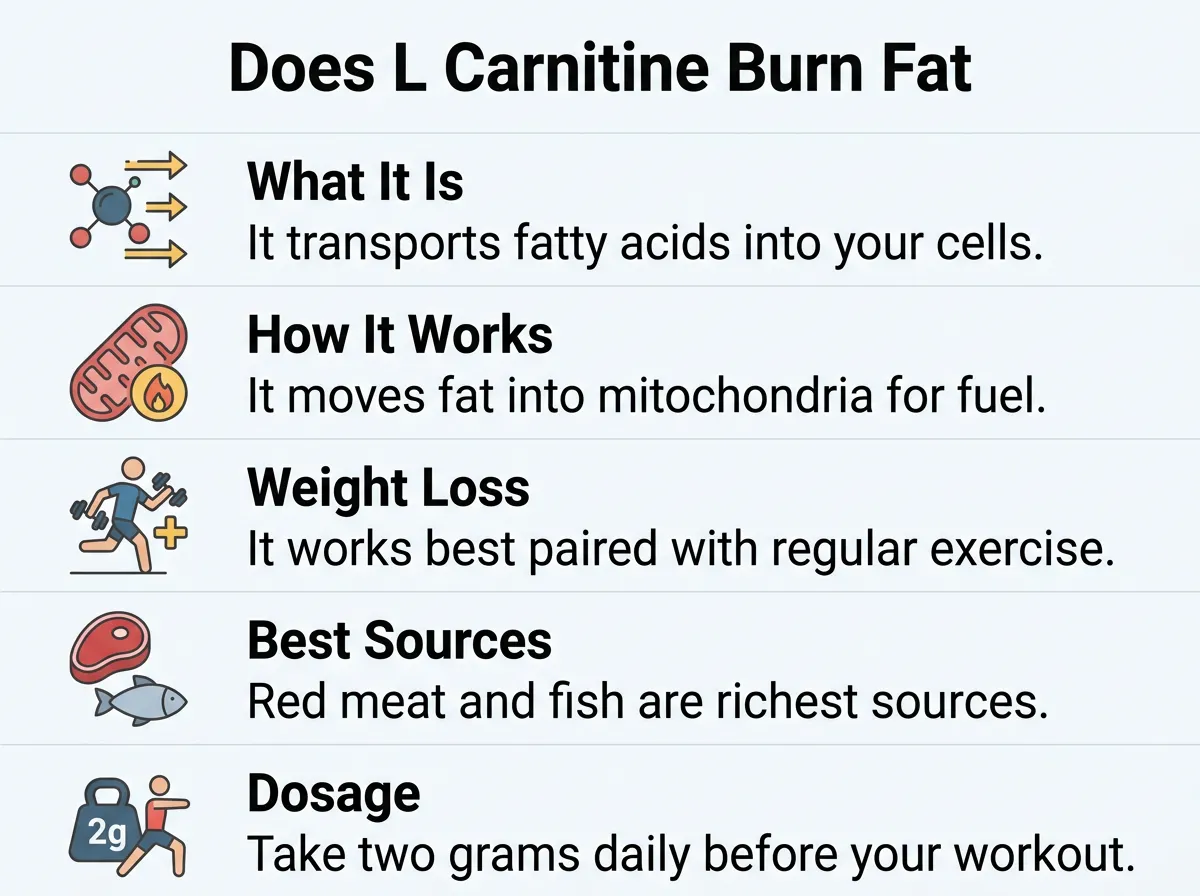
Does L Carnitine Burn Fat? — key points at a glance
The Mitochondrial Shuttle System
Think of your cells as tiny cities. Inside these cities are power plants called mitochondria. The mitochondria take nutrients and turn them into usable energy. However, fat cells cannot just walk into the mitochondria on their own. They are too large to pass through the cell walls freely.
This is where L-Carnitine comes to the rescue. It acts like a high-speed shuttle bus. It binds to fatty acids in your blood. It then carries them across the cell membrane directly into the mitochondria. Once inside, the fats are burned for fuel. Many experts refer to it as the ultimate transporter. You can read more about how this mechanism works in this detailed review of the fat transporter myth and science.
Energy Production and Endurance
Because it helps burn fat for fuel, it also boosts your workout performance. When your muscles use fat for energy, they save their stored carbs. This means you can exercise longer before feeling tired. More energy during workouts leads to more calories burned. It is a wonderful cycle that supports your overall fitness goals.
Does L-Carnitine Actually Help You Lose Weight?
Now, let us tackle the main question directly. Does L Carnitine Burn Fat when you take it as a supplement? The short answer is yes, but it requires teamwork. It is not a magic wand that melts fat while you sit on the couch. It is an assistant that makes your hard work more effective.
What the Clinical Research Says
Scientists have conducted many studies on this topic. When researchers look at the data, they see clear patterns. A major scientific review analyzed multiple clinical trials. It found that people taking the supplement lost significantly more weight than those who took a dummy pill. You can view the details of this research in this meta-analysis on L-Carnitine and weight loss. The weight loss was modest but highly consistent. This shows that the supplement provides a real, measurable edge.
The Role of Diet and Exercise
Here is the honest truth: L-Carnitine needs fatty acids to transport. If you are eating excess calories and not moving, your body will not need to burn fat for fuel. The shuttle buses will sit idle in the parking lot. To activate this supplement, you must create a demand for energy. You do this through a balanced, calorie-controlled diet and regular exercise. When you combine these three elements, the results can be truly amazing.
Natural Food Sources vs. Supplements
You do not always need to buy pills or powders to get this compound. You can easily get it through your daily diet. Let us compare natural food sources with dietary supplements.
Best Dietary Sources
The word carnitine actually comes from the Latin word “carnis,” which means flesh. As you might guess, animal products are the best sources. Here is a quick breakdown of foods rich in this nutrient:
- Beef: The absolute best source, providing about 80 to 140 mg per three-ounce serving.
- Pork: A solid option, offering around 20 to 30 mg per serving.
- Chicken: Contains about 3 to 5 mg per serving.
- Whole Milk: Provides about 3 to 4 mg per glass.
- Codfish: A great seafood option, containing around 4 to 7 mg per serving.
If you eat a balanced diet with plenty of red meat, your body likely has good levels of carnitine. However, vegetarians and vegans often have much lower levels. For them, taking a supplement can be incredibly helpful.
Who Benefits Most from Supplementing?
While anyone can use it, certain groups will see the biggest difference. Vegetarians and vegans will notice a boost in energy. Older adults also benefit, as natural levels drop as we age. Finally, active gym-goers who want to push their workouts to the next level will find it highly useful.
How to Take L-Carnitine for Best Results
If you decide to try this supplement, you want to use it correctly. Proper dosing and timing will help you get the most value for your money. Here are some simple, practical tips.
Recommended Dosages
The standard, safe dose for daily use is between 1,000 mg and 2,000 mg. It is best to start with a lower dose of 500 mg. This allows your body to get used to it. You can slowly increase the amount over a few weeks. Always read the label on your specific product, as concentrations can vary.
Optimal Timing and Synergy
Timing can make a big difference in how your body absorbs this nutrient. Here is a simple routine to follow:
- Before Workouts: Take your dose 30 to 45 minutes before you exercise. This ensures it is active in your bloodstream when you start.
- Pair with Carbs: Try taking it with a small meal or a shake that contains healthy carbohydrates. Carbs spike your insulin levels. This spike helps shuttle the carnitine directly into your muscle cells where it is needed most.
- Be Consistent: Take it daily, even on rest days. Consistency helps build up the storage levels in your muscles over time.
Potential Side Effects and Safety Tips
For most healthy people, this supplement is very safe. It has been studied extensively for years. However, like anything you consume, it is important to be aware of how your body reacts.
Common Mild Side Effects
If you take too much, you might experience mild digestive issues. These can include a mild stomach ache, nausea, or loose stools. To avoid this, keep your doses reasonable and take it with food. Some people also notice a mild odor if they take very high doses. Keeping your daily intake under 2,000 mg usually prevents this completely.
Who Should Avoid It?
While safe for most, some individuals should talk to a doctor first. If you have kidney disease, thyroid issues, or a history of seizures, seek medical advice before starting. Pregnant or nursing women should also consult their healthcare provider.
Conclusion
So, does L-Carnitine burn fat? It certainly does, but it is a reliable teammate rather than a solo superstar. It works by acting as a cellular shuttle, delivering fat cells to your mitochondria to be burned for daily fuel. It helps boost your workout stamina and speeds up muscle recovery. However, it still requires your effort. To see real fat loss, you must pair it with a healthy diet and a fun, active workout plan. If you are ready to put in the work, this supplement can be a fantastic tool to help you reach your goals faster. Stay consistent, eat well, keep moving, and let your body do the rest!
Frequently Asked Questions
How long does L-Carnitine take to work?
You may feel an increase in physical energy and stamina within a few days of starting the supplement. However, visible fat loss results typically take four to six weeks of consistent use. This timeline requires combining the supplement with a balanced diet and regular workouts.
Can I take L-Carnitine without working out?
Yes, you can take it without working out, but you will not see significant fat-burning results. The supplement acts as a shuttle that transports fats when your body demands extra energy. Without exercise to create that demand, the extra carnitine will not have a major impact on weight loss.
Does L-Carnitine cause hair loss?
No, there is no scientific evidence linking this supplement to hair loss. In fact, some studies suggest that certain forms like Acetyl-L-Carnitine may support hair follicle health and growth. It is generally considered very safe for hair and skin health.
What is the best time of day to take L-Carnitine?
The best time to take it is about thirty to forty-five minutes before your daily workout. Taking it with a meal containing carbohydrates can also improve how well your muscles absorb it. On rest days, you can take it in the morning with your breakfast.
Can I get enough L-Carnitine from food alone?
If you regularly eat red meat, fish, and dairy, your body likely gets a sufficient amount naturally. However, vegetarians, vegans, and older adults may have lower levels and benefit greatly from supplements. For active weight loss, a supplement offers a concentrated dose that is hard to get from food alone.
Is it safe to take L-Carnitine every day?
Yes, taking it every day is safe for most healthy adults when you stick to the recommended dosage of one to two grams. Consistent daily intake is actually recommended to keep muscle storage levels high. Always consult your doctor if you have pre-existing health conditions like kidney or thyroid issues.
