


Yes, muscle training is highly effective for burning fat both during and long after your workout. By building lean muscle tissue, you naturally increase your resting metabolism, which allows your body to burn more calories around the clock. Combining resistance training with a balanced diet is the most sustainable way to achieve permanent fat loss.
Imagine walking into a gym for the first time in months. You want to shed some extra weight, feel lighter, and get lean. Your eyes dart between two options. On one side, you see rows of people jogging on treadmills, looking bored and sweaty. On the other side, you see people lifting dumbbells, kettlebells, and barbells. Most people default to the cardio machines because they believe sweating is the only way to melt away tissue. But a quiet shift is happening in the fitness world. More and more people are asking: does muscle training burn fat better than traditional cardio?
For decades, we were told that running was the only path to a slimmer waistline. We were told to avoid weights because they would make us bulky. Today, we know better. Science has revealed how weight training completely reshapes your body. In this guide, we will explore the wonderful relationship between lifting weights and losing fat. We will explain how your body uses energy, how muscle burns fat, and how you can start your own simple lifting routine today.
Key Takeaways
- Metabolic Boost: Lean muscle tissue naturally burns more daily calories at rest than body fat does.
- The Afterburn Effect: Intense muscle workouts keep your body burning extra calories for up to 48 hours.
- Body Recomposition: Lifting weights allows you to lose pure fat while keeping your attractive, shapely muscles.
- Better Insulin Sensitivity: More muscle helps your body store carbohydrates in muscles rather than as fat.
- Sustainable Progress: Muscle training prevents the severe metabolic crash that often comes with crash diets.
- Functional Strength: Building muscle protects your joints, improves your posture, and makes daily life easier.
📑 Table of Contents
How Muscle Training Triggers Fat Loss
To answer the big question, does muscle training burn fat, we must look at how our bodies spend energy. Every single day, your body burns a set number of calories just to keep you alive. This is called your resting metabolic rate. Your brain, heart, lungs, and muscles all require constant fuel to function. The exciting news is that you can actively change how many calories your body burns at rest.
The Active Nature of Muscle Tissue
Muscle tissue is highly active. It requires a lot of energy just to exist. On the other hand, fat tissue is mostly passive. It is simply stored energy waiting to be used. When you build new muscle, you increase your body’s daily energy demands. One pound of muscle burns about six calories a day at rest. One pound of fat burns only about two calories a day. While that might seem like a small difference, it adds up over weeks, months, and years. Does muscle training burn fat? Yes, because it builds a bigger, more active engine inside your body.
The Science of Energy Expenditure
When you lift weights, your muscles contract against resistance. This contraction requires a fuel called adenosine triphosphate, or ATP. To create ATP, your body must break down stored sugars and fats. This means that during your actual workout, your body is actively burning fuel. But the real magic happens once you put the weights down and go home.
The Magic of the Afterburn Effect
Many people wonder, does muscle training burn fat as well as running if you do not sweat as much? The secret weapon of muscle training is something scientists call EPOC. This stands for Excess Post-Exercise Oxygen Consumption. In simple terms, it is the afterburn effect.
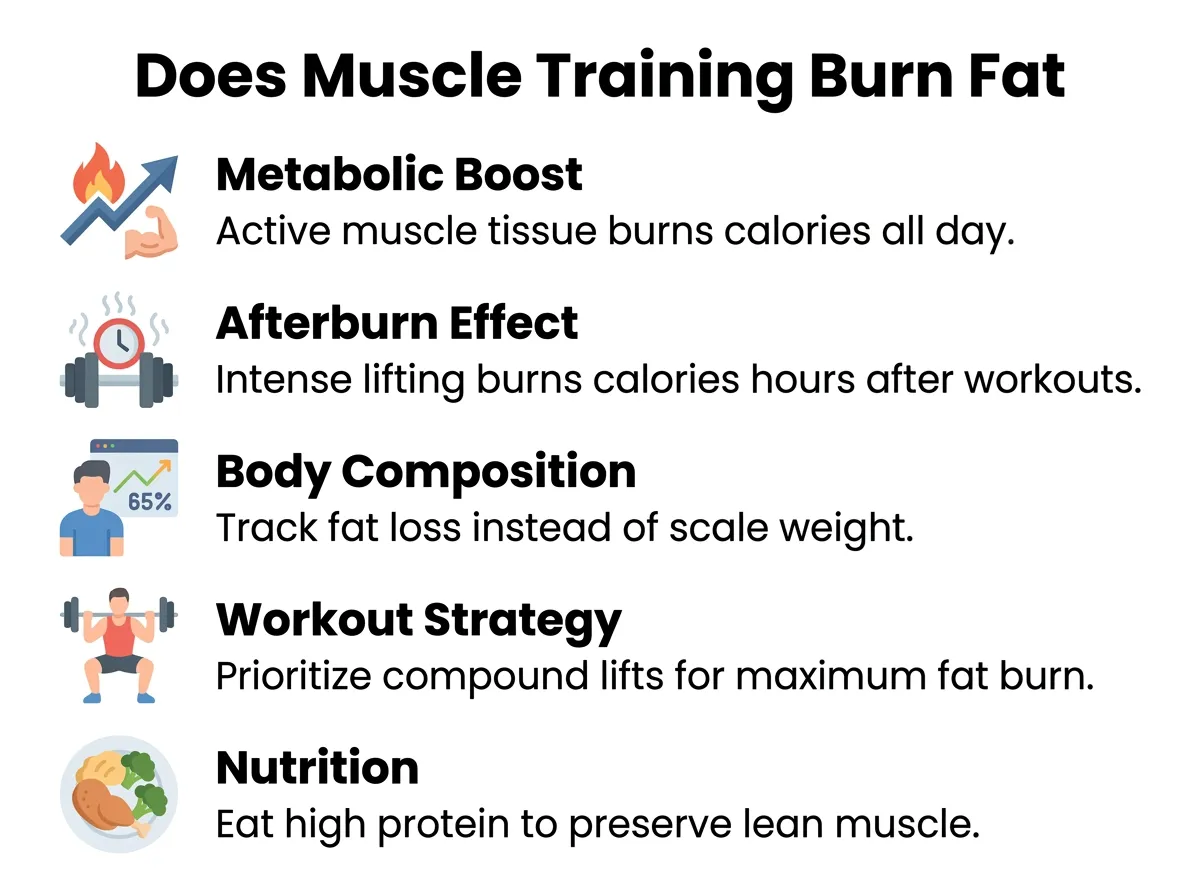
Does Muscle Training Burn Fat? — key points at a glance
What is EPOC?
When you do steady cardio, your body stops burning extra calories almost as soon as you step off the machine. Your heart rate quickly returns to normal. However, lifting weights creates tiny, healthy micro-tears in your muscle fibers. Your body has to work incredibly hard to repair these fibers. It must pump oxygen, synthesize protein, and restore balance. This repair process takes a lot of energy. This means your metabolism stays elevated for up to 24 to 48 hours after your session. Does muscle training burn fat while you sleep? It absolutely does, thanks to this afterburn effect.
How to Maximize the Afterburn
To get the biggest afterburn effect, you should focus on challenging workouts. Lifting very light weights for hundreds of repetitions will not trigger a high level of EPOC. Instead, you want to lift weights that make the last few repetitions of your set feel difficult. This challenge is what forces your body to adapt, repair, and burn extra calories for hours afterward.
Muscle vs. Fat: The Truth About Body Weight
Does muscle training burn fat in a way that shows up on the scale? This is where many people get confused. They start lifting weights, they look leaner in the mirror, but the scale does not move. Sometimes, the scale even goes up a little bit. This can be highly frustrating if you do not understand what is happening.
The Density Difference
You have probably heard the phrase that muscle weighs more than fat. This is not strictly true. A pound of feathers weighs the same as a pound of bricks. However, muscle is much denser than fat. One pound of muscle takes up about 18 percent less space than one pound of fat. If you lose five pounds of fat and gain five pounds of muscle, your weight will stay the exact same. But your body will look completely different. Your waist will be smaller, your clothes will fit better, and your arms will look toned. This process is called body recomposition.
Why the Scale Can Lie
The scale is a very simple tool. It cannot tell the difference between water, muscle, bones, and fat. When you begin a weight program, your muscles store extra water to help with the repair process. This temporary water weight can mask your fat loss. If you only look at the scale, you might think your program is failing. Instead, measure your progress by how your clothes feel, how you look in photos, and how much stronger you feel.
Designing a Fat-Burning Muscle Program
Now that we know the answer to our main question, does muscle training burn fat, we need to talk about action. How do you design a workout program that maximizes fat loss? You do not need to spend hours in the gym every day. In fact, three short sessions a week can produce incredible results.
Choose Compound Movements
If you want to burn fat, you must prioritize compound exercises. These are movements that use multiple joints and large muscle groups at the same time. Examples include squats, lunges, push-ups, rows, and deadlifts. Doing a bicep curl only uses a tiny muscle. Doing a squat uses your glutes, quadriceps, hamstrings, and core. More muscles working means more energy spent, which leads to faster fat loss.
Use Progressive Overload
To keep burning fat, you must keep challenging your body. If you lift the same ten-pound dumbbells for the next year, your body will adapt. It will stop building new muscle and stop burning extra calories. You must practice progressive overload. This means slowly increasing the challenge over time. You can do this by adding a little more weight, performing more repetitions, or resting less between sets.
Sample Weekly Routine
Here is a simple, highly effective three-day routine you can do at home or at the gym:
- Monday (Lower Body & Core): Goblet squats, reverse lunges, glute bridges, and planks.
- Wednesday (Upper Body & Core): Push-ups, dumbbell rows, overhead presses, and side planks.
- Friday (Full Body): Dumbbell deadlifts, chest presses, split squats, and lat pulldowns.
Perform each exercise for three sets of 8 to 12 repetitions. Rest for one minute between sets. Focus on slow, controlled movements.
Nutrition Secrets to Support Muscle Growth and Fat Loss
Does muscle training burn fat if you eat whatever you want? Sadly, no. You cannot out-train a poor diet. If you eat more calories than your body needs, you will still store fat, no matter how hard you lift. To get the best results, you need to pair your training with simple, healthy nutrition choices.
Prioritize Protein
Protein is the building block of muscle. When you are trying to lose fat, eating enough protein is crucial. Protein does two amazing things. First, it helps preserve your muscle tissue while you are eating fewer calories. Second, protein is highly satiating. It keeps you feeling full and satisfied, which stops you from snacking on junk food. Excellent sources of protein include chicken breast, turkey, eggs, Greek yogurt, tofu, and fish.
Manage Your Caloric Balance
To lose fat, your body must be in a slight caloric deficit. This means you consume slightly fewer calories than you burn. Avoid extreme diets that starve your body. If you cut your calories too drastically, your body will panic. It will begin to break down your hard-earned muscle tissue for energy. This slows down your metabolism and stops fat loss in its tracks. Instead, aim for a small, gentle deficit that you can easily maintain for months.
Conclusion
Let us take a final look at our core question: does muscle training burn fat? The answer is a clear and resounding yes. While cardio is great for your heart health, muscle training is the ultimate tool for reshaping your body and boosting your metabolism. By building lean muscle, you turn your body into a fat-burning machine that works for you every minute of the day. Do not be afraid of the weight room. Embrace the weights, feed your body with nutritious food, and watch your body transform.
Frequently Asked Questions
Does muscle training burn fat faster than cardio?
Yes, muscle training is often faster for long-term fat loss because it raises your resting metabolism. While cardio burns calories during the workout, lifting weights keeps your body burning calories for up to 48 hours afterward. Combining both methods gives you the best of both worlds.
Will lifting weights make me look bulky?
No, lifting weights will not make you bulky unless you are actively trying to gain massive size. Building bulk requires a massive surplus of calories and specific heavy training over many years. For most people, muscle training simply creates a lean, toned, and firm appearance.
How many times a week should I lift weights to lose fat?
You should aim to lift weights three to four times a week for optimal fat loss. This frequency allows you to stimulate all your major muscle groups while giving your body enough time to rest and recover. Consistency is far more important than working out every single day.
Can I build muscle and lose fat at the same time?
Yes, this process is known as body recomposition. It is highly common for beginners, people returning to exercise after a long break, or those with a higher body fat percentage. You can achieve this by lifting weights regularly and eating a high-protein diet with a small calorie deficit.
Do light weights with high reps burn more fat?
No, lifting very light weights for high repetitions is not the most effective way to burn fat. To stimulate muscle growth and trigger the afterburn effect, you need to lift weights that challenge your muscles. Aim for weights where you can comfortably complete 8 to 15 repetitions with good form.
Should I do cardio before or after muscle training?
You should do your muscle training first when your energy levels are highest. Lifting weights requires a lot of focus and physical strength, so you want your muscles to be fresh. Doing cardio afterward ensures you do not compromise your lifting form or safety.
