


Burning fat and building muscle at the same time is known as body recomposition. You can achieve this by eating a slight calorie deficit, consuming plenty of protein, and lifting weights regularly. This approach helps you lose fat while shaping your body with strong, lean muscle.
Have you ever looked in the mirror and felt confused? You want to lose a few pounds. But you also want to look toned and strong. Often, we are told we must choose just one goal. We think we have to shrink first, then bulk up later. This back-and-forth can feel like a never-ending cycle. It can leave you feeling tired and stuck in the same place.
But what if you did not have to choose? What if you could do both at the same time? It sounds like a dream. However, it is a real method used by fitness pros every day. If you want to know how to burn fat and gain muscle, you have come to the right place. If you want to learn how to burn fat and gain muscle, you are in the right place. This guide will show you how to transform your body without losing your mind.
We will break down the science of this process. We will look at what to eat, how to train, and how to rest. You do not need to be a pro athlete to make this work. With some simple shifts in your daily habits, you can reach your goals. Let us dive in and learn the best way to shape your body.
Key Takeaways
- Eat a Slight Calorie Deficit: Do not starve yourself. A small deficit of 200 to 300 calories is perfect for body recomposition.
- Prioritize Protein: Consume plenty of protein to protect your muscles while losing fat.
- Lift Weights Regularly: Focus on strength training three to four times a week to stimulate muscle growth.
- Limit but Use Cardio: Do not overdo cardio. Use it as a tool, not the main focus of your workouts.
- Get Quality Sleep: Aim for seven to eight hours of sleep each night to help your muscles heal and grow.
📑 Table of Contents
The Science of Body Recomposition
Many people think you cannot build new tissue while losing old tissue. They believe you must either eat a lot to grow or starve to get thin. But your body is smarter than that. This dual process of changing your fat-to-muscle ratio is called body recomposition. It is all about giving your body the right signals.
Fueling Your Body Right
To lose fat, you need to burn more energy than you take in. This is called a calorie deficit. To build muscle, your body needs extra energy. This sounds like a conflict. But here is the secret. Your body can use your stored fat as fuel to build that new muscle. To do this, you must keep your calorie deficit very small. A deep cut in food will make your body burn muscle for fuel instead. If you want to master how to burn fat and gain muscle, you must feed your body just enough to thrive.
The Power of Protein
Protein is the building block of your body. When you eat less food, protein keeps your muscles safe. It tells your body to burn fat instead of muscle. Protein also keeps you feeling full for a long time. This makes it much easier to stick to your food plan. You should try to eat protein with every single meal. Good sources include chicken, fish, eggs, tofu, and beans.
Smart Nutrition Strategies
Now that you know the science, let us talk about your plate. You do not need a strict diet to see results. You just need a smart plan. Knowing how to burn fat and gain muscle starts with what you buy at the grocery store.
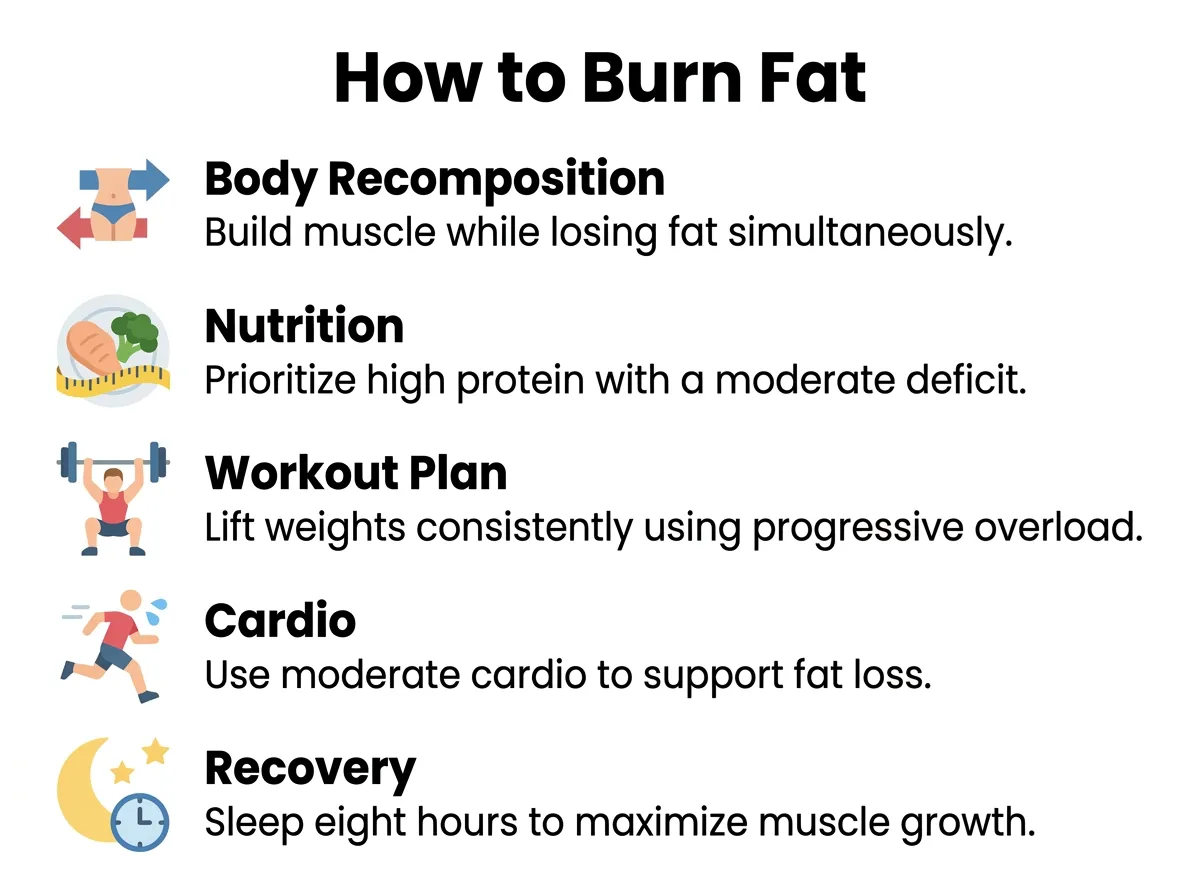
How to Burn Fat and Gain Muscle? — key points at a glance
Finding Your Calorie Sweet Spot
Do not starve yourself. Instead, aim for a very small calorie deficit. This is usually about 200 to 300 calories below your daily burn rate. This small cut gives you enough energy to lift weights. At the same time, it forces your body to tap into fat stores for energy. It is the sweet spot for body change. If you eat too little, your workouts will suffer. You will also feel cranky and tired all day.
Foods to Focus On
Fill your plate with whole foods. These are foods that have not been changed much from their natural state. Think of fresh fruits, colorful vegetables, and whole grains. These foods have lots of vitamins and fiber. They keep your body running well. Try to limit sweet drinks and packaged snacks. These foods give you quick energy but leave you hungry soon after. Learning how to burn fat and gain muscle means choosing foods that fuel your goals.
Designing Your Workout Plan
You cannot eat your way to new muscle. You have to work for it. Your muscles need a reason to grow. That reason is resistance training. If you want to know how to burn fat and gain muscle, lifting weights is your best friend.
Why Strength Training is King
Strength training does two great things. First, it tears down muscle fibers so they can grow back stronger. Second, it keeps your metabolism high. Muscle burns more calories than fat, even when you are resting. If you do not exercise while dieting, you will lose precious muscle mass. In fact, a study on trying to lose weight without losing muscle shows that active people keep much more of their strength. Lifting weights is not just for bodybuilders. It is a key tool for weight loss. You can learn more about strength training for weight loss from health experts.
How Often to Lift
You do not need to live in the gym. Three to four weight sessions a week is plenty. Focus on big movements that use many muscles at once. These are called compound exercises. Examples include squats, lunges, push-ups, and rows. These moves give you the most bang for your buck. They burn a lot of calories and build muscle fast. Many beginners struggle with how to burn fat and gain muscle at the same time, but focusing on these moves makes it much easier. Always try to lift a little more weight over time. This is how you keep making progress.
The Role of Cardio
Many people think they must run for hours to lose fat. This is not true. Too much cardio can actually work against you. It can make your body burn muscle for fuel. If you want to learn how to burn fat and gain muscle, you must use cardio wisely.
HIIT vs. LISS
High-Intensity Interval Training, or HIIT, involves short bursts of hard work. Think of sprinting for thirty seconds, then walking for a minute. HIIT is fast and burns a lot of fat. Low-Intensity Steady State cardio, or LISS, is slow and easy. Think of a long walk or a light bike ride. Both have a place in your plan. LISS is great for recovery and heart health. HIIT is great for quick fat loss. Try to do a mix of both during your week.
Keeping It Balanced
Do not let cardio take over your life. Keep your focus on lifting weights. Think of cardio as a tool to help burn extra energy. Two or three short cardio sessions a week are more than enough. If you feel too tired to lift weights, you are doing too much cardio. Listen to your body and adjust as needed.
Recovery and Sleep
We often forget that muscles do not grow while we work out. They grow when we rest. If you want to know how to burn fat and gain muscle, you must take recovery seriously.
Rest Days Are Crucial
Take at least two rest days each week. On these days, you can walk or stretch. But do not lift heavy weights. This gives your muscles time to heal. It also prevents injury. If you never rest, your body will get tired. Your progress will slow down or stop completely. People often ask us how to burn fat and gain muscle without feeling exhausted, and the answer is always proper rest.
Sleep Your Way to Progress
Sleep is when the magic happens. Your body releases growth hormones while you sleep. These hormones help build muscle and burn fat. Aim for seven to eight hours of good sleep each night. Create a quiet, dark room for rest. Avoid your phone before bed. Better sleep will make a huge difference in your results. It is the easiest step in learning how to burn fat and gain muscle.
Conclusion
Changing your body takes time. There are no quick fixes or magic pills. But you can do it. By eating enough protein, lifting weights, and resting well, you will see progress. Remember to be patient with yourself. Focus on how you feel and how your clothes fit, not just the scale. Now you have the tools for how to burn fat and gain muscle. Start today, stay consistent, and enjoy the journey to a stronger, healthier you!
Frequently Asked Questions
Can you actually burn fat and build muscle at the same time?
Yes, you can do both. This is called body recomposition and works best for beginners or those returning to exercise. It requires a high-protein diet and steady weight training.
How long does body recomposition take?
You can start seeing changes in four to six weeks. However, significant results usually take three to six months of consistent work. Patience is key when trying to change your shape.
Do I need to count calories to make this work?
While you do not have to count every calorie, it can help. Knowing your general food intake ensures you stay in a small calorie deficit. This prevents you from eating too much or too little.
How much protein should I eat daily?
Aim to eat about 0.8 to 1 gram of protein per pound of your body weight. This amount keeps your muscles safe while your body burns fat. Good options include chicken, eggs, fish, and Greek yogurt.
Should I do cardio before or after weights?
It is best to do weights first so you have the most energy to lift. Doing cardio afterward ensures your muscles are fully stimulated during strength training. This order helps you get the best results.
Can I build muscle without lifting heavy weights?
Yes, you can use bodyweight exercises or resistance bands. The key is to challenge your muscles so they have to work hard. As long as the exercise is difficult, your muscles will grow.
