


Fasted cardio can increase the amount of fat your body burns for fuel during your workout. However, science shows it does not lead to greater overall fat loss over a 24-hour period compared to fed cardio. Ultimately, your total daily calorie balance determines your long-term weight loss success.
Imagine your alarm goes off at 6:00 AM. You sit up, rub your eyes, and look at your running shoes by the door. Your stomach rumbles slightly. You wonder if you should grab a quick banana for energy or head straight out into the morning air on empty. In the fitness world, this daily choice is the subject of a massive debate. Some enthusiasts swear that working out on an empty stomach is the ultimate secret to melting away body fat, while others warn that it can leave you feeling completely exhausted.
So, what is the actual truth? Does fasted cardio burn more fat, or is it just another fitness myth that sounds too good to be true? Many people try this method hoping for fast results, only to find themselves feeling dizzy and frustrated. If you want to make the most of your sweat sessions, it is important to understand what is really happening inside your body when you skip that morning meal.
In this article, we will break down the science of fasted exercise. We will look at how your body burns energy when you skip breakfast, explore the pros and cons of this approach, and share practical tips for success. By the end, you will know exactly how to time your meals and workouts to reach your fitness goals without losing your mind.
Key Takeaways
- Fuel Source Shift: Fasted exercise forces your body to rely more heavily on stored fat for energy during the actual workout.
- Daily Compensation: Your body naturally balances out fat oxidation over 24 hours, meaning total daily fat loss remains similar whether you eat before or not.
- Intensity Matters: Working out on an empty stomach can lower your energy levels, which may reduce the overall intensity and duration of your session.
- Muscle Preservation: High-intensity fasted training runs the risk of breaking down muscle tissue for fuel.
- Personal Preference: The best workout routine is the one you can stick to consistently over time.
📑 Table of Contents
What Exactly Is Fasted Cardio?
To understand this trend, we need to look at what “fasted” actually means in a scientific sense. It is not just about feeling a little hungry before you hit the treadmill. Truly fasted cardio happens when you exercise after your body has completely finished digesting its last meal.
The State of Fasting
When you eat, your body breaks down food into glucose, which is a type of sugar. This glucose enters your bloodstream, and your pancreas releases insulin to help your cells absorb it. When you are in this “fed state,” your body prefers to burn this easily available glucose for fuel. Once you fully digest your food, your insulin levels drop back down to a baseline level. Your body then enters the “fasted state,” which usually takes about eight to twelve hours after eating.
Glycogen and Your Energy Reserves
Your body stores carbohydrates in your liver and muscles in the form of glycogen. During an overnight fast, your liver glycogen levels drop as your body keeps your organs running while you sleep. When you wake up and do cardio before eating, your body has low insulin levels and less ready-to-use glycogen. This forces your system to look for alternative fuel sources to keep your muscles moving.
The Science of Fat Burning: Fasted vs. Fed
Does fasted cardio burn more fat than working out after a meal? To answer this question, we have to look at how our bodies burn fuel. The short answer is yes, but there is a major catch that most people miss.
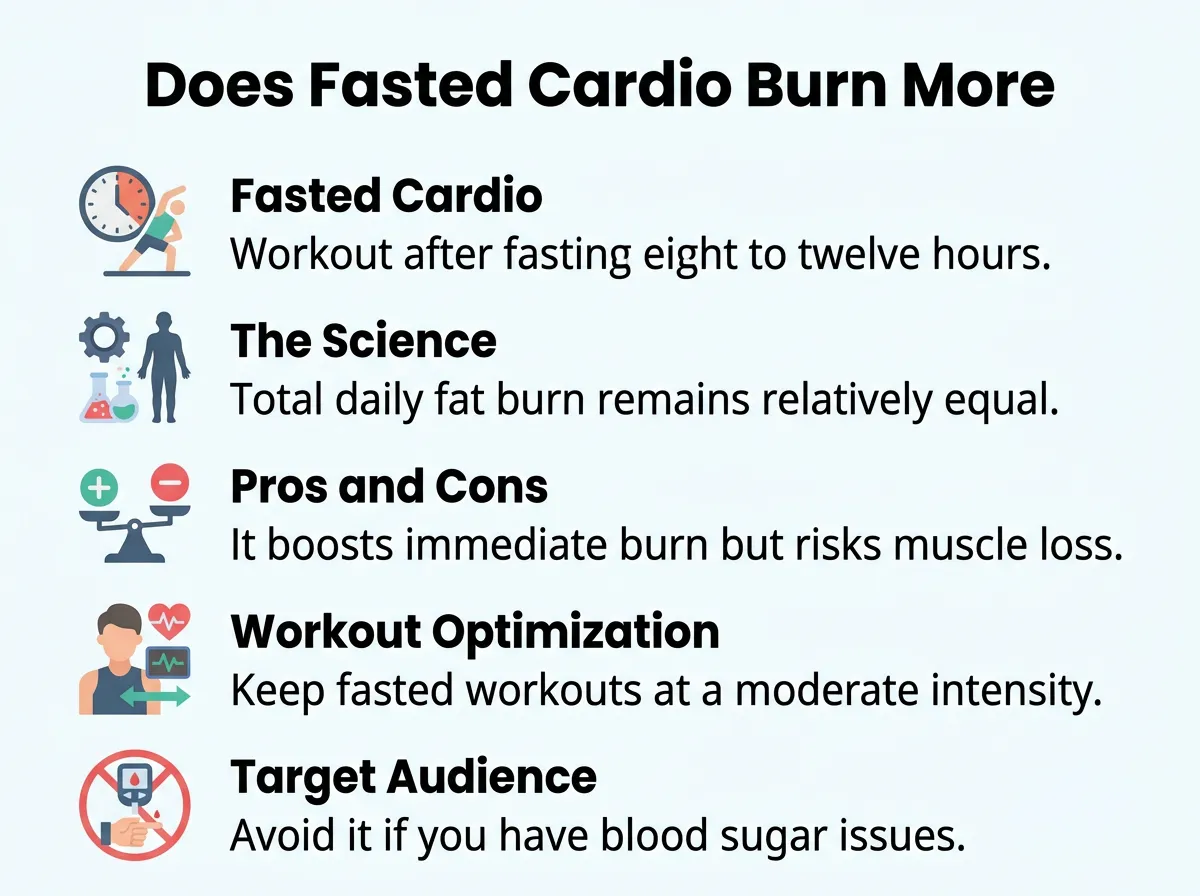
Does Fasted Cardio Burn More Fat? — key points at a glance
Does Fasted Cardio Burn More Fat During Exercise?
When your insulin levels are low, your body turns to fat cells for energy. According to UCLA Health, fasted cardio relies on burning stored fat because your body does not have quick carbs to use. This process is called lipolysis, where fat cells release fatty acids into the blood to be burned for fuel. During a fasted workout, you do indeed burn a higher percentage of calories from fat than you would if you had eaten a bowl of oatmeal beforehand.
The 24-Hour Energy Balance
However, burning fat during a workout does not automatically mean you will lose more body fat by the end of the week. This is because your body is incredibly smart and constantly adapts. If you burn mostly fat during your morning workout, your body will compensate by burning more carbohydrates later in the day. Conversely, if you eat before your workout, you will burn more carbs during exercise, but your body will then burn a higher percentage of fat during the rest of the day.
In fact, a scientific review from UNSW Sydney found that total fat loss and weight change are nearly identical whether you perform cardio fasted or fed. What matters most is your overall calorie balance at the end of the day, not the specific fuel source used during your 30-minute run.
Pros and Cons of Exercising on an Empty Stomach
Like any fitness strategy, skipping a pre-workout meal has its advantages and disadvantages. It is not a one-size-fits-all solution for everyone.
The Benefits: What You Gain
One of the biggest perks is pure convenience. You do not have to wake up extra early to cook, digest, and wait around before you can start moving. For many busy people, lacing up their shoes and heading straight out the door is the only way to fit a workout into their morning. Additionally, some people suffer from stomach cramps, nausea, or indigestion if they run with food in their belly. Working out empty can keep your digestive system calm and comfortable.
The Drawbacks: What to Watch Out For
On the flip side, there are some real risks to consider. The most common downside is a drop in workout performance. Without carbs in your system, you might feel sluggish, weak, or tired much faster. This means you might not run as fast or as far as you would with proper fuel. There is also the risk of muscle loss. If you run out of glycogen and push your body too hard, your system may break down muscle tissue to get amino acids for energy. Finally, some people experience a spike in hunger later in the day, which can easily lead to overeating.
How to Maximize Your Cardio Workouts
If you decide that fasted cardio fits your lifestyle and preferences, you want to make sure you do it safely. Here are some practical tips to get the best results from your morning routine.
Keep the Intensity Low to Moderate
Fasted cardio is not the time for high-intensity interval training (HIIT) or heavy sprinting. When you work out at a high intensity, your body requires carbohydrates to produce energy quickly. Since you do not have many carbs available, your performance will suffer, and you will risk muscle breakdown. Stick to steady-state cardio, like a brisk walk, an easy jog, or a relaxed bike ride.
Stay Hydrated
Just because you are fasting does not mean you should skip water. In fact, you should drink water before, during, and after your workout. Overnight, you lose water through your breath and sweat. Working out dehydrated can make your heart work harder and make your exercise feel much more difficult than it actually is.
Prioritize Post-Workout Nutrition
Once your workout is finished, your body is ready to recover and rebuild. Try to eat a balanced meal within one to two hours of finishing your session. Focus on high-quality protein to repair your muscles and healthy carbohydrates to replenish your glycogen stores. A protein shake with a banana, or eggs with whole-grain toast, are excellent choices.
Who Should (and Should Not) Try Fasted Cardio?
To decide if this method is right for you, consider your lifestyle, fitness goals, and health history.
Great For Morning People and Steady Runners
This approach is perfect for early risers who love a peaceful morning routine. If you enjoy low-intensity activities like walking, hiking, or easy cycling, you will likely do very well. It is also highly suitable for people who genuinely feel heavy or sick when exercising with food in their stomachs.
Not Recommended For High-Intensity Athletes
If you are training for a marathon, trying to build significant muscle mass, or love lifting heavy weights, you should probably eat first. According to health experts at GoodRx, exercising on an empty stomach can lead to low blood sugar, which causes dizziness, shaking, or even fainting. If you have a history of diabetes, hypoglycemia, or disordered eating, you should always consult your doctor before trying fasted training.
The Verdict: Consistency Over Timing
So, does fasted cardio burn more fat in the long run? At the end of the day, the debate around fasted cardio comes down to personal preference. While it does change the fuel your body uses during the workout itself, it does not act as a magic trick for rapid weight loss.
Your body fat levels are determined by your overall daily calorie balance. To lose fat, you must burn more calories than you consume over time. If eating a small meal before your workout allows you to run faster, push harder, and burn more total calories, then fed cardio is the better choice for you. If you feel energized, light, and focused on an empty stomach, then fasted cardio is a fantastic option. Find what feels good for your body, stay consistent, and the results will follow.
Frequently Asked Questions
Does fasted cardio burn muscle?
Yes, there is a risk of muscle loss if you perform high-intensity workouts while fasted. When your body runs out of stored carbohydrates, it may break down muscle tissue to use amino acids for energy. To prevent this, keep your fasted cardio workouts at a low-to-moderate intensity.
Can I drink coffee before fasted cardio?
Yes, you can drink black coffee before your workout, and it may actually help. Caffeine can boost your metabolism, increase focus, and make your exercise feel easier. Just make sure to avoid adding sugar, milk, or creamer, as these will break your fast.
How long should a fasted cardio session last?
For best results and safety, keep your fasted cardio sessions between 30 to 45 minutes. Exercising longer than this on an empty stomach increases the risk of muscle breakdown, fatigue, and low blood sugar. Always listen to your body and stop if you feel dizzy.
Is fasted cardio better than fed cardio for weight loss?
No, research shows that fasted cardio is not superior to fed cardio for overall weight loss. While you burn more fat during a fasted workout, your body compensates by burning fewer calories from fat later in the day. The most important factor for weight loss is your total daily calorie deficit.
What should I eat after fasted cardio?
You should eat a balanced meal containing both protein and carbohydrates within one to two hours after your workout. Protein helps repair and rebuild your muscles, while carbohydrates replenish your depleted glycogen energy stores. Good options include oatmeal with protein powder or eggs on whole-wheat toast.
Does drinking water break a fast before cardio?
No, drinking plain water does not break your fast. In fact, staying hydrated is crucial for your performance and safety during a morning workout. You can also drink unsweetened teas or electrolyte water, provided they contain zero calories.
