


Ozempic does not directly burn fat on its own, but it facilitates fat loss by mimicking a natural hormone that curbs appetite, delays stomach emptying, and lowers calorie intake. This caloric deficit prompts your body to burn stored fat for energy. However, to maximize fat loss and prevent muscle wasting, users should pair the medication with a protein-rich diet and strength training.
Have you ever scrolled through social media and felt like everyone is talking about a new miracle weight loss shot? It seems like overnight, conversations shifted from gym routines and meal prep to weekly injections. You hear stories of rapid transformations, clothing sizes dropping, and stubborn weight melting away. It is natural to feel curious and wonder what is actually happening inside the body.
With all the buzz surrounding semaglutide, a major question keeps coming up: Does Ozempic burn fat? Many people want to know if this medication actively targets their waistline or if there is a different science at play. It is easy to get swept up in the hype, but understanding the actual biology can help you make informed decisions about your health.
In this guide, we will dive deep into how this medication interacts with your body. We will explore the differences between losing water weight, muscle, and actual fat. Plus, you will learn practical steps to ensure you lose weight healthily while keeping your body strong and energized.
Key Takeaways
- Indirect Fat Loss: Ozempic does not actively dissolve fat cells but causes weight loss by dramatically reducing appetite and calorie intake.
- Hormonal Mechanism: It mimics GLP-1, a hormone that signals fullness to your brain and slows down digestion.
- Muscle Preservation: Rapid weight loss on Ozempic can lead to muscle loss unless paired with resistance training and high protein intake.
- Visceral Fat Target: The overall reduction in calories forces the body to burn stubborn visceral fat around organs, improving metabolic health.
- Lifestyle Integration: Long-term success requires combining Ozempic with consistent lifestyle changes, as weight regain is common after stopping.
📑 Table of Contents
How Ozempic Works in the Body
Before we look at the main question, we need to understand what this medication actually is. Ozempic was originally designed to help people manage type 2 diabetes. However, doctors and patients quickly noticed a powerful side effect: significant weight loss.
The Role of GLP-1
The active ingredient in Ozempic is semaglutide. This compound mimics a natural hormone in your body called GLP-1 (glucagon-like peptide-1). Normally, your gut releases this hormone after you eat. It tells your brain that you are full, satisfied, and ready to stop eating. By mimicking this hormone, the medication keeps those fullness signals active for much longer.
Slowing Down Your Stomach
The medication also slows down gastric emptying. This means food stays in your stomach for a longer period. Because your stomach empties slowly, you feel physically full for hours after a small meal. It naturally reduces those pesky food cravings and stops the urge to snack throughout the day.
Does Ozempic Burn Fat Directly?
Now let’s tackle the big question: Does Ozempic burn fat on its own? The short answer is no, it does not directly melt or dissolve fat cells. There is no magical chemical reaction in the drug that targets and destroys adipose tissue.
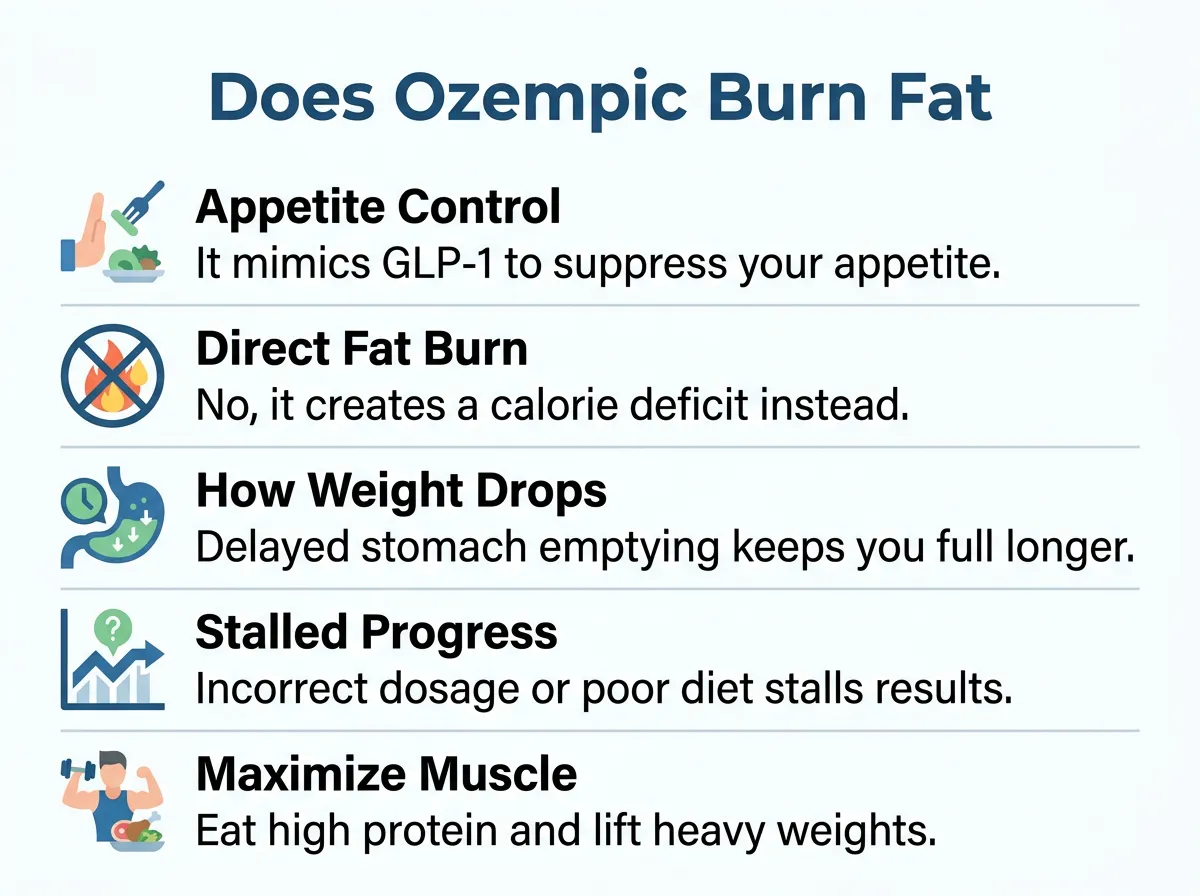
Does Ozempic Burn Fat? — key points at a glance
Instead, the medication acts as an incredibly effective tool for appetite control. When you eat significantly fewer calories, your body experiences a caloric deficit. Because your body still needs energy to function, it turns to its backup energy stores. This is when your system begins breaking down stored body fat for fuel.
So, while the medication itself does not burn fat, it creates the perfect internal environment for your body to do so. If you are wondering does Ozempic burn fat or just suppress appetite, the truth is that it suppresses your appetite, which then forces your body to use its fat stores for energy.
Fat Loss vs. Muscle Loss
When you lose weight quickly, your body does not just burn fat. It also looks for energy in your muscles. This is a common concern for people taking semaglutide. If you lose weight too fast without eating enough protein or lifting weights, a large portion of that weight loss can come from lean muscle tissue. Losing muscle slows down your metabolism, making it harder to keep the weight off in the long run.
What is “Ozempic Face”?
You might have heard the term “Ozempic face” in the news. This is not a medical condition. It simply refers to the hollowed, slightly aged look that can happen to someone’s face after rapid weight loss. When you lose fat quickly, you lose it from all over your body, including the natural fat pads in your cheeks that keep you looking youthful.
The Science of Weight Loss on Semaglutide
To get a clear picture of how this works, we can look at clinical data. Research shows that people taking semaglutide experience major changes in their body composition. According to clinical studies on Ozempic’s weight management benefits, patients often lose a significant percentage of their initial body weight over a year of treatment.
Most of this lost weight is indeed body fat, including dangerous visceral fat. Visceral fat is the deep belly fat that wraps around your internal organs. It is linked to heart disease, high blood pressure, and type 2 diabetes. By helping you eat less, the medication is highly effective at reducing this harmful fat, which greatly improves your overall cardiovascular and metabolic health.
Why You Might Not Be Losing Weight on Ozempic
While many people experience incredible success, others find themselves struggling. If you feel like you are not losing weight on Ozempic as quickly as expected, you are not alone. There are several reasons why this might happen.
First, dosage plays a huge role. Most people start on a very low dose to let their body adjust to the side effects, like nausea. Real weight loss often does not begin until you reach the higher therapeutic doses. Second, lifestyle still matters. If you are eating calorie-dense, highly processed foods, you might still consume too many calories, even with a suppressed appetite. Finally, underlying medical conditions like thyroid issues or extreme stress can slow down your progress.
Practical Tips to Maximize Fat Loss and Keep Muscle
If you want to ensure that the weight you lose is fat and not precious muscle, you must be proactive. Here are a few simple, actionable steps to protect your health during your weight loss journey.
Prioritize Your Protein
When your appetite is low, every bite counts. Make sure you focus on high-quality protein sources. Chicken, turkey, fish, tofu, eggs, and Greek yogurt should be the stars of your meals. Protein helps rebuild muscle fibers and keeps you feeling satisfied even longer.
Start Resistance Training
Do not just stick to cardio. Lifting weights, using resistance bands, or doing bodyweight exercises like push-ups and squats tells your brain that you still need your muscles. This encourages your body to burn fat for energy instead of breaking down muscle tissue. Aim for two to three strength sessions per week.
Stay Hydrated
Drinking plenty of water is essential. Sometimes, our brains mistake thirst for hunger. Staying hydrated supports your kidneys, keeps your digestion moving smoothly, and helps flush out metabolic waste as your body breaks down fat.
What Happens When You Stop Taking It?
It is important to view Ozempic as a long-term tool rather than a quick fix. Studies show that when people stop taking the medication, their natural appetite returns to normal. Without the active hormone signal, cravings can come back quickly. If you have not built sustainable lifestyle habits, you may find yourself regaining the weight you lost.
To maintain your results, focus on building healthy habits while on the medication. Learn what balanced portions look like, find physical activities you genuinely enjoy, and establish a healthy relationship with food.
Summary and Final Thoughts
Ultimately, does Ozempic burn fat? The medication does not physically melt fat away, but it is a powerful catalyst. By mimicking natural hormones, it helps you manage your portions, silence the constant thoughts about food, and stay in a caloric deficit.
To get the best results, treat the medication as a helper rather than the sole solution. Pair it with a nutritious, protein-rich diet and consistent strength training. This approach ensures you shed unwanted fat, keep your muscles strong, and build a healthy foundation for the future.
Frequently Asked Questions
Does Ozempic burn fat directly?
No, Ozempic does not directly melt fat cells on its own. Instead, it suppresses your appetite and slows digestion, which helps you eat less and naturally places your body into a caloric deficit to burn stored fat for fuel.
Where do you lose fat first on Ozempic?
Fat loss on Ozempic occurs systemically across your entire body rather than targeting one specific spot. However, many people notice weight reduction first in their face, midsection, and arms, where fat reserves are highly visible.
Will I lose muscle while taking Ozempic?
Yes, rapid weight loss can cause you to lose muscle alongside fat. To prevent this, it is highly recommended to eat a protein-rich diet and participate in regular strength training exercises while using the medication.
Why am I not losing fat on Ozempic?
You might not be losing fat if you are still on a lower, non-therapeutic starting dose of the medication. Additionally, lifestyle factors such as eating calorie-dense foods, chronic stress, or lack of physical activity can also slow down your weight loss progress.
Does Ozempic reduce visceral fat?
Yes, clinical studies indicate that a significant portion of the weight lost on Ozempic comes from harmful visceral fat. This is the stubborn fat stored deep inside your abdomen around vital organs, and reducing it helps lower your cardiovascular risks.
Will I regain the fat if I stop taking Ozempic?
Many patients do experience weight regain after they stop taking the medication because their natural appetite and cravings return. To maintain your fat loss long-term, it is crucial to establish sustainable eating habits and exercise routines while on the drug.
