


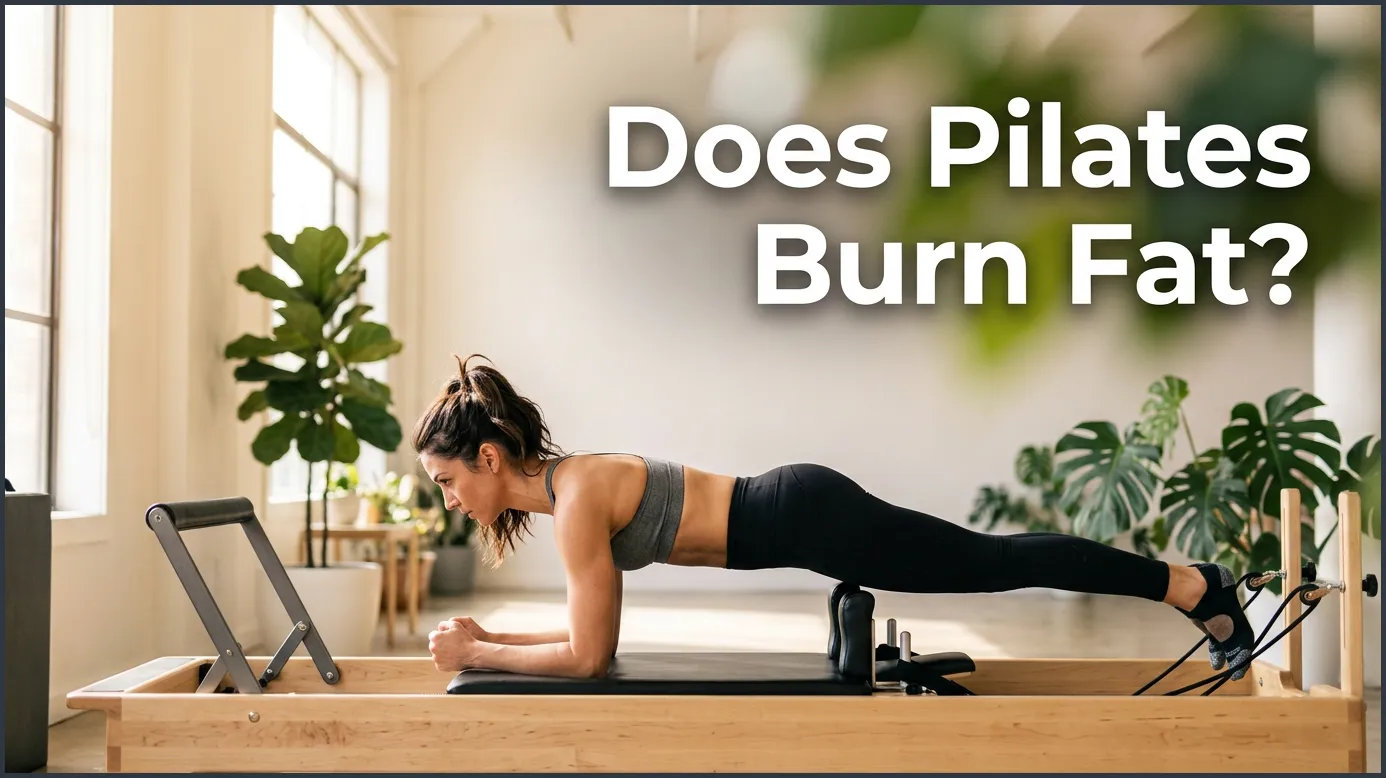
Yes, Pilates can help you burn fat, but it works differently than high-intensity cardio workouts. By building lean muscle mass, Pilates naturally boosts your resting metabolism so you burn more calories throughout the day. For the best fat-loss results, you should combine Pilates with a balanced diet and regular aerobic exercise.
Imagine stepping onto a soft mat in a quiet, peaceful room. There are no heavy weights slamming on the floor. There is no loud music thumping in your ears. You simply move your body with control, focus on your breathing, and feel every single muscle stretch and work. It feels amazing, but as you wipe a bead of sweat from your forehead, a common question might pop into your mind. Can a workout this calm and controlled really help you shed those extra pounds?
Many of us want to get fit without spending hours on a boring treadmill. We want a workout that makes us feel strong, flexible, and happy rather than completely exhausted. This is why so many people turn to Pilates. But when it comes to changing your body shape, you need to understand what actually works for weight loss and how this mindful practice fits into the bigger picture.
In this guide, we will dive deep into how Pilates affects your body. We will look at how it burns calories, how it builds muscle, and how it compares to other workouts. You will also learn the exact steps you can take to make Pilates a highly effective part of your personal fat-loss journey.
Key Takeaways
- Lean Muscle Growth: Pilates builds toned, lean muscles that naturally increase your daily calorie burn.
- Core Strength: A stronger core improves your posture and helps you perform other fat-burning workouts more easily.
- Stress Reduction: Pilates lowers your cortisol levels, which helps prevent your body from storing excess belly fat.
- Reformer Advantage: Using Reformer machines adds extra resistance to speed up your muscle building and fat loss.
- Consistency Counts: Practicing Pilates 3 to 4 times a week delivers the best long-term body changes.
- Balanced Approach: True weight loss requires combining your Pilates routine with clean eating and light cardio.
📑 Table of Contents
Understanding the Science of Fat Loss
To understand how Pilates affects your body shape, we first need to look at how fat loss works. Your body needs energy to do everything. It needs energy to breathe, walk, digest food, and even sleep. We measure this energy in units called calories.
The Calorie Deficit Explained
To lose fat, you must create a calorie deficit. This means you need to burn more calories than you eat. You can do this by eating less food, moving your body more, or combining both methods. Every single movement you do throughout the day helps. A structured workout like Pilates burns energy, which helps move you closer to your daily calorie goals.
The Power of Muscle for Your Metabolism
Muscle is highly active tissue. It takes much more energy for your body to maintain muscle than it does to maintain fat. This means the more muscle you have, the more calories you burn at rest. Even when you are sitting on the couch or sleeping at night, your muscle is working for you. This is why building lean muscle is the ultimate secret weapon for lasting fat loss.
How Pilates Targets Fat Burn
So, how does Pilates fit into this fat-loss equation? Pilates may look gentle, but it is actually a powerful form of strength training. It focuses on your deep core muscles, glutes, hips, and thighs.
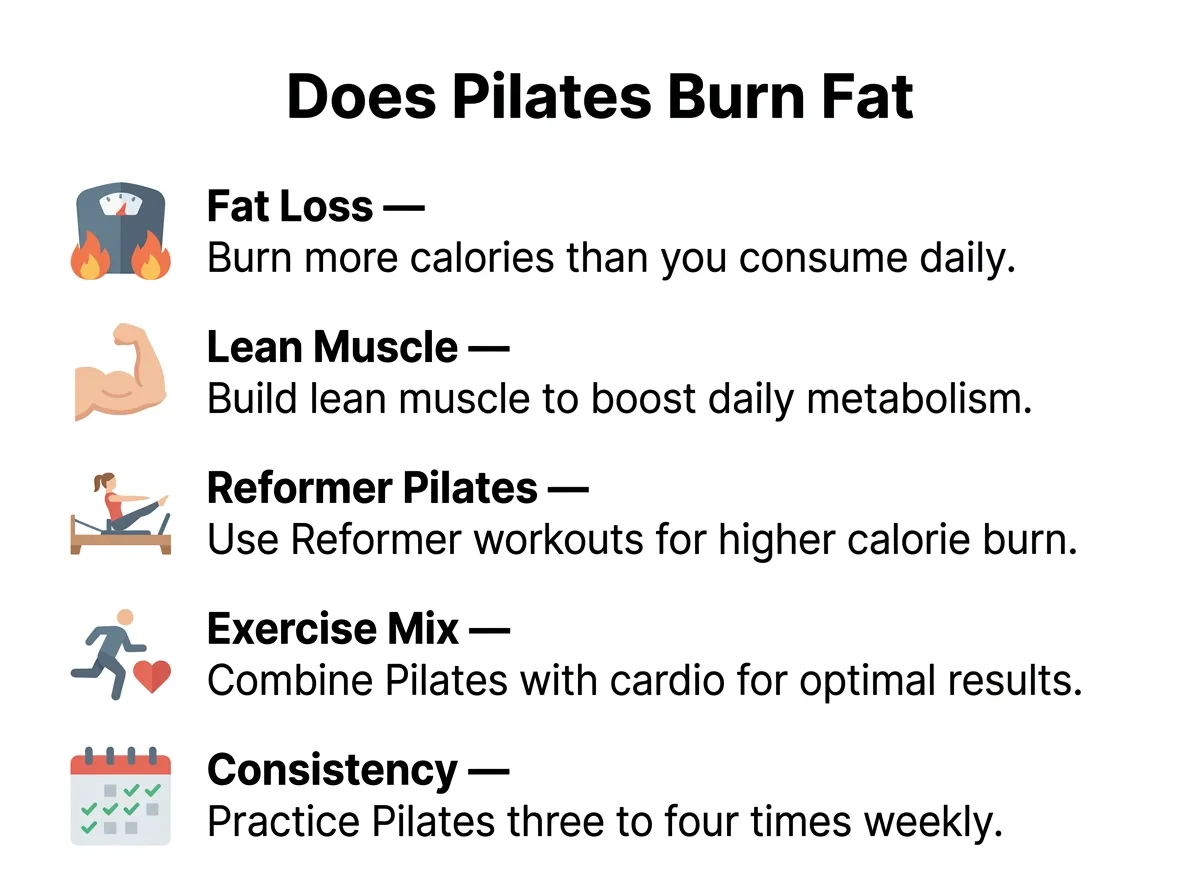
Does Pilates Burn Fat? — key points at a glance
Building Toned, Lean Muscle Mass
During a Pilates class, you perform small, controlled movements. You hold your body in challenging positions for several seconds. This creates constant resistance. Over time, this resistance builds strong, lean muscles without making you look bulky. Instead, it elongates and tones your frame. A useful analysis on Healthline shows that Pilates can change your body composition by reducing body fat percentage and building healthy muscle.
For example, classic moves like the Pilates Hundred or the double-leg stretch force your abs to work overtime. This constant tension strengthens the abdominal wall and helps pull your waistline in, giving you a leaner look.
Elevating Your Heart Rate
While classic Pilates is not a high-intensity cardio workout, it still gets your heart pumping. Newer styles of Pilates move at a faster pace. These classes keep your heart rate elevated for a longer time. This higher heart rate helps you burn more calories during the class itself, which contributes directly to your fat-loss goals.
Lowering Cortisol and Stress
When you are constantly stressed, your body produces a hormone called cortisol. High cortisol levels tell your body to hold onto fat, especially around your belly. Pilates is a deeply mindful workout. It teaches you to breathe deeply and focus on the present moment. This calm focus lowers your stress levels. Lower stress means lower cortisol, which makes it much easier for your body to let go of stored fat.
Mat Pilates vs. Reformer Pilates for Weight Loss
If you visit a local studio, you will see two main options. You can practice on a simple mat, or you can use a large machine called a Reformer. Both options are great, but they work your muscles in different ways.
The Classic Mat Workout
Mat Pilates is highly accessible. You only need your own body weight for resistance, which means you can do it anywhere. It is fantastic for building core strength, balance, and flexibility. Because you do not have machines to help you balance, your muscles must work extra hard to stabilize your body. However, the overall calorie burn on a mat is generally lower than on a machine.
The Power of the Reformer Machine
The Reformer is a specialized machine with springs, pulleys, and a sliding carriage. The springs add extra resistance to your movements, which forces your muscles to work much harder than they would on a mat. According to FS8’s guide on Pilates and weight loss, using resistance equipment like the Reformer increases muscle activation and boosts your overall calorie burn both during and after your session.
Pilates Compared to Other Popular Workouts
To get a clear picture of how Pilates helps you burn fat, let us compare it to other gym workouts.
Pilates vs. High-Intensity Cardio
Workouts like running, cycling, or dancing burn a lot of calories in a short amount of time. They are great for your heart. However, they do not build much muscle. Pilates burns fewer calories per minute than running, but it builds much more lean muscle. This means Pilates helps you burn fat over the long term, while cardio mostly burns calories while you are doing the workout.
Pilates vs. Heavy Weightlifting
Lifting heavy weights at the gym is excellent for building muscle. However, it can be very hard on your joints. Pilates offers a safer, low-impact alternative. It protects your joints while still giving you a deep muscle workout. Medical studies reviewed by GoodRx show that Pilates is highly effective for improving physical function and toning muscles without the high risk of injury associated with heavy lifting.
A Practical Guide to Maximize Your Results
If you want to use Pilates to burn fat, you need a smart plan. You cannot just do it once a week and expect huge changes. Here is how to get the best results.
Keep a Consistent Schedule
Consistency is key for any fitness routine. Try to practice Pilates 3 to 4 times a week. This regular schedule keeps your muscles active and keeps your metabolism running high. You can mix mat classes at home with Reformer sessions at a studio to keep things fun and challenging.
Clean Up Your Nutrition
You cannot out-exercise a poor diet. Pilates will tone your muscles, but you need a clean diet to reveal them. Focus on whole, single-ingredient foods. Eat plenty of lean proteins like chicken, fish, and tofu. Fill your plate with fresh vegetables, fruit, and whole grains. Be sure to drink plenty of water to stay hydrated and keep your energy levels high.
Create a Hybrid Weekly Routine
To speed up your fat loss, try combining Pilates with other activities. This gives you a balanced approach to fitness. Here is an example of a highly effective weekly schedule:
- Monday: 45-minute Pilates mat workout
- Tuesday: 30-minute brisk walk or light jog
- Wednesday: 45-minute Reformer Pilates class
- Thursday: Rest day or gentle stretching
- Friday: 45-minute Pilates mat workout
- Saturday: 30-minute swim or bicycle ride
- Sunday: Rest day
This balanced mix gives you the best of both worlds: high calorie burn from cardio and strong, lean muscles from Pilates.
Your Next Steps to a Stronger, Leaner Body
Pilates is far more than just a fitness trend. It is a complete system that heals, strengthens, and shapes your body. While it may not burn as many instant calories as a fast-paced run, its long-term benefits for your metabolism are unmatched. By building lean muscle, lowering your stress, and improving your posture, it creates the perfect environment for your body to shed fat naturally.
Be patient with yourself as you begin. Listen to your body and focus on enjoying the mindful movements. With time, dedication, and a healthy lifestyle, you will feel stronger, stand taller, and achieve the healthy, lean body you deserve.
Frequently Asked Questions
Can you lose belly fat by doing Pilates?
Yes, Pilates can help you lose belly fat by strengthening your deep core muscles and lowering your stress hormones. However, you cannot target fat loss in just one spot, so you must pair Pilates with a healthy diet to lose overall body fat.
How many times a week should I do Pilates to lose weight?
For the best results, you should aim to practice Pilates 3 to 4 times per week. This consistency helps you build lean muscle and keep your metabolism active throughout the week.
Is Mat or Reformer Pilates better for burning fat?
Reformer Pilates is generally better for burning fat because the machine’s springs add extra resistance. This extra resistance challenges your muscles more, which increases your calorie burn and speeds up muscle building.
Does Pilates burn more calories than walking?
A vigorous Pilates session can burn more calories than a casual walk, but a very fast power walk may burn a similar amount. Combining both activities in your weekly routine is the best way to maximize your total fat burn.
How long does it take to see weight loss results from Pilates?
Most people begin to feel stronger and notice better posture within 3 to 4 weeks of regular practice. Visible fat loss and muscle definition usually become noticeable after 8 to 12 weeks of consistent workouts and healthy eating.
Can beginners use Pilates to burn fat?
Absolutely, Pilates is highly beginner-friendly because it is low-impact and easy on the joints. Beginners can start with basic mat exercises and slowly increase the intensity as their strength and endurance improve.
