


Yes, weightlifting is an incredibly effective tool for burning body fat and transforming your shape. While cardio burns more calories during a session, lifting weights builds lean muscle, which raises your resting metabolism to burn fat all day long. Combining strength training with a balanced diet is the ultimate formula for sustainable fat loss.
Imagine walking into a gym on a busy Monday evening. On one side, you see a row of treadmills. People are running hard, sweating, and staring at screens. On the other side, you see the free weight area. People there are lifting dumbbells, loading barbells, and taking breaks between sets. If your main goal is to shed a few pounds and get lean, which side should you choose?
For decades, the standard advice for shedding weight was very simple. People told you to run, cycle, or use the elliptical. They said weights would only make you bulky. But today, sports science tells a very different story. If you are standing at this fitness crossroads, you are probably wondering: Does weightlifting burn fat?
In this guide, we will break down the real science behind strength training and body fat. We will look at how your body uses energy. We will explore the hidden power of building muscle. Finally, we will give you a simple, practical plan to start lifting your way to a leaner, healthier body.
Key Takeaways
- The Afterburn Effect: Weightlifting keeps your body burning extra calories for hours after your workout ends.
- Metabolic Boost: Muscle tissue is highly active and burns more calories at rest than fat tissue does.
- Body Recomposition: Lifting weights helps you lose pure fat while preserving and building lean muscle.
- Compound Movements: Exercises like squats and deadlifts recruit large muscle groups for maximum calorie burn.
- Consistency is Key: A simple routine of three days a week can yield dramatic fat loss results over time.
📑 Table of Contents
How Weightlifting Actually Burns Fat
When we think of burning fat, we often think of sweating during a hard cardio session. But fat loss is a twenty-four-hour process. To understand how does weightlifting burn fat, we have to look at how your body handles energy over the course of a whole day.
Weight Loss vs. Fat Loss
It is very common to confuse weight loss with fat loss. When you step on a scale, that number reflects everything in your body. It includes fat, muscle, water, bones, and organs. If you lose weight by just starving yourself or doing hours of low-intensity cardio, you will lose fat. However, you will also lose valuable muscle. This slows down your metabolism. Weightlifting protects your muscle. It ensures that the weight loss you see on the scale comes from fat, not muscle.
The Magic of Body Recomposition
Weightlifting does something that cardio cannot do alone. It changes your body composition. This means you lose fat while building or keeping lean muscle. If you want to know, does weightlifting burn fat effectively, the answer lies in this process. Lifting weights ensures that you look firm, toned, and healthy rather than just “skinny fat” when you lose weight.
The Afterburn Effect Explained
One of the best reasons to pick up a barbell is a process called EPOC. This stands for Excess Post-Exercise Oxygen Consumption. In simple terms, it is the “afterburn effect.” To truly understand how does weightlifting burn fat, we have to talk about EPOC.
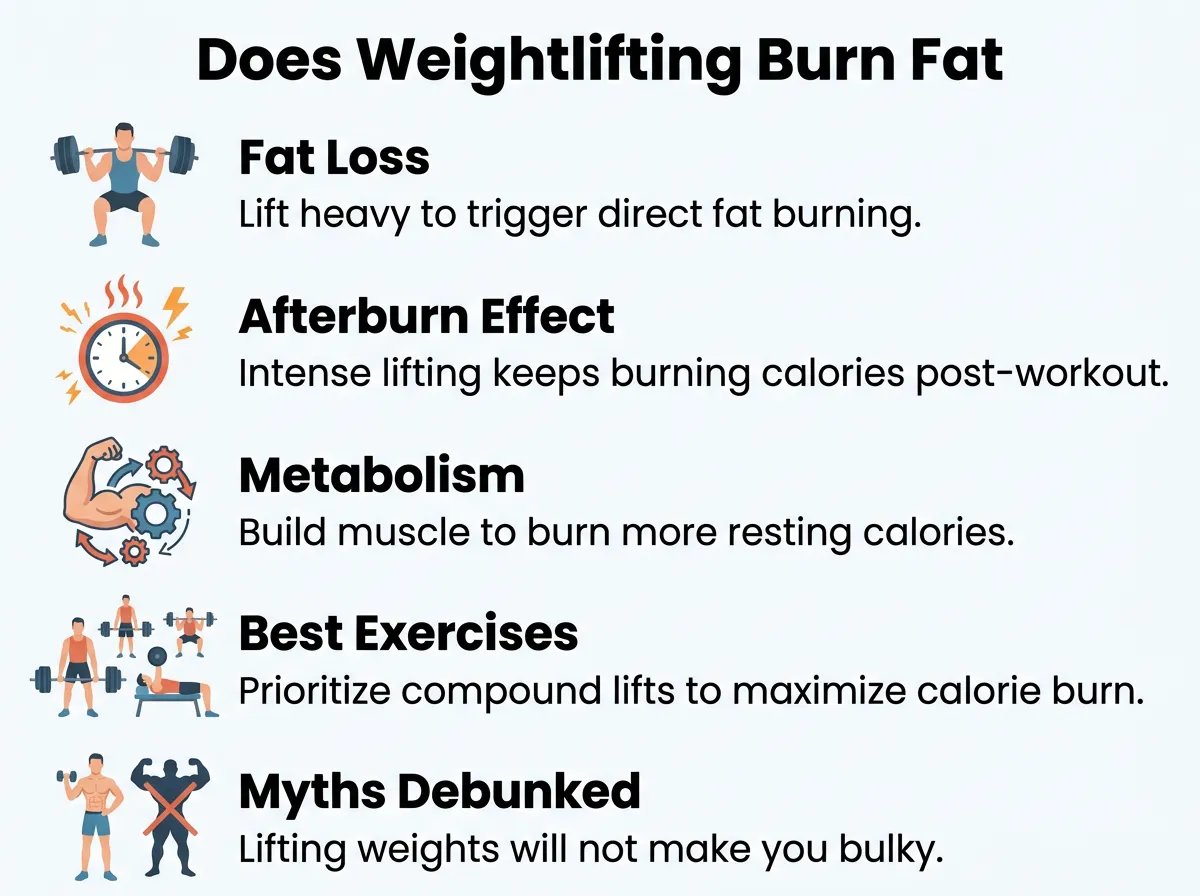
Does Weightlifting Burn Fat? — key points at a glance
Burning Calories While You Sleep
When you lift heavy weights, you create tiny, healthy tears in your muscle fibers. After your workout, your body has to work hard to repair these fibers. It needs to restore oxygen levels, cool down your body temperature, and balance your hormones. All of this work requires energy. This means your body keeps burning calories at an elevated rate for up to twenty-four to forty-eight hours after you leave the gym.
Weights vs. Cardio
If you look at a head-to-head matchup, a cardio session burns more calories during the actual workout. But once you stop running, the calorie burn stops quickly. With weight training, the burn keeps going. When comparing cardio vs weights for weight loss, science shows that weights provide a superior long-term metabolic boost. This makes strength training a secret weapon for keeping fat off for good.
How Muscle Mass Boosts Your Metabolism
When people wonder, does weightlifting burn fat, they often forget about resting metabolism. To understand how weightlifting changes your body, you need to think of your body as a car. Muscle is a big, powerful engine. Fat is just the luggage in the trunk.
Muscle is Active Tissue
Muscle is highly active tissue. This means it requires energy just to exist on your body. Even when you are sitting on the couch watching television, your muscles are burning calories. Fat tissue, on the other hand, is mostly dormant. It does not require much energy to maintain itself.
Increasing Your Basal Metabolic Rate
By lifting weights, you build lean muscle mass. This directly increases your Basal Metabolic Rate, or BMR. Your BMR is the number of calories your body burns just to keep you alive. One of the greatest benefits of lifting weights is that it turns your body into a constant fat-burning machine. So, does weightlifting burn fat by building muscle? Yes, because the more muscle you have, the more calories you burn every single second of the day.
The Best Weightlifting Exercises for Fat Loss
Not all exercises are created equal. If you want to maximize your fat loss, you should focus on exercises that give you the biggest bang for your buck.
Compound Movements are King
Compound exercises are movements that use more than one joint and muscle group at a time. Examples include squats, deadlifts, chest presses, and rows. Because these exercises use large muscle groups, they require a massive amount of energy. Doing a set of heavy squats will burn far more fat than doing a set of bicep curls. If you want to know, does weightlifting burn fat better than cardio, look at the energy required for heavy compound lifts.
The Role of Progressive Overload
To keep burning fat, you must challenge your body. This is called progressive overload. You can do this by lifting heavier weights, doing more repetitions, or resting less between sets. If you lift the exact same weights for the exact same reps every week, your body will adapt. It will stop burning as much fat. You might still ask, does weightlifting burn fat if you lift light weights? It can, but you must still push yourself close to failure to see results.
Debunking Common Weightlifting Myths
There are many old myths that prevent people from lifting weights, especially when they want to shed fat. Let us clear up the most common misunderstandings.
Myth 1: Lifting Weights Makes You Bulky
This is the biggest fear for many beginners. They worry that lifting weights will make them look too large. The truth is that building massive muscles requires years of heavy lifting and eating an enormous amount of extra food. When you lift weights while eating healthy, you will not get bulky. Instead, you will look firm, lean, and athletic.
Myth 2: You Can Spot-Reduce Belly Fat
Many people start lifting weights hoping to burn fat from one specific area, like the stomach. However, spot reduction is a myth. Your body burns fat from all over your body in a patterns decided by genetics. If you want to use weight training to reduce belly fat, you must focus on overall fat loss. Over time, the fat on your stomach will shrink along with the rest of your body.
Practical Tips for Your Fat-Loss Journey
Starting a new routine can feel overwhelming. Here are a few simple tips to help you get started safely and effectively.
Start with Three Days a Week
You do not need to live in the gym to see results. Three full-body workouts per week are perfect for beginners. This gives your muscles plenty of time to repair, grow, and burn fat. Focus on moving your body well and staying consistent.
Prioritize Protein in Your Diet
To lose fat, you must combine your workouts with a healthy diet. Focus on eating whole foods and lean proteins like chicken, fish, tofu, and beans. This is why, when asking does weightlifting burn fat, we must also focus on protein. Protein feeds your muscles, helps them repair, and keeps you feeling full for longer.
Conclusion
So, does weightlifting burn fat? Absolutely. While cardio has its place for heart health, lifting weights is the ultimate tool for changing your body shape and boosting your metabolism. By building lean muscle, you enjoy the benefits of the afterburn effect and burn more calories even when you are resting. Do not be afraid of the free weight section. Grab some weights, focus on your form, and watch your body transform.
Frequently Asked Questions
Is cardio or weightlifting better for fat loss?
While cardio burns more calories during your actual workout, weightlifting burns more calories in the long run. Lifting weights builds muscle, which raises your resting metabolism and helps you burn fat even at rest. For the best results, you should combine both methods in your routine.
How many times a week should I lift weights to lose fat?
Aiming for three to four sessions per week is ideal for fat loss. This frequency allows you to target all major muscle groups while giving your body enough time to recover. Consistency is far more important than working out every single day.
Will weightlifting make women look bulky?
No, lifting weights will not make women look bulky. Building massive muscle mass requires very high levels of testosterone and a large calorie surplus. Instead, weight training will help women achieve a lean, toned, and strong physique.
Do I need to lift heavy weights to burn fat?
Both light and heavy weights can help you burn fat, but lifting moderate to heavy weights is highly efficient. Heavy lifting recruits more muscle fibers, which triggers a stronger metabolic response and a larger afterburn effect. Always prioritize safe form over heavy weight.
Can weightlifting burn belly fat specifically?
You cannot choose where you lose fat, as spot reduction is a myth. However, weight training reduces overall body fat, including visceral fat around your midsection. Over time, consistent lifting will lead to a leaner, flatter stomach.
Should I lift weights before or after cardio?
It is generally best to lift weights before doing cardio. This ensures you have the maximum amount of energy and focus for your strength exercises, reducing the risk of injury. Doing cardio second allows you to use your remaining energy to burn extra calories.
