


When you drink alcohol, your body pauses the fat-burning process for roughly 12 to 36 hours. Because your liver must focus entirely on breaking down the toxins in alcohol, it stops burning stored fat and carbohydrates. This temporary metabolic freeze depends on how many drinks you consume, your body size, and whether you eat while drinking.
Imagine this simple scenario. You spent all week eating healthy meals. You went to the gym three times. You feel lighter, stronger, and full of energy. Then, the weekend arrives. You meet up with some friends and enjoy a few drinks. It feels like a harmless way to unwind. But deep down, you might wonder how those drinks affect your fitness goals.
Many active people know that alcoholic drinks contain extra calories. But the real issue is not just the liquid calories. The real problem is how alcohol changes your inner fat-burning machine. When you consume a drink, your body undergoes a chemical shift. Let us look at what happens inside your body when you take a sip, how it impacts your progress, and how you can manage your lifestyle.
Key Takeaways
- Metabolism Shift: Your body views alcohol as a toxic substance and burns it off first, putting fat burning on hold.
- The Timeline: Fat burning usually stops for 12 to 36 hours after your last drink, depending on your consumption.
- Acetate Production: Your liver turns alcohol into acetate, which your body burns for energy instead of stored fat.
- Hormone Changes: Drinking lowers testosterone and raises cortisol, which can slow muscle growth and speed up fat storage.
- Increased Hunger: Alcohol lowers your willpower and triggers hunger hormones, which often leads to late-night overeating.
- Smart Management: You can protect your metabolism by staying hydrated, choosing low-calorie drinks, and eating protein first.
📑 Table of Contents
The Science of Metabolism: Why Alcohol Takes Priority
When you eat food, your body has to decide what to burn for energy. Usually, it relies on a mix of carbohydrates and fats. But when you drink alcohol, your normal biology goes out the window. Your body treats alcohol as an urgent toxin. It wants to get rid of this substance as fast as possible.
The Body’s Emergency Clean-Up Crew
Your liver is the main organ that processes alcohol. It drops every other job to focus on this task. It stops burning fat, and it stops burning carbs. Why does this happen? Because your body cannot store alcohol. It has to burn it up immediately. This means your normal fat-burning systems go on a complete break.
Acetate: The Fat-Burning Blocker
As your liver breaks down the alcohol, it produces a chemical called acetate. Your body detects this acetate in your blood. Instead of burning your belly fat for energy, your body burns this new acetate first. According to research on weight loss from the Cleveland Clinic, this metabolic shift completely stalls your progress. Your body will not touch its fat stores until all the acetate is gone.
How Long Does Alcohol Stop Fat Burning?
So, how long does alcohol stop fat burning? The general answer is that a single drink can pause your fat burning for up to 12 to 24 hours. If you have a heavy night of drinking, that pause can easily stretch to 36 hours. During this entire window, your fat loss goals are essentially on hold.
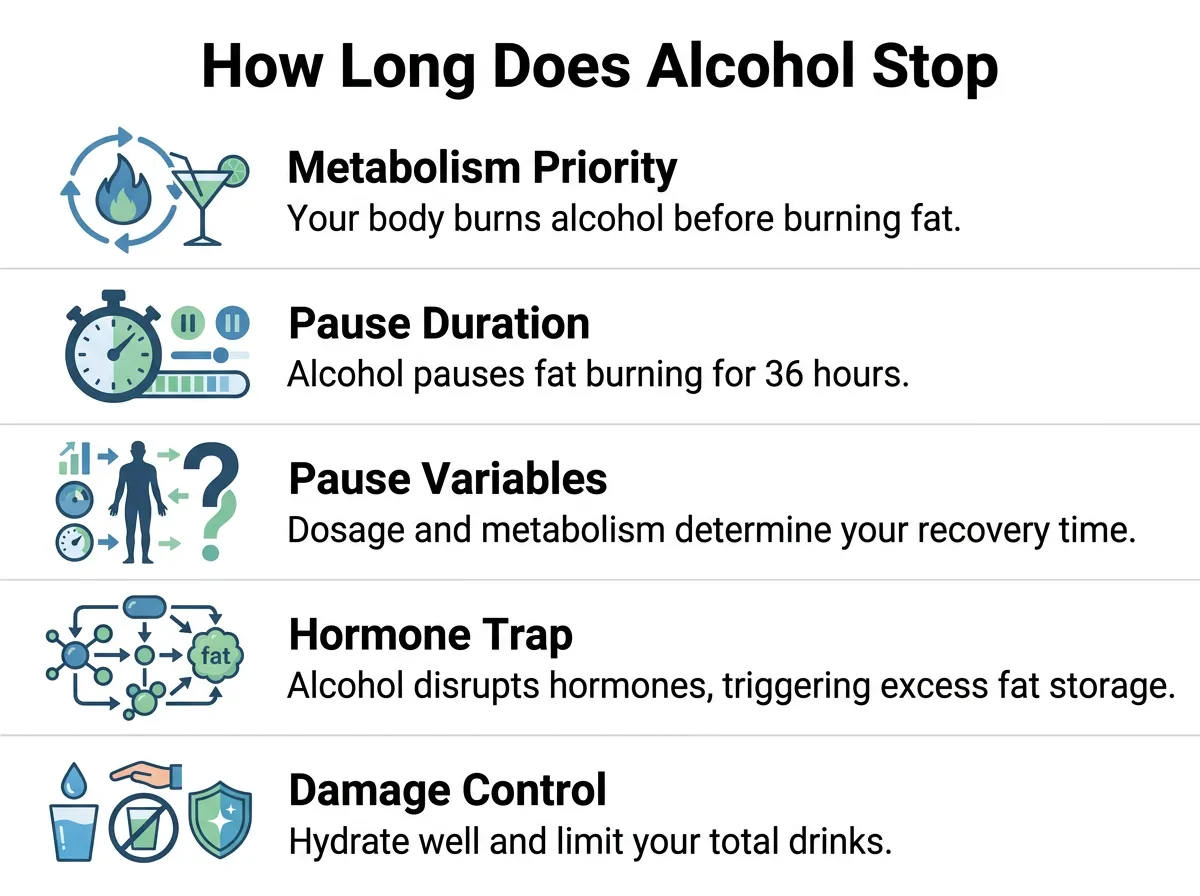
How Long Does Alcohol Stop Fat Burning? — key points at a glance
Think of it like a pause button on a video game. As long as alcohol is in your system, the fat-burning button is stuck. On average, your liver can process about one standard drink per hour. A standard drink is a 12-ounce beer, a 5-ounce glass of wine, or a 1.5-ounce shot of liquor. For a deeper look into this process, GoodRx explains how the liver prioritizes toxins over food nutrients, prolonging this metabolic freeze.
But even after the alcohol leaves your blood, the metabolic effects linger. Your body still has to clean up the cellular leftovers. This means your metabolism might not return to its normal state until the next day. If you are trying to find out how long does alcohol stop fat burning to plan your week, it is best to assume you will lose a full day of fat burning per drinking session.
Factors That Control Your Fat-Burning Pause
Not everyone processes alcohol at the exact same speed. Several things can change how long your fat burning remains on hold. Understanding these factors can help you make better choices.
The Number of Drinks You Have
This is the most important factor. One light beer will cause a short pause. A round of four sweet cocktails will shut down your fat burning for a long time. The more you drink, the longer your liver has to work, and the longer your fat loss is delayed.
Your Body Composition and Genetics
Your weight, muscle mass, and biological makeup play a big role. Muscle tissue contains a lot of water. This water helps dilute alcohol in your system. Genetics also determine how many liver enzymes you have to break down toxins. Some people naturally clear alcohol out of their system faster than others.
Food Intake Before and During Drinking
Drinking on an empty stomach is a recipe for a rapid metabolic freeze. The alcohol enters your blood quickly, forcing your liver into panic mode. Eating a balanced meal with protein and healthy fats before you drink slows down absorption. This gives your liver a better chance to keep up with the workload.
The Empty Calories and Hormone Trap
The metabolic freeze is only one part of the story. Alcohol also affects your hormones and your appetite in ways that make weight loss much harder. To learn more about this biological process, you can read about the impact of alcohol on weight loss on Healthline.
Cortisol and Testosterone Levels
Alcohol can disrupt your hormone balance. It raises cortisol, which is your body’s stress hormone. High cortisol levels encourage your body to store fat, especially around your stomach. At the same time, alcohol lowers testosterone. This hormone is key for building muscle and keeping your metabolism fast. A study on alcohol’s physiological effects published in PubMed Central (PMC) explains how alcohol consumption alters normal nutrient oxidation and disrupts hormone pathways, further slowing down fat loss.
The Late-Night Munchies Effect
Have you ever noticed how appealing pizza or fries look after a few drinks? Alcohol lowers your inhibitions and tricks your brain into thinking you are starving. This combination leads to overeating. You are not just pausing your fat burning. You are also dumping extra calories into a system that cannot burn them off. These extra calories are almost guaranteed to be stored as fat.
Practical Tips to Minimize the Fat-Burning Freeze
You do not have to live like a monk to reach your fitness goals. If you want to enjoy a drink occasionally, you can use these simple tips to protect your metabolism.
- Stick to Low-Calorie Drinks: Avoid sugary mixers, sweet wines, and heavy craft beers. Instead, choose vodka with club soda, a light beer, or dry red wine.
- Hydrate Like a Pro: Drink one large glass of water for every alcoholic beverage you consume. This helps your kidneys flush out toxins and keeps you hydrated.
- Eat Protein First: Before you have your first sip, eat a high-protein meal. Protein keeps you full and slows down the absorption of alcohol.
- Keep Moving: Do not skip your workouts. Exercising the day of or the day after drinking can help boost your metabolism back up, even if you have to lower the intensity.
- Set a Drink Limit: Decide how many drinks you will have before you go out. Limiting yourself to one or two drinks keeps the fat-burning pause as short as possible.
Finding the Right Balance for Your Lifestyle
At the end of the day, fitness is about long-term sustainability. If you love having a glass of wine with dinner or sharing a beer with friends, you can still lose weight. The key is understanding how your body works.
When you understand how long does alcohol stop fat burning, you can make smarter choices. You can plan your drinks around your heavy workout days. You can choose lighter options. Most importantly, you can stop feeling guilty and start feeling in control of your health journey. Moderation, planning, and self-compassion are your best tools for lasting success.
Frequently Asked Questions
Can I still lose weight if I drink alcohol on weekends?
Yes, you can still lose weight, but your progress may be slower. Since weekend drinking pauses fat burning for 12 to 36 hours, you must be very consistent with your diet and exercise during the week to make up for the pause.
What is the best alcohol to drink when trying to lose weight?
The best options are low-calorie, low-sugar drinks like tequila, vodka, or gin mixed with club soda or water. Dry wines and light beers are also better choices than sweet cocktails and heavy craft beers.
Does alcohol turn directly into fat?
No, alcohol itself does not directly turn into fat. However, because your body burns alcohol for energy first, any food you eat while drinking is much more likely to be stored as fat.
How long after drinking can I exercise to burn fat?
You can exercise as soon as you feel hydrated and alert, usually the next day. While a workout will help boost your metabolism, your body may still be processing the last of the alcohol, so listen to your body and avoid overexertion.
Does drinking water make your body burn alcohol faster?
Water does not speed up how fast your liver processes alcohol, as that rate is constant. However, drinking water prevents dehydration, supports kidney function, and helps you feel better the next day.
Does a single beer ruin my entire week of weight loss?
No, a single beer will not ruin your entire week. It will only pause your fat burning for a few hours, which has a very small impact on your overall weekly progress if your diet is on track.
