


Yes, building muscle is one of the most effective ways to burn fat. Muscle tissue is metabolically active, meaning it burns calories even when you are resting. By increasing your muscle mass, you naturally boost your metabolism and accelerate long-term fat loss.
Does Building Muscle Burn Fat?
Have you ever stared at the gym floor, wondering if you should head to the treadmills or the weights? Most of us are taught that cardio is the only way to shed unwanted weight. We spend hours running in place, staring at a screen, and hoping for the best. But there is a better, more exciting path to reaching your fitness goals.
Lifting weights and shaping your body does amazing things behind the scenes. It changes how your body uses energy. In this article, we will explore the science of how your body composition shifts when you build strength. We will look at how your daily calorie burn changes, how your diet plays a key role, and why lifting weights is the ultimate secret weapon for a lean body.
Key Takeaways
- Muscle is active tissue: Muscle tissue burns more calories at rest than fat tissue does, boosting your daily energy expenditure.
- The afterburn effect is real: Weight training triggers a recovery process that keeps your body burning calories for hours after your workout.
- Body recomposition is possible: You can lose fat and gain muscle at the exact same time with the right balance of exercise and diet.
- The scale does not tell the whole story: Muscle is denser than fat, so your body shape can change dramatically even if your weight stays the same.
- Protein is your best friend: Eating enough protein preserves your lean muscle mass while you burn body fat.
- Long-term weight control: Building muscle is the best way to prevent weight regain and keep a fast metabolism for life.
📑 Table of Contents
The Science of Muscle and Metabolism
To understand how this process works, we must look at how our bodies burn energy. Every single day, your body uses calories just to keep you alive. This is called your resting metabolic rate. Your heart needs energy to beat, your lungs need energy to breathe, and your organs need energy to function. You burn most of your daily calories just by being alive.
Muscle vs. Fat: The Calorie Burn at Rest
Muscle is highly active tissue. Fat, on the other hand, is mostly storage. Because muscle is so active, it requires a lot of energy to maintain. A common question is: does having muscles really torch body fat at rest? The answer is a clear yes. While a pound of fat burns only about two calories a day, a pound of muscle burns about six calories a day. This might seem like a small difference at first. However, over weeks and months, those extra burned calories add up. It means you burn more energy even when you are sitting on the couch or sleeping.
The Power of the Afterburn Effect
When you do a hard cardio session, you stop burning extra calories almost as soon as you stop moving. Strength training is different. It creates a state called Excess Post-Exercise Oxygen Consumption, or EPOC. This is often called the afterburn effect. Your body has to work hard to repair your muscles after you lift weights. This recovery process keeps your metabolism elevated for up to 24 to 48 hours after your workout ends. You are essentially burning fat while you recover.
How Weight Training Shrinks Fat Cells
For a long time, scientists thought muscle and fat did not talk to each other. They thought muscle just pulled on bones and fat just sat there. Now, we know that is not true. Your muscles actually send out chemical signals when they work hard.
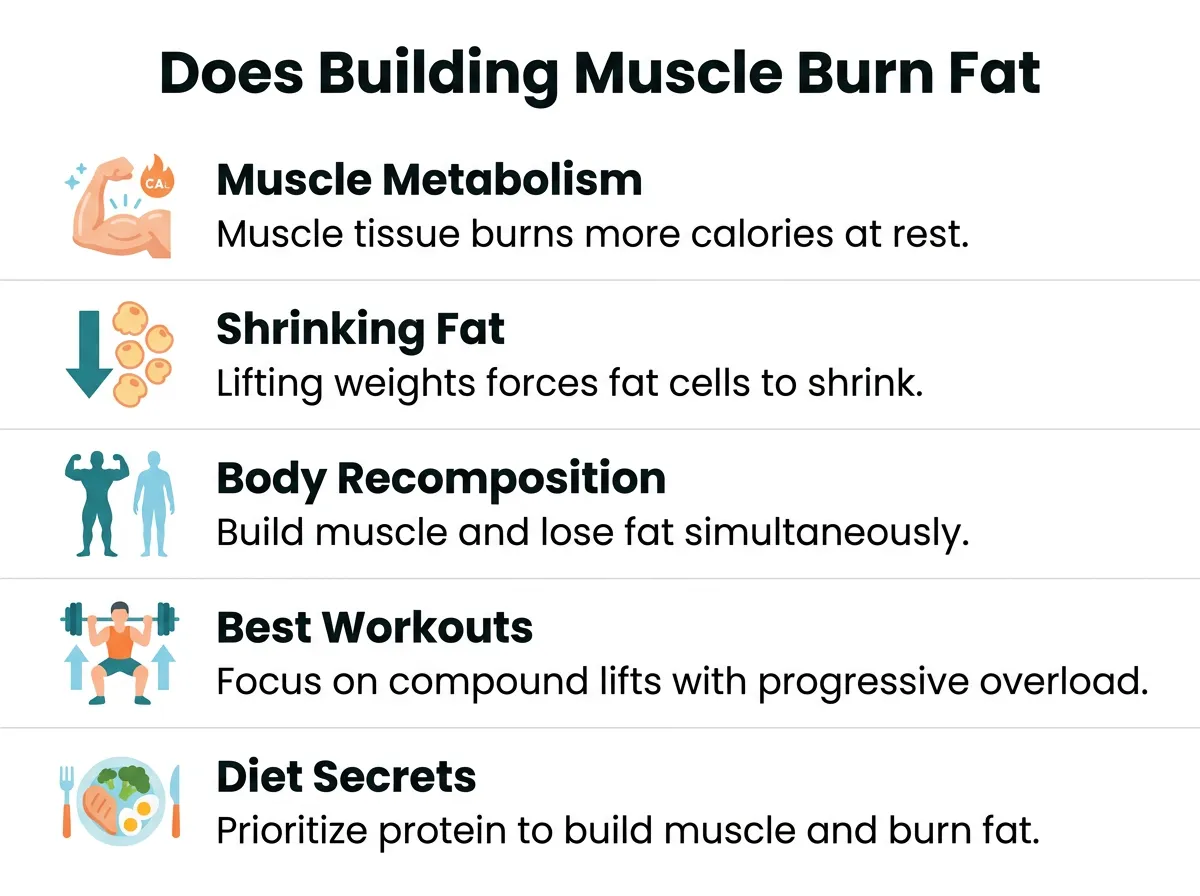
Does Building Muscle Burn Fat? — key points at a glance
The Cellular Conversation
When you lift weights, your muscles release tiny bubbles called extracellular vesicles. These bubbles carry instructions straight to your fat cells. New research shows that lifting weights tells your fat cells to start breaking down and releasing their stored energy. This means that building muscle does not just burn calories. It actively tells your body to get rid of fat. It is like sending a direct message to your fat storage to start packing its bags.
Body Recomposition: Losing Fat and Gaining Muscle
Many people think you have to choose between losing weight or gaining muscle. They think you must do one first and then the other. But you can actually do both at the same time. This exciting process is called body recomposition.
What is Body Recomposition?
If you want to change your shape, you should focus on body recomposition rather than just losing weight. This process involves reducing your body fat percentage while building lean muscle mass. To do this, you need a mix of strength training and a smart eating plan. It allows you to look tighter, leaner, and stronger without necessarily seeing a huge drop on the scale.
Why the Scale Can Lie to You
The scale is a poor tool for measuring your progress. Muscle tissue is much denser than fat tissue. This means one pound of muscle takes up much less space than one pound of fat. If you lose five pounds of fat and gain five pounds of muscle, your weight will stay exactly the same. However, you will look much slimmer. Your clothes will fit better, and your waist will look smaller. Do not let the scale discourage you. Focus on how you look and feel instead.
The Best Workouts for Muscle and Fat Loss
If you want to get the best results, you need to choose the right exercises. You do not need to spend hours doing bicep curls. Instead, you should focus on exercises that use large muscle groups.
Use Compound Movements
Compound exercises are movements that use more than one joint at a time. Examples include squats, lunges, push-ups, and rows. These exercises are amazing because they work many muscles at once. The more muscles you use, the more energy your body needs. This leads to a much higher calorie burn during and after your workout.
The Role of Strength Training
You should aim to lift weights three to four times a week. Make sure you are using strength training for weight loss to keep your bones strong and your muscles active. As you get stronger, make the exercises a little harder. This is called progressive overload. You can do this by adding more weight, doing more repetitions, or resting less between sets.
Nutrition Secrets to Fuel Your Progress
Exercise is only half of the puzzle. What you put on your plate is just as important. If you want to build muscle and burn fat, you need to feed your body the right nutrients.
Prioritize Protein
Protein is the building block of muscle. When you exercise, you create tiny tears in your muscle fibers. Protein helps repair these tears, making your muscles stronger and larger. Protein also keeps you feeling full for a long time. This makes it much easier to eat fewer calories without feeling hungry all day. Good sources of protein include chicken, fish, eggs, tofu, beans, and Greek yogurt.
Maintain a Small Calorie Deficit
To lose fat, your body needs to burn more calories than it takes in. However, you should not starve yourself. If you cut your calories too much, your body will start to burn muscle for energy instead of fat. This slows down your metabolism. Instead, aim for a small and steady calorie deficit. This will help you lose fat while keeping your hard-earned muscle.
Keeping the Weight Off for Good
The biggest benefit of building muscle is that it helps you maintain your weight loss. Many people lose weight through crash diets, only to gain it all back. This happens because they lose muscle along with fat, which ruins their metabolism.
Say Goodbye to Yo-Yo Dieting
When you focus on building muscle, you protect your metabolism. You create a body that is highly efficient at burning food for energy. This makes it much easier to keep your new shape for the rest of your life. You will not have to live on tiny portions forever because your body will naturally burn more food.
Conclusion
Building muscle is the ultimate key to burning fat and keeping it off. It boosts your metabolism, reshapes your body, and makes you feel strong. Do not let the scale hold you back. Grab some weights, eat your protein, and enjoy the journey to a healthier, happier you.
Frequently Asked Questions
Does building muscle burn fat?
Yes, building muscle is highly effective for burning fat. Muscle tissue is metabolically active and burns more calories than fat, even when your body is at rest. This naturally speeds up your daily calorie burn.
Can I build muscle and lose fat at the same time?
Yes, this process is known as body recomposition. By eating a high-protein diet and doing consistent strength training, you can build lean muscle while dropping body fat.
Why is my weight not changing if I am losing fat?
Muscle is much denser than fat, meaning it takes up less space in your body. If you gain muscle and lose fat simultaneously, your scale weight might stay the same even as you look leaner and lose inches.
How many times a week should I lift weights to lose fat?
You should aim to lift weights three to four times per week. Focus on full-body workouts or compound movements that target large muscle groups for the best results.
Do I need to do cardio to burn fat?
While cardio is great for heart health and burns calories, it is not strictly necessary for fat loss. Combining strength training with a clean diet is often more effective for long-term fat loss than cardio alone.
What should I eat to build muscle and burn fat?
You should eat a diet rich in lean protein, vegetables, and whole grains while keeping a small calorie deficit. Protein is crucial because it repairs muscle tissue and keeps you feeling full throughout the day.
