


Yes, doing weights burns fat effectively by building lean muscle tissue, which naturally boosts your resting metabolic rate. Unlike standard cardio, strength training keeps your body burning calories for hours after your workout is finished through excess post-exercise oxygen consumption. Combining weights with a balanced diet is one of the most sustainable ways to achieve long-term fat loss.
Walk into any local gym, and you will see a very familiar sight. The treadmills are packed with people running. Everyone is sweating, breathing hard, and watching the clock. Meanwhile, the weight section is often much quieter. Many people still believe that if you want to lose weight, you must run for miles. But is this really the best way to get fit?
If you want to shed body fat, you might look at the dumbbells and wonder. Does doing weights burn fat, or is cardio the only way to get lean? It is a common question that causes a lot of confusion. Many people fear they will get too bulky or waste their time if they do not stick to the running machine.
In this guide, we will break down the science of lifting weights. We will look at how your body burns energy during and after a workout. You will learn how muscle tissue changes your daily metabolism. We will also compare weights to cardio and give you practical steps to start your own fat-loss journey.
Key Takeaways
- Boosts metabolism: Lifting weights builds muscle, which burns more calories at rest than fat tissue does.
- The afterburn effect: Strength training increases your calorie burn for up to 48 hours after your workout ends.
- Reduces belly fat: Weight training is highly effective at targeting dangerous visceral fat around your organs.
- Preserves muscle mass: Unlike cardio alone, lifting weights ensures you lose fat, not muscle, as you shed pounds.
- Improves overall health: Strength training strengthens bones, supports joint health, and boosts your mood.
📑 Table of Contents
The Science of Weight Training and Fat Loss
To answer the question, does doing weights burn fat, we first have to look at how your body uses energy. Your body burns calories every second of the day just to keep you alive. This is called your resting metabolic rate. When you lift weights, you change how your body works on a cellular level.
How Muscle Burns Calories
Muscle tissue is highly active tissue. This means it requires a lot of energy just to exist on your body. Fat tissue, on the other hand, is mostly stored energy. It does not need many calories to stay there. When you lift weights, you create tiny tears in your muscles. Your body must work hard to repair these fibers.
As you build more muscle, your resting metabolism goes up. This means you burn more calories even when you are sitting on the couch, working at your desk, or sleeping. If you want to boost your daily calorie burn, building muscle is the key.
The Afterburn Effect Explained
Have you ever heard of the afterburn effect? The scientific name is excess post-exercise oxygen consumption, or EPOC. When you lift heavy weights, your body uses a lot of energy. This creates an oxygen deficit. After your workout is done, your body has to work extra hard to restore its oxygen levels and repair muscle tissue.
This recovery process can last for 24 to 48 hours. During this time, your body keeps burning calories at a higher rate. So, does doing weights burn fat? Yes, and it does so long after you leave the gym. Your body becomes a fat-burning machine even on your rest days.
Cardio vs. Weights: The Ultimate Showdown
When people ask, does doing weights burn fat, they often compare it directly to cardio. Many believe that cardio is the ultimate king of weight loss. It is true that running or cycling burns a lot of calories while you are doing it. If you spend 30 minutes on a treadmill, you will likely burn more calories than doing 30 minutes of lifting weights.
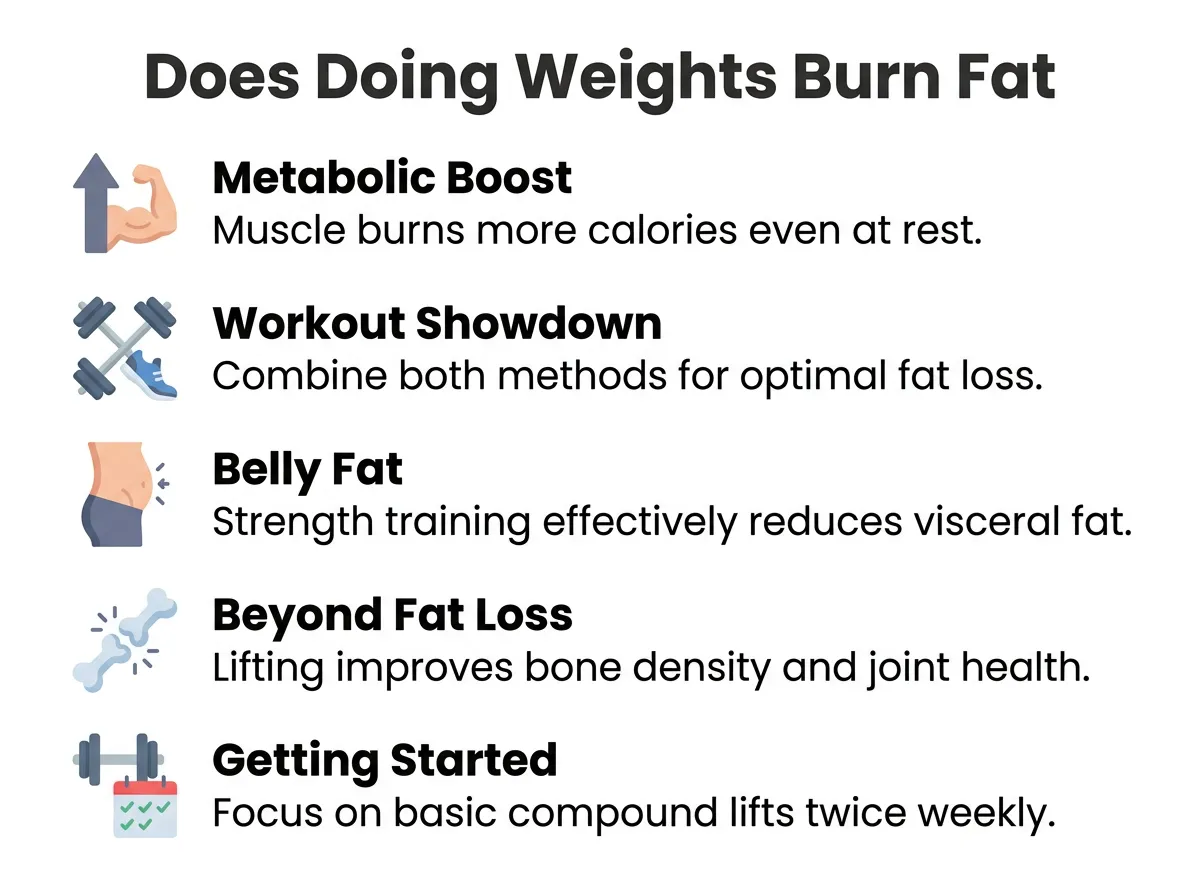
Does Doing Weights Burn Fat? — key points at a glance
However, that is only half the story. Once you stop running, your calorie burn drops back to normal very quickly. Lifting weights might burn fewer calories during the actual session, but the long-term effects are much greater. A helpful guide on cardio vs weights for weight loss shows that combining both is often the best path to success.
But does doing weights burn fat as effectively as running? Yes, because cardio can sometimes burn muscle if you do too much of it. Weights help protect your muscle mass. This is vital because losing muscle slows down your metabolism, making it harder to keep the weight off in the future.
Can Lifting Weights Help You Lose Belly Fat?
Many of us want to lose fat in specific areas. Belly fat is a very common trouble spot. So, does doing weights burn fat around your waist?
Visceral vs. Subcutaneous Fat
There are two types of fat in your body. Subcutaneous fat sits right under your skin. This is the fat you can pinch. Visceral fat sits deep inside your abdomen and wraps around your organs. Visceral fat is dangerous for your health and is linked to heart disease and diabetes.
Studies show that strength training is highly effective at reducing this dangerous visceral fat. When you build muscle, your body improves its insulin sensitivity. This helps you manage blood sugar levels and prevents your body from storing excess fat around your belly. You can learn more about how weight training reduces belly fat to improve your long-term health.
Spot Reduction is a Myth
It is important to know that you cannot choose where you lose fat first. Doing a thousand sit-ups will not burn belly fat specifically. Your body loses fat as a whole system. This makes us look at the bigger picture: does doing weights burn fat more evenly than spot training? Yes, because lifting weights burns overall body fat and builds muscle, toning your entire body, including your midsection.
The Hidden Health Benefits of Strength Training
Lifting weights is not just about looking good in the mirror. It does amazing things for your overall health and well-being.
If you are still wondering, does doing weights burn fat, a major study confirmed this fact. Researchers found that strength training can burn fat too, even without traditional cardio. This study busted the old myth that only aerobic exercise can help you lose fat.
Here are some of the other key benefits of lifting weights:
- Better bone density: Lifting weights puts healthy stress on your bones, which protects you as you age.
- Joint stability: Stronger muscles support your joints, reducing pain and preventing injuries.
- Higher energy levels: Physical strength makes daily tasks feel much easier.
- Better mental health: Lifting weights releases feel-good hormones that reduce stress and anxiety.
By lifting weights, you build a body that is strong, resilient, and highly efficient at burning fuel. You can read more about the great benefits of lifting weights to see how it can transform your daily lifestyle.
How to Get Started with Weight Training for Fat Loss
Now that you know the answer to does doing weights burn fat, you might want to start lifting. But walking into the weight room can feel scary at first. Many beginners struggle to believe this. They ask, does doing weights burn fat if I do not sweat as much as I do on a stationary bike? The answer is yes, and here is a simple plan to help you begin safely and effectively.
Focus on Compound Movements
If you want to maximize your fat burn, focus on compound exercises. These are movements that use multiple joints and large muscle groups at once. Good examples include:
- Squats
- Lunges
- Push-ups
- Dumbbell rows
- Glute bridges
Because these exercises use many muscles at the same time, they require a lot of energy. This means a much higher calorie burn during and after your workout.
The Rule of Progressive Overload
To keep burning fat and building muscle, you must challenge your body. This is called progressive overload. It means you slowly increase the weight or the number of repetitions over time. If you lift the same five-pound weights forever, your body will adapt and stop changing. Try to make your workouts slightly harder each week.
Finding Your Perfect Routine
When planning your schedule, you might wonder, does doing weights burn fat if you only lift twice a week? Yes, you do not need to live in the gym to see results. For most beginners, two to three days a week of full-body lifting is perfect.
Give your body at least one day of rest between lifting sessions. This rest is when the real magic happens. Your muscles repair and grow, and your body burns fat while you rest. Try to support your lifting with a good diet. To lose fat, you still need to eat slightly fewer calories than you burn. Eat plenty of protein to help your muscles recover, drink lots of water, and get enough sleep every night.
Conclusion
Ultimately, does doing weights burn fat? The science says a resounding yes. Lifting weights is one of the most powerful tools you have for body transformation. It raises your metabolism, burns calories hours after you finish, and protects your hard-earned muscle.
Do not let the weight room scare you. Start small, focus on your form, and be consistent. Before you know it, you will feel stronger, have more energy, and watch the fat melt away. Grab some weights today and start your journey to a healthier you!
Frequently Asked Questions
How long does it take to see results from lifting weights?
Most people begin to feel stronger and have more energy within two to three weeks of consistent lifting. Visible changes in your body shape and fat loss usually become noticeable after six to eight weeks. Consistency and a balanced diet are key to seeing these changes.
Will lifting weights make me look too bulky?
No, lifting weights will not make you bulky unless you are actively eating a large excess of calories and training specifically for extreme muscle size. For most people, lifting weights builds lean muscle, which actually makes you look toned, firm, and slender.
Should I lift weights before or after cardio?
It is generally best to lift weights before doing cardio if you do them in the same session. This ensures you have the energy to lift with safe form and high intensity. Doing cardio first can tire your muscles, making your weight training less effective.
Can I lose weight by just lifting weights without changing my diet?
While lifting weights burns calories and builds metabolism-boosting muscle, you cannot out-train a poor diet. For real fat loss, you need to combine your weight training with a slight calorie deficit. Eating whole foods and getting enough protein will speed up your results.
How many times a week should I lift weights to lose fat?
Lifting weights two to three times a week is highly effective for beginners looking to lose fat. This schedule allows your body enough time to recover and rebuild muscle between sessions. As you get stronger, you can increase your workouts to four days a week.
Do I need heavy weights to burn fat?
You do not need to lift extremely heavy weights to burn fat. Lifting moderate weights with higher repetitions can also challenge your muscles and torch calories. The most important thing is that the weights feel challenging to you by the end of each set.
