


Yes, fasting burns fat by shifting your body’s primary fuel source from glucose to stored fat. When you stop eating for several hours, your insulin levels drop and your body begins a process called metabolic switching. This natural state allows you to target stubborn fat reserves while preserving lean muscle mass.
Imagine waking up on a busy morning. You rush out the door and skip breakfast. Years ago, health experts told us this was a terrible mistake. They said skipping meals would ruin our metabolism and make us gain weight. But today, things have completely changed. Millions of people are skipping meals on purpose. They use fasting to lose weight, gain energy, and feel better. If you have ever asked yourself, does fasting burn fat, you are not alone.
Understanding how your body handles food can change how you look at dieting. When you eat all day, your body is always busy digesting. When you stop eating, your body gets a chance to rest and repair. It shifts from using food for energy to using its own stored fuel. In this guide, we will explore the science behind this process. We will look at how fasting affects your hormones, your metabolism, and your fat cells. By the end, you will know exactly how this practice works and if it is right for your lifestyle.
Key Takeaways
- The metabolic switch: Fasting lowers insulin levels, which signals your body to start burning stored fat for energy instead of sugar.
- Growth hormone boost: Fasting can increase human growth hormone (HGH) levels, helping you preserve muscle while losing fat.
- Caloric deficit made easy: By limiting your eating window, you naturally eat fewer calories without tracking every single bite.
- Autophagy benefits: During longer fasts, your body cleans out damaged cells and regenerates new, healthier ones.
- Consistency is key: Finding a fasting schedule that fits your daily life is the best way to get long-term results.
📑 Table of Contents
The Science Behind Fasting and Fat Loss
To answer the question, “does fasting burn fat?”, we must first look at human history. For thousands of years, food was not always easy to find. Our ancestors did not have supermarkets or refrigerators. They had to hunt and gather. Often, they went hours or even days without a single meal. Because of this, the human body evolved a brilliant survival system. It learned to store energy from food so it could survive during times of scarcity.
The Metabolic Switch
When you eat, your digestive system breaks down food into a simple sugar called glucose. This sugar enters your blood and serves as your body’s main energy source. Any glucose that you do not use right away is saved in your liver and muscles as glycogen. Once those storage areas are full, the extra energy is turned into body fat. According to research from Johns Hopkins Medicine, fasting triggers what scientists call a metabolic switch. This switch happens when your body runs out of its glucose stores and starts burning fat for fuel.
The Role of Insulin
Insulin is the master hormone when it comes to fat storage. When you eat, your pancreas releases insulin to help move glucose into your cells. High insulin levels act like a one-way lock. They tell your body to store energy and stop burning fat. When you do not eat, your insulin levels drop very low. This drop signals your body that it is time to release stored fat. So, does fasting burn fat? It absolutely does, because low insulin levels act like a key that unlocks your fat cells.
How Does Fasting Burn Fat?
To understand how does fasting burn fat, it helps to look at the process step by step. Your body does not just burn fat instantly. It follows a very specific biological pathway.
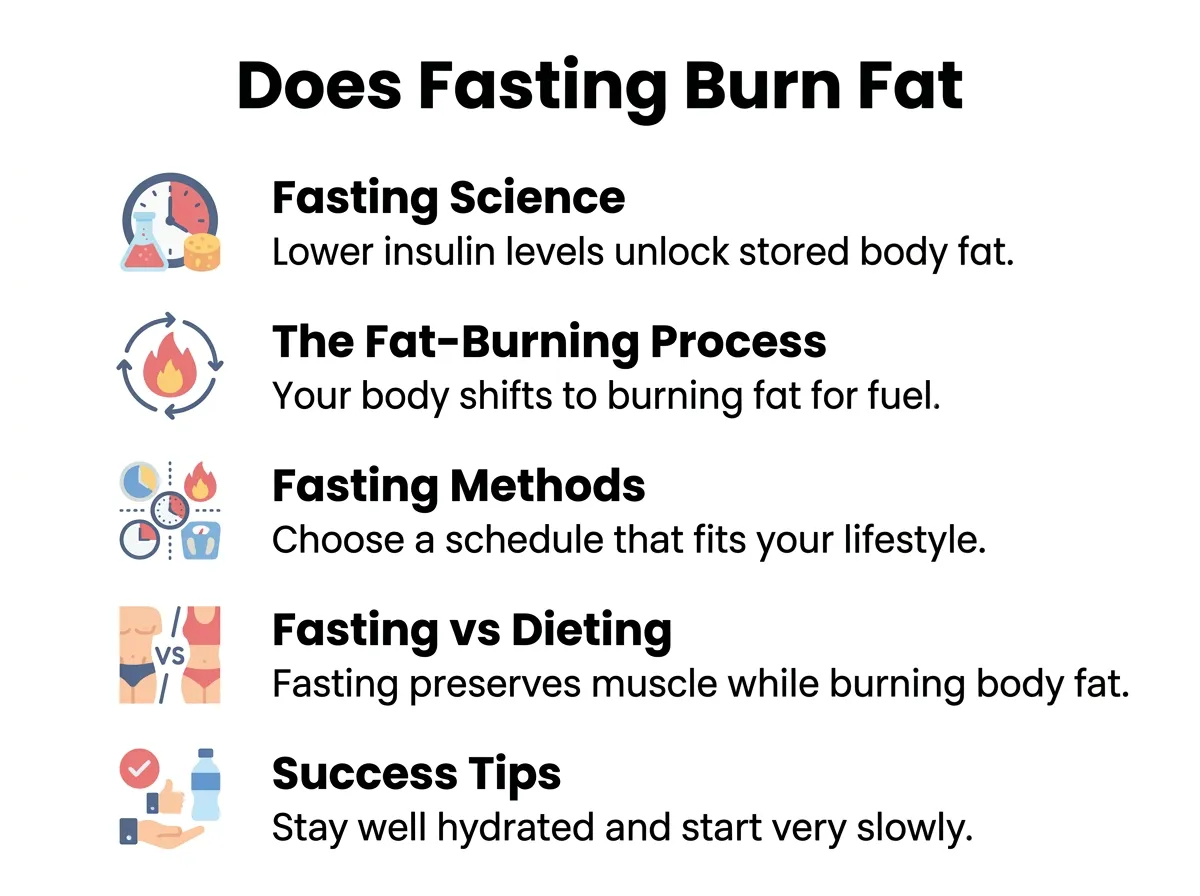
Does Fasting Burn Fat? — key points at a glance
Glycogen Depletion
When you begin a fast, your body first burns the glucose floating in your blood. Once that is gone, it taps into your glycogen stores in the liver. Think of glycogen as a small backup battery. For most people, it takes about 12 to 16 hours of fasting to drain this backup battery. Until this battery is empty, your body will not burn a significant amount of fat. This is why a normal eating schedule of three meals plus snacks rarely allows for true fat burning.
Using Ketones for Energy
Once your liver glycogen is used up, your body enters a state called ketosis. Your liver begins to break down fat tissue into molecules called ketones. These ketones travel through your bloodstream to power your brain, heart, and muscles. When this happens, you are actively burning fat for almost all your daily energy needs. This explains exactly how does fasting burn fat. You are shifting your body from a sugar-burning machine into a fat-burning machine.
Popular Fasting Methods to Try
You do not need to go without food for days to experience these benefits. There are several simple ways to fit fasting into your life. If you want to know “does fasting burn fat?” for your unique routine, look at these popular options.
The 16/8 Method
This is the most common way to start. You fast for 16 hours each day and eat all your food within an 8-hour window. For example, you might eat your first meal at noon and your last meal at 8:00 PM. Many people find this easy because they sleep through most of the fasting window. It naturally reduces the time you have to eat, which often leads to eating fewer calories.
The 5:2 Diet
With this method, you eat normally for five days of the week. On the other two days, you limit your food intake to about 500 to 600 calories. This approach creates a large calorie deficit over the course of the week. It helps answer the question “does fasting burn fat?” by helping you cut back on calories without feeling restricted every single day.
24-Hour Fasts
This involves fasting from one meal to the same meal the next day. For instance, you might eat dinner on Monday night and not eat again until dinner on Tuesday night. People usually do this once or twice a week. It gives your digestive tract a long break and pushes your body deeper into the fat-burning state.
Fasting vs. Simple Calorie Restriction
Some people wonder why they cannot just eat less food at every meal. While standard dieting can work, fasting offers some unique metabolic benefits.
Hormonal Protection
When you reduce your calories on a typical diet, your metabolism often slows down. Your body thinks food is scarce, so it tries to save energy. Fasting acts differently. It can actually increase your metabolic rate by raising levels of a hormone called noradrenaline. This hormone tells your fat cells to break down even faster.
Muscle Preservation
A major concern for anyone trying to lose weight is muscle loss. You want to get rid of fat, not muscle. You might wonder, when you limit your eating, does your body eat fat or muscle first? Fortunately, research shows that fasting is excellent for keeping your muscles safe. Fasting triggers a large increase in human growth hormone (HGH). This hormone helps protect lean muscle mass while encouraging your body to burn fat for fuel.
If you wonder, does fasting burn fat without losing muscle, the answer is yes. Many health experts suggest that trying intermittent fasting can be a much simpler way to manage your weight without losing your hard-earned muscle.
Practical Tips for Success
Starting a new health routine can feel tough. If you want to make sure fasting burns fat effectively, follow these helpful tips.
Stay Hydrated
You must drink plenty of fluids during your fast. Water, sparkling water, black coffee, and plain green tea are all great choices. They do not contain calories, so they will not spike your insulin or break your fast. Staying hydrated also helps keep away the false hunger pains that often pop up.
Eat Whole Foods
What you eat during your eating window still matters. If you break your fast with fast food and sugary snacks, you will spike your insulin. This can put a quick stop to fat burning and leave you feeling sluggish. Instead, focus on whole foods. Eat plenty of lean protein, healthy fats like avocados, and fiber-rich vegetables.
Listen to Your Body
Fasting is a tool, not a punishment. If you feel dizzy, weak, or sick, you should stop and eat. Start slowly. If a 16-hour fast feels too hard, start with a 12-hour fast. Slowly increase your fasting time as your body gets used to the change.
Conclusion
So, does fasting burn fat? The scientific evidence points to a clear yes. By lowering insulin levels and initiating the metabolic switch, fasting allows your body to access and burn its stored fat for energy. It offers a natural, effective way to lose weight while preserving muscle and supporting overall metabolic health.
However, remember that consistency is key. Fasting is not a free pass to eat low-quality food during your eating windows. For the best results, combine fasting with a balanced diet of whole foods and regular movement. Start slowly, find a schedule that fits your daily life, and enjoy the many benefits of this ancient practice.
Frequently Asked Questions
How long do you have to fast before you start burning fat?
Most people start burning fat after about 12 to 16 hours of fasting. This is the typical time it takes for your body to deplete its stored liver glycogen. Once glycogen is low, your system begins breaking down fat stores for energy.
Can I drink coffee while fasting?
Yes, you can drink black coffee while fasting. It contains virtually zero calories and will not raise your insulin levels or break your fast. Just avoid adding milk, sugar, or creamers to your cup.
Does fasting burn muscle instead of fat?
No, fasting actually helps protect your muscles. It triggers a rise in human growth hormone, which preserves lean muscle tissue while encouraging your body to use fat for fuel. This makes it highly effective for body recomposition.
Will fasting slow down my metabolism?
Short-term fasting does not slow down your metabolism. In fact, it can briefly boost your metabolic rate by raising levels of noradrenaline. However, extremely long fasts of several days can eventually cause your metabolism to slow down to conserve energy.
What is the best thing to eat to break a fast?
The best way to break a fast is with a small meal of easy-to-digest whole foods. Focus on lean proteins, healthy fats, and cooked vegetables, such as chicken with avocado or a light soup. Avoid sugary foods or heavy carbs right away to prevent rapid insulin spikes.
Can women fast the same way as men?
Women can absolutely fast, but some may need a gentler approach. Female bodies are highly sensitive to calorie restriction, which can impact reproductive hormones. Many women find success starting with shorter fasting windows, like 12 to 14 hours, and gradually building up.
