


Yes, protein does help burn fat, though not directly like a magic pill. Instead, it boosts your metabolism through the thermic effect of food, helps preserve calorie-burning muscle mass, and keeps you feeling full longer so you naturally eat fewer calories. By optimizing these bodily functions, protein becomes your ultimate ally in sustainable weight loss.
Imagine walking down the grocery store aisle. Every box, bag, and bottle seems to shout at you. “High Protein!” “Loaded with Protein!” “Now with 20g of Protein!” It is easy to feel like protein is the superstar of the health world. But behind all the marketing hype, a vital question remains: Does Protein Burn Fat? Or is it just another trendy buzzword designed to sell protein shakes and bars?
Many of us have tried every diet under the sun. We have cut carbs, counted calories, and skipped meals. Yet, the stubborn belly fat remains. If you are tired of feeling hungry and frustrated, understanding how your body uses protein is a game-changer when exploring the question: Does Protein Burn Fat?
Key Takeaways
- Boosts Metabolism: Protein has a high thermic effect, meaning your body burns more calories just digesting it compared to carbs or fats.
- Reduces Appetite: High-protein meals trigger fullness hormones and decrease hunger hormones, helping you naturally eat less.
- Preserves Muscle: Consuming enough protein prevents muscle loss during a calorie deficit, keeping your metabolic rate high.
- Targeted Fat Loss: Protein encourages your body to burn stored fat for energy rather than breaking down muscle tissue.
- Easy Swaps: Simple changes, like eating eggs instead of cereal, make reaching your daily protein goals easy and enjoyable.
📑 Table of Contents
How Protein Boosts Your Metabolism
To understand how your body digests food, we must look at how metabolic rate changes after eating. Many people wonder, does protein burn fat on its own? The answer lies in how your body handles different nutrients.
Every time you eat, your body has to spend energy to break down, absorb, and process those nutrients. This process is called the Thermic Effect of Food, or TEF. Think of it as a tax your body pays just to digest its fuel. Protein has a much higher thermic effect than carbs or fats. When you eat fat or carbs, your body uses about 5 to 15 percent of those calories just to digest them. But when you eat protein, your body burns a whopping 20 to 30 percent of those calories during digestion!
This means if you eat 100 calories of chicken breast, your body actually only stores about 70 to 80 of those calories. The rest is burned off as heat. According to clinical studies on protein-induced thermogenesis, this simple metabolic boost can add up to burning an extra hundred calories or more every day.
So, does protein burn fat? Yes, because it forces your metabolic engine to work harder. By simply swapping some carbs for lean protein, you increase your daily calorie burn without doing extra workouts.
How Protein Controls Hunger and Cravings
One of the biggest enemies of fat loss is hunger. It is hard to stay on track when your stomach is constantly growling. This is where protein acts like a natural appetite suppressant. When you ask yourself, “Does Protein Burn Fat?”, you must look at how it stops you from overeating in the first place.
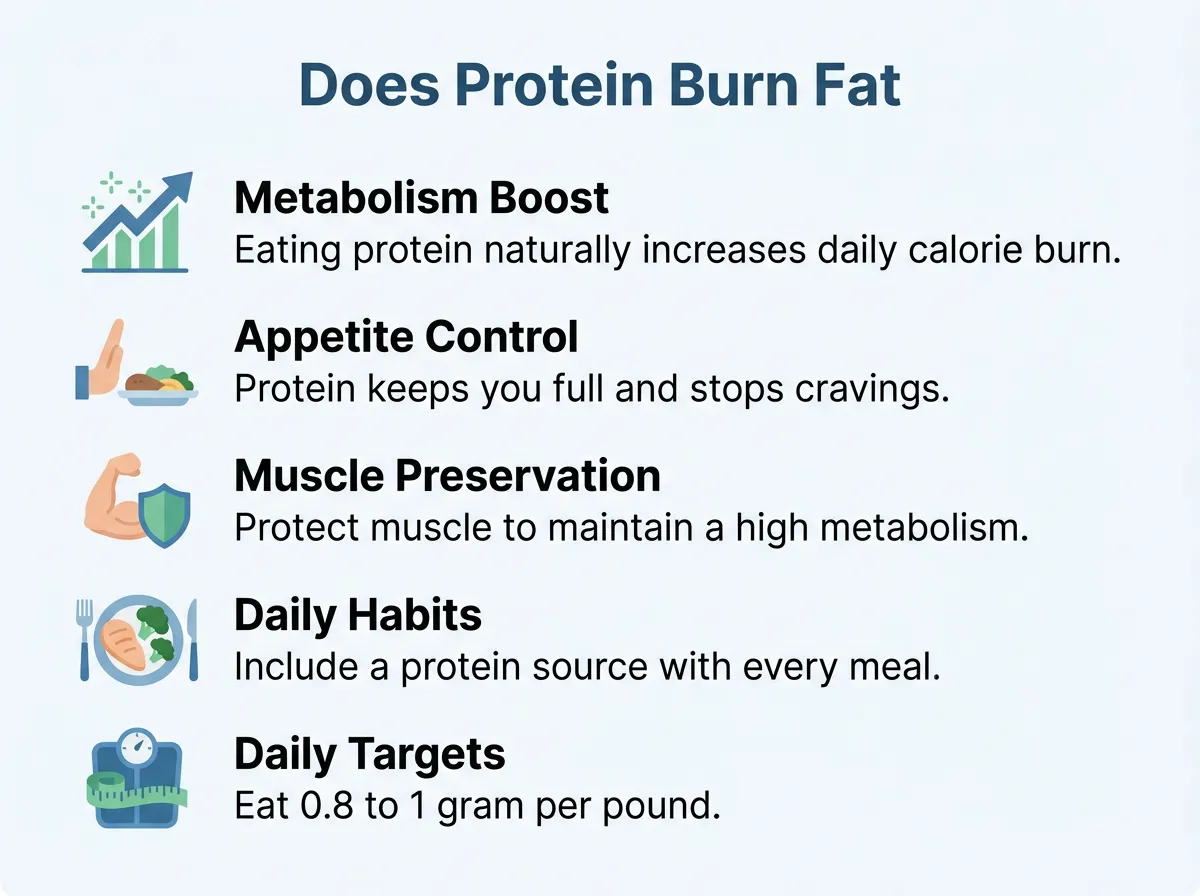
Does Protein Burn Fat? — key points at a glance
Protein changes the levels of your hunger hormones. It reduces the level of ghrelin, which is known as the hunger hormone. At the same time, it boosts hormones like peptide YY and GLP-1, which tell your brain that you are full and satisfied. This hormonal shift is why a high-protein breakfast keeps you full until lunch, while a sugary pastry leaves you starving an hour later.
When you feel full, you naturally eat less. You do not have to fight intense cravings for sweet or salty snacks late at night. By reducing your overall calorie intake effortlessly, protein helps create the calorie deficit you need to lose weight. If you want to know, does protein burn fat by helping you eat less, the research points to a clear yes. You can read more about how this works on how protein can help you lose weight and curb those pesky cravings.
Preserving Muscle: The Key to Long-Term Fat Loss
When people say they want to lose weight, what they really mean is they want to lose fat. There is a huge difference between the two. When you cut calories too low without eating enough protein, your body starts to break down muscle for energy. This is a disaster for your metabolism.
Muscle tissue is highly active. It burns calories even when you are just sitting on the couch watching television. Fat tissue, on the other hand, does very little. If you lose muscle while dieting, your metabolism slows down. This makes it incredibly easy to gain all the weight back once you stop dieting.
Does protein burn fat while keeping your muscle safe? Absolutely. Eating enough protein, especially when combined with strength training, signals your body to keep its muscle and burn fat instead. This is why fitness experts emphasize protein. It ensures that the weight you lose comes from your fat stores, not your muscles. When clients ask, does protein burn fat during a calorie deficit, coaches always point to muscle preservation. To understand how to structure your intake to protect your muscle, check out this guide on how much protein to eat to lose weight effectively.
Practical Ways to Eat More Protein Every Day
Now that you know the answer to “Does Protein Burn Fat?”, you might wonder how to get more of it into your daily routine. You do not need to live on bland chicken breasts and chalky protein shakes. Here are some simple, delicious ways to boost your protein intake:
Start Your Day with Protein
Skip the sugary cereal or bagels. Instead, scramble some eggs, make a bowl of Greek yogurt topped with berries, or blend a quick protein smoothie. Starting your day with 20 to 30 grams of protein sets a positive tone for your blood sugar and hunger levels for the rest of the day.
Smart Swaps for Snacks
Instead of reaching for chips or crackers when the afternoon slump hits, try high-protein snacks. Cottage cheese, hard-boiled eggs, beef jerky, or a handful of almonds are great choices. These snacks keep your energy steady instead of causing a sugar crash.
Balance Your Plate
At lunch and dinner, make protein the star of your plate. Aim to fill a quarter of your plate with a lean protein source like chicken, fish, tofu, or lean beef. Fill half your plate with colorful vegetables and the remaining quarter with fiber-rich carbs like quinoa or sweet potatoes. When you structure your meals this way, you no longer have to wonder, does protein burn fat, because you will see the results in the mirror.
How Much Protein Do You Actually Need?
There is no one-size-fits-all answer to how much protein you should eat. Your ideal amount depends on your age, gender, activity level, and goals. However, a general rule of thumb for weight loss is to aim for about 0.8 to 1.0 grams of protein per pound of target body weight. If your goal weight is 150 pounds, you should try to eat around 120 to 150 grams of protein daily.
If you are highly active or do heavy lifting, your needs might be slightly higher. It is best to spread this intake out throughout the day. Your body can only absorb so much protein in one sitting, so aiming for 25 to 40 grams per meal is a smart strategy. If you are trying to answer, does protein burn fat for your specific body type, focus on getting enough grams daily and keeping your sources clean.
Common Mistakes to Avoid
While protein is amazing for fat loss, it is not a magic shield against weight gain. Here are a few common traps people fall into:
Eating Too Many Processed Protein Foods
Just because a protein bar has a label boasting high protein does not mean it is healthy. Many of these bars are loaded with sugar, artificial ingredients, and as many calories as a candy bar. Always choose whole, minimally processed foods first.
Forgetting About Total Calories
At the end of the day, weight loss still requires a calorie deficit. If you eat a high-protein diet but consume more calories than your body burns, you will still gain weight. Protein helps you control your calories, but it does not erase them.
Neglecting Fiber and Veggies
Focusing purely on protein can sometimes lead to digestive issues if you ignore fiber. Make sure you are still eating plenty of leafy greens, vegetables, and whole grains to keep your digestive system running smoothly.
Conclusion
So, does protein burn fat? The answer is a clear and resounding yes. While it won’t melt fat off your body overnight, protein is the most powerful tool you have to naturally boost your metabolism, preserve your metabolism-boosting muscle, and crush your daily cravings. By making simple changes to prioritize protein in your meals, you can take control of your weight loss journey and achieve the lasting results you deserve.
Frequently Asked Questions
Can eating protein alone make you lose weight?
No, eating protein alone will not cause weight loss if you are still consuming too many total calories. While protein boosts your metabolism and reduces appetite, you must still maintain a calorie deficit to lose fat. Protein simply makes achieving and staying in that deficit much easier.
Which protein foods are best for burning fat?
The best protein foods for fat loss are whole, lean sources that are low in added sugars and unhealthy fats. Excellent choices include chicken breast, turkey, wild-caught fish, eggs, Greek yogurt, cottage cheese, tofu, lentils, and tempeh.
Does eating too much protein get stored as fat?
Yes, any excess calories, including those from protein, can be stored as fat if you eat more than your body burns. However, because your body uses so much energy to digest protein, it is much harder to store excess protein as fat compared to excess carbs or fats.
Can I lose belly fat by just eating protein powder?
No, protein powder is a supplement designed to help you meet your daily protein goals, not a magic fat burner. To lose belly fat, you need a balanced diet of whole foods, a calorie deficit, and a consistent exercise routine that includes strength training.
Is a high-protein diet safe for everyone?
For most healthy people, a high-protein diet is perfectly safe and highly beneficial. However, individuals with pre-existing kidney conditions should consult their doctor before significantly increasing their protein intake, as their bodies may struggle to filter the waste products of protein digestion.
How long does it take for protein to help you lose weight?
You may notice the appetite-suppressing effects of protein within just a day or two of increasing your intake. However, visible fat loss and changes in your body composition generally take four to twelve weeks of consistent eating and exercise to become noticeable.
