



Running is an incredibly effective way to burn fat and lose weight because it burns a high number of calories. To maximize your results, combine high-intensity intervals with consistent aerobic runs and a healthy, calorie-controlled diet. Understanding how your body uses energy can help you turn every run into a powerful fat-burning session.
Imagine tying your running shoes early in the morning. The air is fresh and cool. You take your first steps onto the pavement. As your heart rate starts to rise, you might wonder if this effort is truly helping you shed those stubborn pounds. Many of us start running with one big goal in mind: to slim down and feel better in our clothes.
But how exactly does our body react to the miles we cover? Does running burn fat in a way that other exercises cannot? It is easy to get lost in the sea of fitness advice online. Some people swear by long, slow jogs, while others say short, fast sprints are the only way to go.
In this guide, we will break down the science of running for weight loss. We will explore how your body uses fat for fuel and look at different types of running workouts. We will also share simple, actionable tips to help you get the most out of every single mile.
Key Takeaways
- Calorie Burn: Running is highly efficient because it engages large muscle groups, creating a strong calorie deficit.
- The Fat-Burning Zone: Gentle, slow runs at a conversational pace help your body burn a higher percentage of fat for fuel.
- Interval Training: Adding high-intensity sprints triggers an afterburn effect, burning calories long after your run ends.
- Visceral Fat reduction: Running is especially effective at reducing harmful belly fat that surrounds your internal organs.
- Nutrition Matters: You must combine running with a balanced diet to avoid overeating after your workouts.
- Consistency is Key: Regular, shorter runs are much safer and more effective than occasional, exhausting runs.
📑 Table of Contents
How Running Influences Fat Loss
To understand fat loss, we must look at how our bodies use energy. Every movement we make requires fuel. When you run, your body taps into its energy stores to keep you moving forward.
The Calorie Deficit Connection
At its core, losing fat requires a calorie deficit. This means you must burn more calories than you take in. Running is one of the most efficient calorie-burning activities you can choose. It engages large muscle groups, like your glutes, quadriceps, and hamstrings. Because these muscles are big, they require a lot of oxygen and energy to work. According to research on running for weight loss, the sheer amount of energy needed to move your entire body weight makes running a premier tool for creating a caloric deficit.
Visceral Fat vs. Subcutaneous Fat
Not all fat is the same. Subcutaneous fat is the soft fat you can pinch under your skin. Visceral fat is the hidden fat that wraps around your internal organs. While both can affect how you look, visceral fat is the type that can harm your health. Running is highly effective at reducing this deeper, dangerous fat. The physical stress of running triggers the release of hormones that specifically target visceral fat stores. This means running does not just help you look leaner; it also makes you much healthier from the inside out.
The Science of the Fat-Burning Zone
You have probably heard of the “fat-burning zone.” Many cardio machines have charts showing this zone. But what does it actually mean, and how does it work?
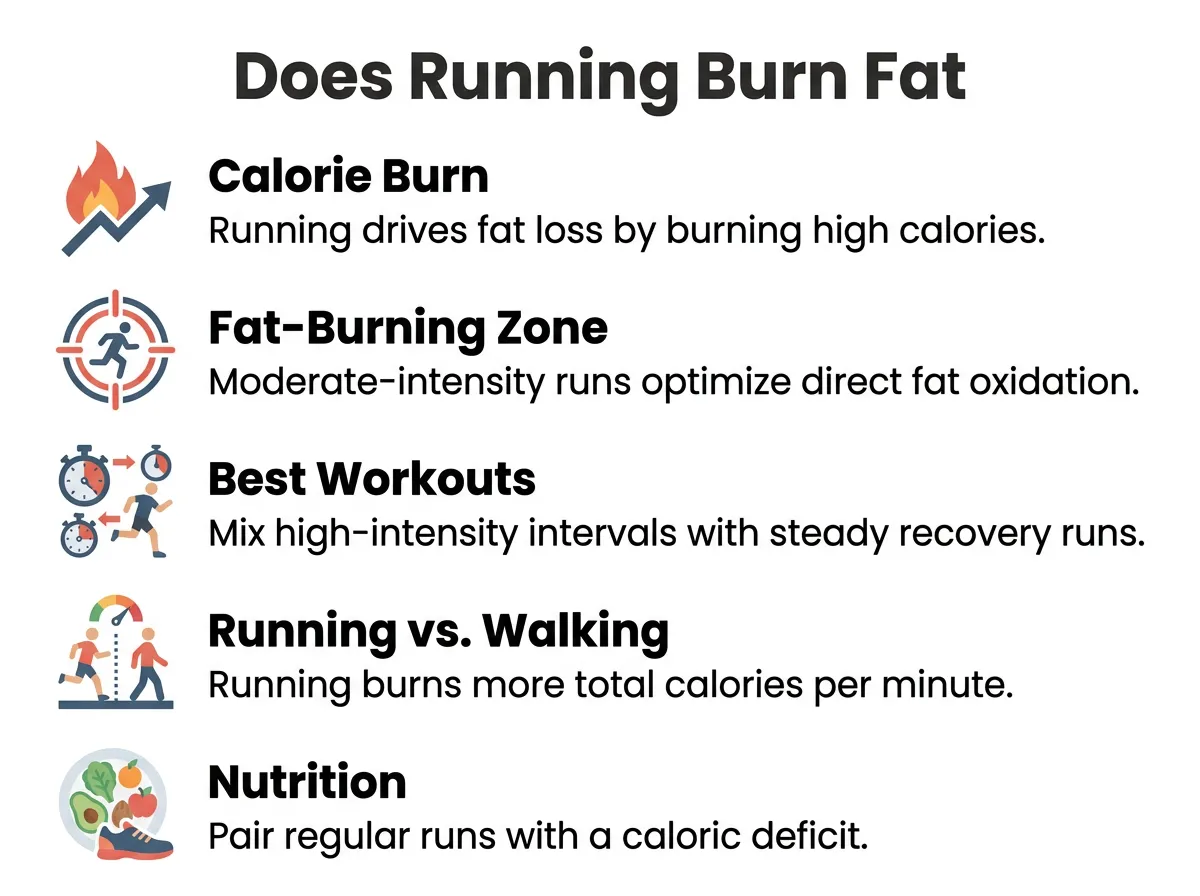
Does Running Burn Fat? — key points at a glance
High-Intensity vs. Low-Intensity Exercise
Your body has two main sources of fuel: carbohydrates and fat. Carbohydrates are like quick-burning kindling. Fat is like a thick, slow-burning log. When you work out at a lower intensity, your body has plenty of oxygen. It can take its time to break down fat for fuel. When you push hard and sprint, your body needs energy fast. It cannot wait for fat to break down, so it burns carbohydrates instead.
Understanding Heart Rate Zones
The fat-burning zone typically happens when you exercise at about 60% to 70% of your maximum heart rate. At this level, you can still talk in full sentences. It feels like an easy, gentle jog. While it is true that you burn a higher percentage of fat at this lower intensity, you burn fewer total calories overall. To get the best results, you need a balance. A deeper look at the facts about running and fat burning reveals that total calorie burn is often more important than the percentage of fat burned during the workout itself.
Running Workouts That Maximize Fat Burn
If you want to use running to lose fat, you should vary your workouts. Doing the exact same run every day can lead to a plateau. Your body is smart and adapts quickly to routine.
Steady-State Aerobic Runs
These are your classic, comfortable jogs. They should last anywhere from 30 to 60 minutes. Because they are low-intensity, you can do them often without burning out. These runs build your aerobic base. They teach your body to become highly efficient at using fat as a primary fuel source over long periods.
High-Intensity Interval Training (HIIT)
If you are short on time, intervals are your best friend. A HIIT run involves short bursts of sprinting followed by walking or slow jogging to recover. For example, you can warm up for five minutes, sprint for 30 seconds, and walk for 90 seconds. Repeat this cycle 8 to 10 times. HIIT runs burn a lot of calories in a short time. They also trigger the “afterburn effect,” where your body keeps burning calories for hours after you finish your workout.
Running vs. Walking for Weight Loss
Many beginners wonder if they need to run, or if walking is enough to achieve their goals. Both are wonderful forms of movement, but they serve different purposes.
Efficiency and Time
Running is simply a more intense version of walking. Because it requires more effort, running burns about double the calories of walking in the same amount of time. If you only have 30 minutes to exercise, running will give you a much bigger calorie burn. When comparing walking vs running for weight loss, running wins for efficiency, but walking is much easier on your joints and requires less recovery time.
How to Combine Both
You do not have to choose just one. A run-walk method is a great way to start. You can run for one minute and walk for two minutes. As you get stronger, you can increase the running time and decrease the walking time. This prevents injury and keeps your workouts fun.
The Role of Nutrition in Your Running Journey
You cannot outrun a bad diet. This is a common saying in the fitness world, and it is entirely true. Running makes you burn calories, but it also makes you very hungry.
Fueling Your Runs Properly
To run well, your body needs good food. Do not starve yourself to lose weight. Eat complex carbohydrates like oatmeal or brown rice before your runs. These give you lasting energy. After your run, focus on protein and healthy fats. Protein helps repair your muscles so they can grow stronger.
Avoiding the “Rungry” Pitfall
Have you ever felt incredibly hungry after a long run? This is often called being “rungry.” It is very easy to eat more calories than you burned during your workout. A 30-minute run might burn 300 calories. But eating a large muffin and a sugary coffee drink afterward can easily add 500 calories. Keep track of your food intake to ensure you remain in a gentle calorie deficit.
Tips to Build a Sustainable Running Routine
Starting a running routine is exciting, but staying with it can be hard. The key to long-term fat loss is consistency.
Consistency Over Intensity
It is much better to run three times a week for 20 minutes than to run once a week for two hours. Slow and steady wins the race. Give your body time to adapt to the impact of running. This protects your knees, ankles, and feet from overuse injuries.
Incorporating Strength Training
Running is great, but adding strength training will supercharge your fat loss. Muscle tissue burns more calories at rest than fat tissue does. Lifting weights once or twice a week will help you build lean muscle. This keeps your metabolism high and protects your joints while you run.
Conclusion
Running is a powerful, accessible, and highly effective way to burn fat. By combining easy, aerobic runs with short, intense intervals, you can maximize your calorie burn and improve your health. Remember to pair your runs with a balanced diet and plenty of rest. Be patient with yourself. Fat loss takes time, but every step you take brings you closer to a healthier, happier you. Grab your shoes, head outside, and enjoy the journey!
Frequently Asked Questions
Does running burn belly fat?
Yes, running is highly effective at reducing belly fat, especially harmful visceral fat. It triggers hormones that target fat stores in the abdominal area. Combining consistent runs with a healthy diet is the best way to see results.
How long should I run to start burning fat?
Your body starts burning fat as fuel almost immediately, but it becomes the primary fuel source after about 20 to 30 minutes of running. For the best fat-burning results, aim for runs that last between 30 and 45 minutes. Always start with a gentle warm-up to prepare your muscles.
Is it better to run on an empty stomach to burn fat?
Running on an empty stomach, or fasted running, can make your body burn a slightly higher percentage of fat during the run. However, it can also leave you feeling tired and weak, which might shorten your workout. For most people, eating a small, carb-rich snack before running leads to a better overall workout.
Can I lose weight by running 15 minutes a day?
Yes, running 15 minutes a day can help you lose weight by increasing your daily calorie burn. However, to see steady progress, you should combine this daily habit with a calorie-controlled diet. Adding a few longer runs or high-intensity intervals during the week can also help.
How many times a week should I run to lose fat?
Aim to run three to four times a week to allow your body proper time to recover and adapt. Running every day can lead to overuse injuries, especially if you are a beginner. On your off days, try walking, stretching, or light strength training.
Why am I running but not losing fat?
The most common reason for not losing fat while running is eating too many calories. Running increases your appetite, which can easily lead to overeating. To break through this plateau, track your food intake and ensure you are in a gentle caloric deficit.
