



Yes, walking is an incredibly effective way to burn belly fat, particularly the dangerous visceral fat that builds up around your abdominal organs. By combining regular brisk walks with a healthy, balanced diet, you can create the calorie deficit needed to slim your waistline. Making walking a daily habit is one of the easiest, lowest-impact ways to improve your body composition and boost your overall health.
Imagine waking up early in the morning, putting on your favorite pair of sneakers, and stepping outside into the cool, fresh air. You start moving your feet, feeling the gentle rhythm of your body as you glide down the sidewalk. For many of us, this peaceful moment is the highlight of our day. Yet, as you walk, a common question might cross your mind: Does walking burn belly fat? You want to know if this enjoyable, low-stress activity is actually doing the hard work of shrinking your waistline.
It is easy to believe that the only way to lose stubborn belly fat is through grueling workouts, heavy weightlifting, or high-intensity interval training (HIIT) that leaves you gasping for breath. However, fitness does not have to be painful to be effective. In this article, we will explore the real truth behind how walking impacts your midsection. We will break down the science of fat loss, look at different types of abdominal fat, and provide you with a practical guide to help you step your way to a healthier body.
Key Takeaways
- Visceral Fat Target: Walking specifically helps reduce visceral fat, which is the deep abdominal fat linked to chronic heart diseases.
- Calorie Burn: A regular, brisk walking routine creates a consistent daily calorie burn to support steady fat loss.
- Low-Impact Exercise: Walking is easy on your joints, making it highly sustainable for long-term weight management.
- Intensity Matters: Brisk walking or walking on an incline burns more calories than a slow, casual stroll.
- Diet Synergy: For the best results, pair your walking habits with a wholesome diet and light strength training.
📑 Table of Contents
The Science of Walking and Fat Loss
To understand if walking can help you trim your midsection, we first need to look at how the body burns energy. When you walk, your body requires fuel to keep your muscles moving. This fuel comes from a mix of stored carbohydrates and fats. Because walking is a low-to-moderate intensity exercise, your body actually relies heavily on fat as its primary energy source during the workout.
When asking yourself, does walking burn belly fat, the answer lies in your daily energy balance. To lose fat from any part of your body, you must create a calorie deficit, which means you burn more calories than you consume. Walking is a fantastic, sustainable way to increase your daily energy expenditure without exhausting your body. According to a helpful guide on walking for weight loss, adding regular strolls to your daily routine can significantly boost your metabolic rate and help you shed extra pounds over time.
Unlike intense gym workouts that can spike your appetite and lead to overeating, walking tends to keep your hunger levels stable. This makes it much easier to maintain a healthy diet while still burning a steady amount of calories every single day.
Visceral Fat vs. Subcutaneous Fat
When we talk about tummy fat, we are actually talking about two very different types of fat. Knowing the difference is key to understanding why walking is so powerful.
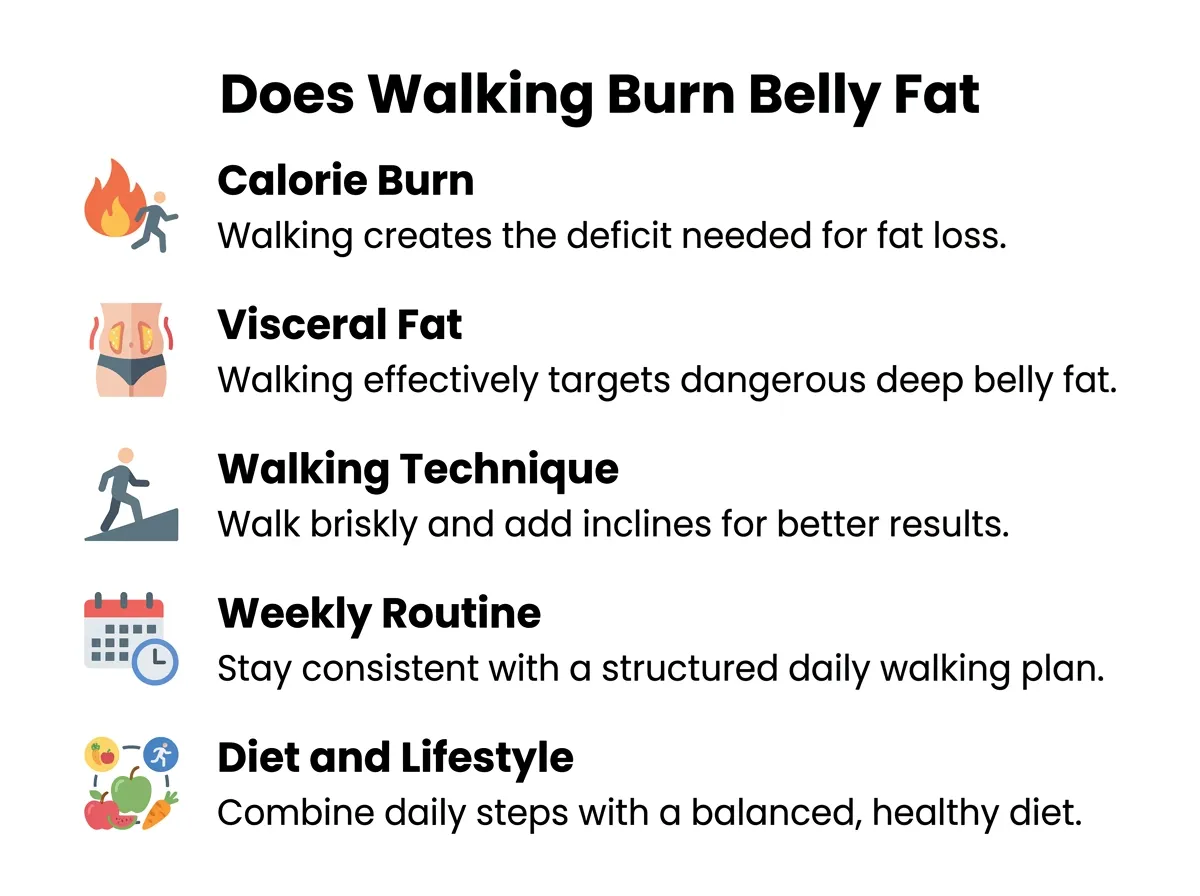
Does Walking Burn Belly Fat? — key points at a glance
Subcutaneous Fat
This is the soft, pinchable fat that sits right beneath your skin. While it might affect how your clothes fit, subcutaneous fat is not highly dangerous to your health. It is simply your body’s way of storing extra energy for later.
Visceral Fat
This is the deep fat that wraps around your internal organs, like your liver and intestines. Visceral fat is active and releases hormones that can lead to inflammation, heart disease, and type 2 diabetes. This is the fat we really want to target for better health.
The great news is that visceral fat is highly responsive to regular aerobic exercise like brisk walking. A clinical study on aerobic exercise and abdominal fat highlights that aerobic physical activities, including moderate walking, are incredibly effective at reducing abdominal visceral fat. So, does walking burn belly fat? Yes, and it specifically targets the most dangerous type of fat hiding deep within your stomach.
How to Walk Your Way to a Flatter Stomach
Not all walks are created equal. While a slow stroll around the block is wonderful for your mental health, you will need to add a bit of structure to your routine if your goal is fat loss. Here are three simple ways to maximize your fat-burning potential during your daily walks.
Pick Up the Pace
To burn more calories, you need to increase your intensity. Brisk walking means moving at a pace where you can still talk, but you cannot sing. This elevated heart rate shifts your body into an optimal fat-burning zone, helping you torch more calories per minute.
Add Some Incline
If you are walking on a treadmill or outdoors, try to find some hills. Walking uphill forces your glutes, hamstrings, and calves to work much harder. This extra effort builds muscle and increases your calorie burn without putting harsh stress on your joints. Expert advice from the Mayo Clinic emphasizes that modifying your walking style, such as adding inclines or varying your speed, is a highly effective way to increase the overall intensity of your fitness program.
Increase Your Daily Step Count
Consistency is key. If you currently take 3,000 steps a day, try raising your goal to 5,000, then 8,000, and eventually 10,000 steps. Little changes, like taking the stairs or parking further away from the store entrance, quickly add up over the course of a week.
A Simple 7-Day Walking Routine
Starting a new exercise routine can feel overwhelming, but it does not have to be. You do not need any fancy gym equipment to begin. To make things easy, here is a simple weekly plan that you can follow to kickstart your fat-burning journey.
- Monday: Brisk 20-minute walk on flat ground to get your body moving.
- Tuesday: 30-minute moderate-paced walk, focusing on deep breathing and steady posture.
- Wednesday: Active recovery day. Take a light, casual 15-minute stroll.
- Thursday: Interval walk. Alternate between 1 minute of fast walking and 2 minutes of normal walking for 25 minutes total.
- Friday: 30-minute walk on a hilly path or on a treadmill set to a light incline.
- Saturday: Long, steady walk. Aim for 45 to 60 minutes at an easy, comfortable pace.
- Sunday: Rest day. Do some light stretching to reward your muscles for their hard work.
If you want a more structured approach, you can check out this detailed 7-day walking plan for visceral fat. Following a clear guide takes the guesswork out of your fitness routine, making it much easier to stick to your goals.
Pairing Walking with Diet and Lifestyle
While walking is a powerful tool, it is not a magic wand. If you walk for an hour but then eat a large, sugary meal, you might undo all your hard work. To truly answer the question, does walking burn belly fat, we must look at the bigger picture.
To lose fat, you should aim to eat whole, nutrient-dense foods. Focus on lean proteins like chicken and fish, plenty of colorful vegetables, and healthy fats like avocados and olive oil. Protein is especially important because it helps repair your muscles after your walks and keeps you feeling full and satisfied for longer.
Additionally, do not ignore the power of sleep and stress management. When you are chronically stressed or sleep-deprived, your body produces a hormone called cortisol. High cortisol levels encourage your body to store fat in your midsection. Aim for seven to eight hours of high-quality sleep each night and practice relaxing activities like deep breathing or reading to keep your stress levels low.
Tips to Stay Motivated and Consistent
The secret to seeing real, lasting changes in your waistline is consistency. A single walk will not melt away belly fat, but hundreds of walks over several months definitely will. Here are a few friendly tips to help you stay motivated on your fitness journey.
- Find a Walking Buddy: Walking with a friend, partner, or family member makes the time fly by. It also holds you accountable on days when you feel like staying on the couch.
- Listen to Entertainment: Save your favorite podcasts, audiobooks, or music playlists specifically for your walks. This gives you something fun to look forward to every time you lace up your shoes.
- Track Your Progress: Use a simple fitness tracker or a smartphone app to count your daily steps. Watching your daily numbers grow can be highly satisfying and keeps you pushing for more.
- Be Kind to Yourself: If you miss a day, do not worry or give up. Simply start again the next day. Fitness is a lifelong journey, not a short race.
Conclusion
So, does walking burn belly fat? The answer is a clear and encouraging yes. By engaging in regular walking, you are choosing a sustainable, joint-friendly, and enjoyable way to improve your health. You do not need intense gym sessions or extreme diets to trim your waistline. By walking briskly, incorporating inclines, eating balanced meals, and staying consistent, you can successfully reduce both subcutaneous and dangerous visceral fat. Start small, enjoy the fresh air, and take it one step at a time!
Frequently Asked Questions
How many steps should I walk daily to lose belly fat?
While any amount of movement is beneficial, aiming for 8,000 to 10,000 steps per day is a great target for fat loss. This level of activity helps burn a significant number of calories and keeps your metabolism active throughout the day. However, if you are just starting, simply focus on increasing your current daily step count gradually.
Can slow walking still burn fat?
Yes, slow walking still burns fat because it keeps your body in a low-intensity, fat-burning zone. However, brisk walking is more efficient because it raises your heart rate and burns more total calories in a shorter amount of time. To get the best results, try to mix some faster intervals into your casual walks.
How long does it take to see weight loss results from walking?
Most people begin to notice physical changes and improved energy levels within four to six weeks of consistent walking. For visible belly fat loss, it may take a few months of daily walking paired with a healthy diet. Consistency and patience are the most important factors for long-term success.
Is it better to walk before or after eating?
Both times offer unique benefits, so the best time is whenever it fits your schedule. Walking before breakfast on an empty stomach can help your body burn stored fat more directly, while a light walk after a meal helps lower blood sugar levels and aids digestion. Choose the option that feels most comfortable and sustainable for your lifestyle.
Does walking on a treadmill burn the same amount of fat as walking outside?
Yes, walking on a treadmill burns a very similar amount of fat as walking outdoors. However, outdoor walking can burn slightly more calories due to natural wind resistance, uneven terrain, and changing slopes. To match this on a treadmill, you can set the incline to 1% or 2% to mimic the outdoor environment.
Can I lose belly fat just by walking without changing my diet?
It is possible to lose some weight by walking alone, but it is much harder to target stubborn belly fat without adjusting your diet. To lose fat efficiently, you need to create a calorie deficit, which is best achieved by combining regular physical activity with balanced eating. Adjusting your portion sizes and eating whole foods will maximize your walking efforts.
