



To maximize weight loss, you should aim to stay in the fat-burning zone for 30 to 60 minutes per session. Consistent workouts of this duration help your body transition from burning sugars to burning stored fat. Combining this timeframe with a balanced diet will yield the best long-term results.
Imagine you are on a treadmill at your local gym. You see a bright screen with different colors and numbers. One area on the screen is labeled the “fat-burning zone.” You might wonder if you should push harder or slow down to reach it. Many people want to know how to get the most out of their gym time. It can feel tricky to find the right pace for weight loss. We all want to make sure our hard work pays off.
This guide will help you understand your body’s energy zones. We will explore how your heart rate affects weight loss. You will learn the science behind fat loss in a simple way. We will look at workout lengths, heart rates, and simple tricks. By the end, you will know exactly how to plan your next workout for the best results. Let us dive in and learn how to make your workouts count.
Key Takeaways
- Target Duration: Plan to spend 30 to 60 minutes per exercise session in your fat-burning zone.
- The Switch: Your body needs about 15 to 20 minutes of steady movement before it starts burning stored fat.
- Heart Rate Goal: The fat-burning zone is usually 50% to 70% of your maximum heart rate.
- Listen to Your Body: If you are a beginner, start with 30 minutes and build up slowly.
- No Need to Overdo It: Working out for more than 60 minutes in this zone may lead to muscle soreness and extra hunger.
- Consistency Wins: Doing steady workouts several times a week is better than one very long workout.
📑 Table of Contents
- What Exactly is the Fat-Burning Zone?
- How Long to Stay in Fat-Burning Zone?
- Factors That Influence Your Ideal Time
- Benefits of Staying in This Zone
- How to Track Your Heart Rate During Workouts
- Fat-Burning Zone vs. High-Intensity Interval Training (HIIT)
- Practical Tips to Maintain Your Fat-Burning Workouts
- Conclusion
What Exactly is the Fat-Burning Zone?
Your body has different energy systems. It uses two main fuels to keep you moving: sugar and fat. When you sit or walk slowly, your body burns a high mix of fat. When you run very fast, your body burns mostly sugar. The fat-burning zone is a sweet spot. It is a level of effort where your body burns a high ratio of fat compared to sugar. This zone usually happens when your heart beats at a moderate pace.
To find this zone, you need to know your heart rate. According to a WebMD guide on the fat-burning zone, this zone is about 50% to 70% of your maximum heart rate. At this rate, you breathe a bit harder, but you can still talk. You are not gasping for air. It feels like a steady, warm walk or a light jog. This is a level of effort you can keep up for a long time.
How to Find Your Maximum Heart Rate
Finding your max heart rate is very easy. The basic math is simple. Subtract your age from 220. For example, if you are 30 years old, your max heart rate is 190 beats per minute. Now, find 50% to 70% of that number. For a 30-year-old, this is between 95 and 133 beats per minute. This range is your target zone. Staying in this range keeps you in the active fat-loss zone. You can use this simple math for any age.
The Science of Fuel Sources
Why does the body burn fat at lower efforts? Fat takes longer to break down than sugar. Your body needs oxygen to burn fat. When you exercise at a moderate pace, you can breathe in plenty of oxygen. This allows your cells to use fat for fuel. If you go too fast, you cannot take in enough oxygen quickly. Your body then switches to sugar because sugar burns fast without much oxygen. Understanding this helps you see why slower can sometimes be better.
How Long to Stay in Fat-Burning Zone?
Now, let us answer the big question. How long to stay in fat-burning zone during your workouts? The short answer is that you should aim for 30 to 60 minutes. But let us look deeper into why this time works best. Your body does not burn fat right away. It takes a little time to start the process.
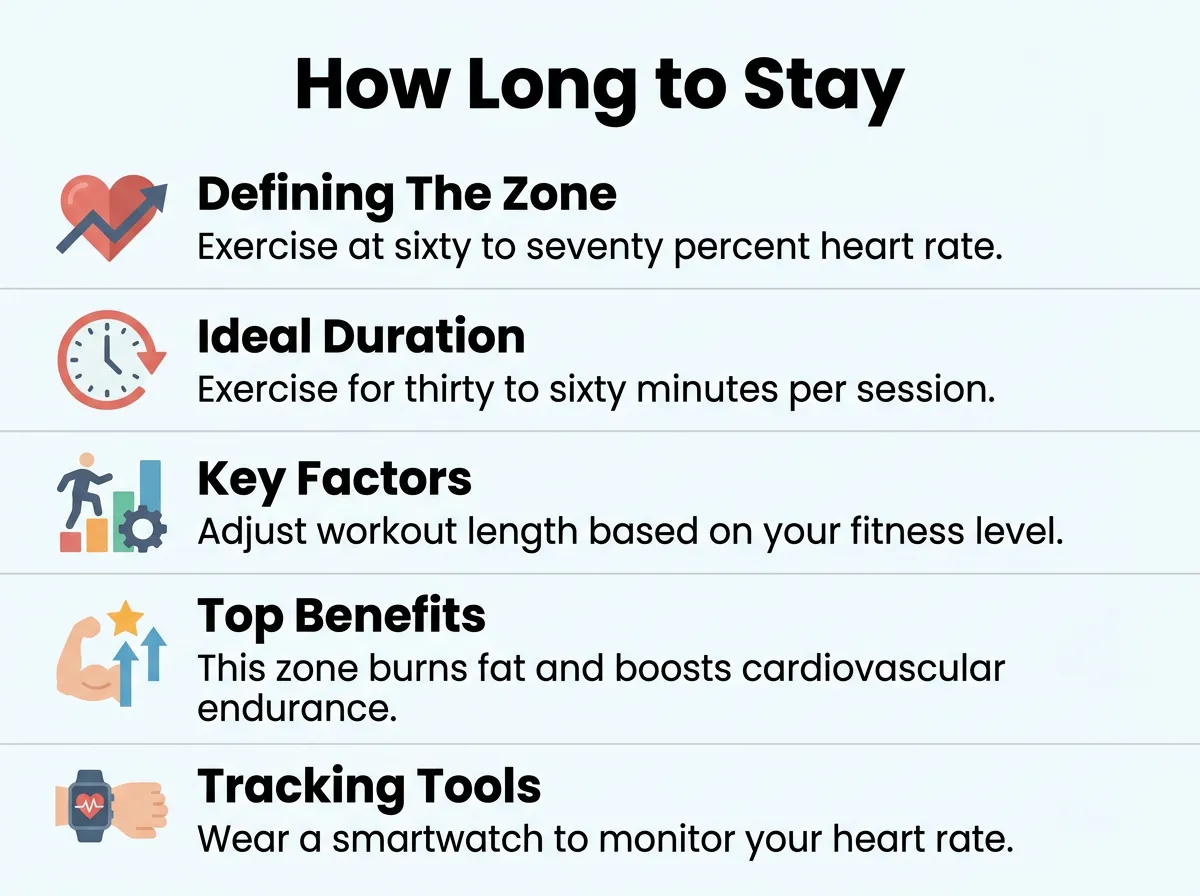
How Long to Stay in Fat-Burning Zone? — key points at a glance
When you first start moving, your muscles use stored sugar. This sugar is easy to reach. After about 15 to 20 minutes of steady exercise, those sugar stores run low. That is when your body starts to rely more on fat. If you stop exercising after 10 minutes, you will not burn much fat. You need to keep going to reach the active fat-burning window. This is why a longer, steady session is so useful.
The 30-Minute Sweet Spot
For most beginners, 30 minutes is the perfect target. It is long enough to shift your body into fat-burning mode. It is also short enough that you will not feel too tired. If you are new to fitness, do not push too hard. Start with 30 minutes of brisk walking or light cycling. You will feel good, and you will build a solid base. As you get stronger, you can slowly increase your time.
The 60-Minute Limit
If you have more experience, you can aim for 45 to 60 minutes. According to Mass General Brigham clinical advice, longer moderate workouts help build aerobic endurance. However, going past 60 minutes may not give you extra benefits. It can make your muscles very sore. It can also make you feel too hungry later. This might lead to overeating. A balance of 45 to 60 minutes is usually the sweet spot for maximum fat loss without burning out.
Factors That Influence Your Ideal Time
Not everyone is the same. Your perfect workout length depends on a few things. Let us look at what can change how long to stay in fat-burning zone.
Your Current Fitness Level
If you are just starting, your muscles are not used to long workouts. A 20-minute session might be plenty for you. Do not feel bad if you cannot hit 45 minutes right away. Your body will still adapt and get stronger. If you are highly fit, you might need 60 minutes to feel a good challenge. Always listen to your body first. It is better to do a shorter workout than to get hurt or feel too tired.
Your Diet and Fueling Habits
What you eat before you work out matters a lot. If you eat a big bowl of oatmeal, your body has a lot of sugar to burn first. It might take longer to start burning fat. If you work out in the morning before breakfast, your sugar stores are already low. You might start burning fat sooner. This is called fasted cardio. However, fasted cardio can feel hard. Make sure you feel safe and strong if you try it.
Benefits of Staying in This Zone
Working out at a moderate pace has many benefits. It is not just about weight loss. Here are some reasons to love moderate exercise.
Easier Recovery on Your Body
High-intensity workouts can be very hard on your joints. They require a lot of recovery time. If you do intense workouts every day, you might get hurt. Moderate exercise is gentle. Your muscles recover quickly. You can do it more often without feeling exhausted. This makes it easier to stay active day after day.
Great for Your Heart Health
Steady cardio is wonderful for your heart. It makes your heart stronger and more efficient. Over time, your resting heart rate will go down. This reduces your risk of heart disease. It also helps lower your blood pressure. You can find more details on these health benefits in the HealthXchange weight management tips. A healthy heart makes every daily task feel much easier.
How to Track Your Heart Rate During Workouts
To get the most out of your workouts, you must know your zone. You do not need fancy gear, but some tools can help.
Using Smart Wearables
Fitness trackers and smartwatches are very popular. They track your pulse all day. Many watches will tell you exactly which zone you are in. They use colors to show your effort. This makes it very easy to adjust your pace. If your heart rate is too high, you can slow down. If it is too low, you can walk a bit faster.
The Talk Test Method
You do not need a watch to track your heart rate. You can use the simple talk test. If you can talk but not sing, you are in the fat-burning zone. If you can sing your favorite song, you are moving too slowly. If you cannot speak more than a couple of words without taking a breath, you are working too hard. This free test is very accurate and easy to use anytime.
Fat-Burning Zone vs. High-Intensity Interval Training (HIIT)
You might have heard of HIIT. This stands for high-intensity interval training. HIIT workouts are very short and very hard. You push yourself to your absolute limit for a few seconds. Then you rest. This cycle repeats for 15 to 20 minutes.
HIIT burns a lot of calories in a short time. Most of these calories come from sugar, not fat. However, HIIT has a special effect. It raises your metabolism for hours after the workout. This is called the afterburn effect. Your body burns extra calories while you rest on the couch.
So, which is better? The fat-burning zone is great for building a base. It is safe and easy to do daily. HIIT is great if you are busy and want a quick workout. Many coaches suggest doing both. You can do steady moderate cardio three times a week. Then you can do one or two short HIIT sessions. This mix keeps your workouts fun and works different energy systems.
Practical Tips to Maintain Your Fat-Burning Workouts
Consistency is key to weight loss. Here are some tips to help you stay on track with your routines.
- Pick activities you love: If you hate running, do not run. Try walking, swimming, cycling, or dancing. Any movement that raises your heart rate works.
- Schedule your workouts: Treat your exercise sessions like doctor appointments. Put them in your calendar. This helps you make them a priority.
- Find a workout buddy: Working out with a friend is fun. It also keeps you accountable. You are less likely to skip a workout if someone is waiting for you.
- Listen to music or podcasts: A good playlist can make 45 minutes fly by. Save your favorite show or podcast only for your workout times.
Conclusion
When thinking about how long to stay in fat-burning zone, remember that consistency is the most important part. Aiming for 30 to 60 minutes of moderate activity is a wonderful goal. It gives your body time to switch to fat fuel without causing too much fatigue. Combine this steady cardio with a balanced diet and good sleep for the best results. Start slow, listen to your body, and enjoy the journey to a healthier you!
Frequently Asked Questions
What is the fat-burning zone?
The fat-burning zone is a level of exercise intensity where your body burns a higher ratio of fat than sugar. It usually occurs when your heart rate is between 50% and 70% of your maximum heart rate. At this level, you can still talk easily but are breathing slightly harder than normal.
How long do I need to work out to start burning fat?
It takes about 15 to 20 minutes of continuous exercise for your body to switch from burning sugar to burning fat. For this reason, you should aim to exercise for at least 30 minutes per session. This ensures you spend a good amount of time in the active fat-loss phase.
Can I burn fat with a 15-minute workout?
Yes, you can still burn calories during a short workout, but most of those calories will come from stored sugars. If you only have 15 minutes, high-intensity workouts like HIIT are better than moderate cardio. HIIT raises your metabolism so you burn calories long after the workout ends.
Is walking enough to reach the fat-burning zone?
Yes, brisk walking is one of the best ways to reach and stay in this zone. It keeps your heart rate at a moderate level without putting too much stress on your joints. Walking is highly sustainable and can easily be done for 45 to 60 minutes.
Should I do cardio on an empty stomach to burn more fat?
Working out on an empty stomach can help you burn fat slightly faster because your sugar stores are already low. However, this fasted cardio can make some people feel weak, dizzy, or tired. It is best to try it safely and see how your body responds before making it a habit.
How many times a week should I exercise in this zone?
Aim to do moderate cardio workouts three to five times a week for the best results. This frequency builds your aerobic fitness and helps you stay consistent with your weight loss goals. Always make sure to include rest days to let your muscles recover.
