


To lose one pound of fat, you traditionally need to create a calorie deficit of about 3,500 calories. However, because human biology adapts to changes in diet and exercise, real-world fat loss is more dynamic than simple math. Creating a consistent, moderate daily deficit of 500 calories through nutrition and movement is the safest way to reach your goals.
Imagine stepping onto the scale after a week of hard work. You hope to see the numbers go down. Many of us track every step, salad, and sweat session. But how does this hard work translate into real weight loss? When we start a fitness journey, one big question always pops up. You might ask yourself: How Many Calories to Burn a Pound of Fat?
If you have ever tried to lose weight, you have likely heard a lot of advice. Some people tell you to cut carbs. Others say you must jog for hours. Underneath all this advice is a simple mathematical equation. Today, we will explore the science of fat loss and how your body uses energy. This guide will help you understand the numbers behind your goals.
We will look at the famous numbers behind fat loss. We will also see why your body is not just a simple calculator. By the end of this guide, you will know how to make a realistic, healthy plan that works for you. Let us dive in and learn how to burn that extra weight for good!
Key Takeaways
- The 3,500-Calorie Rule: One pound of fat contains roughly 3,500 calories of stored energy.
- Metabolic Adaptation: Your body adapts when you eat less, meaning weight loss is rarely a straight line.
- Safe Deficits: Aiming for a daily deficit of 500 to 700 calories helps you lose fat safely without losing muscle.
- Muscle Boosts Metabolism: Strength training helps build muscle, which burns more calories even when you rest.
- Focus on Whole Foods: Eating more protein and fiber-rich foods keeps you full and prevents overeating.
📑 Table of Contents
The Classic 3,500-Calorie Rule Explained
Where Did This Number Come From?
For decades, doctors and trainers have shared a simple rule. They say that one pound of body fat contains 3,500 calories. This idea came from a scientist named Max Wishnofsky in 1958. He calculated the energy stored in human fat tissue. He found that a pound of fat is mostly pure fat, but it also has some water and protein. Learn more about the biology of calories in a pound of fat to see how this science works.
The Basic Math of Weight Loss
To lose weight, you must create an energy gap. This is also called a calorie deficit. If you burn more calories than you eat, your body must find energy elsewhere. It goes to your fat stores to get that energy. So, if you want to know How Many Calories to Burn a Pound of Fat?, the classic math says you need a 3,500-calorie deficit. If you cut 500 calories each day, you will reach this number in seven days. This should result in losing one pound of fat per week.
This math is simple and easy to understand. It gives people a clear goal to work toward. If you eat a little less and move a little more, the weight should come off. However, real life is often a bit more complex than simple math. Our bodies are alive, and they change as we change.
Why the 3,500-Calorie Rule Is Not Perfect
Your Body Adapts to Changes
The human body is not a machine. It is a smart system that wants to keep you alive. When you eat less, your body thinks food is scarce. It tries to save energy to protect you. This process is called metabolic adaptation. Your brain tells your body to burn fewer calories. You might feel a bit more tired. You might move less during the day without even knowing it.
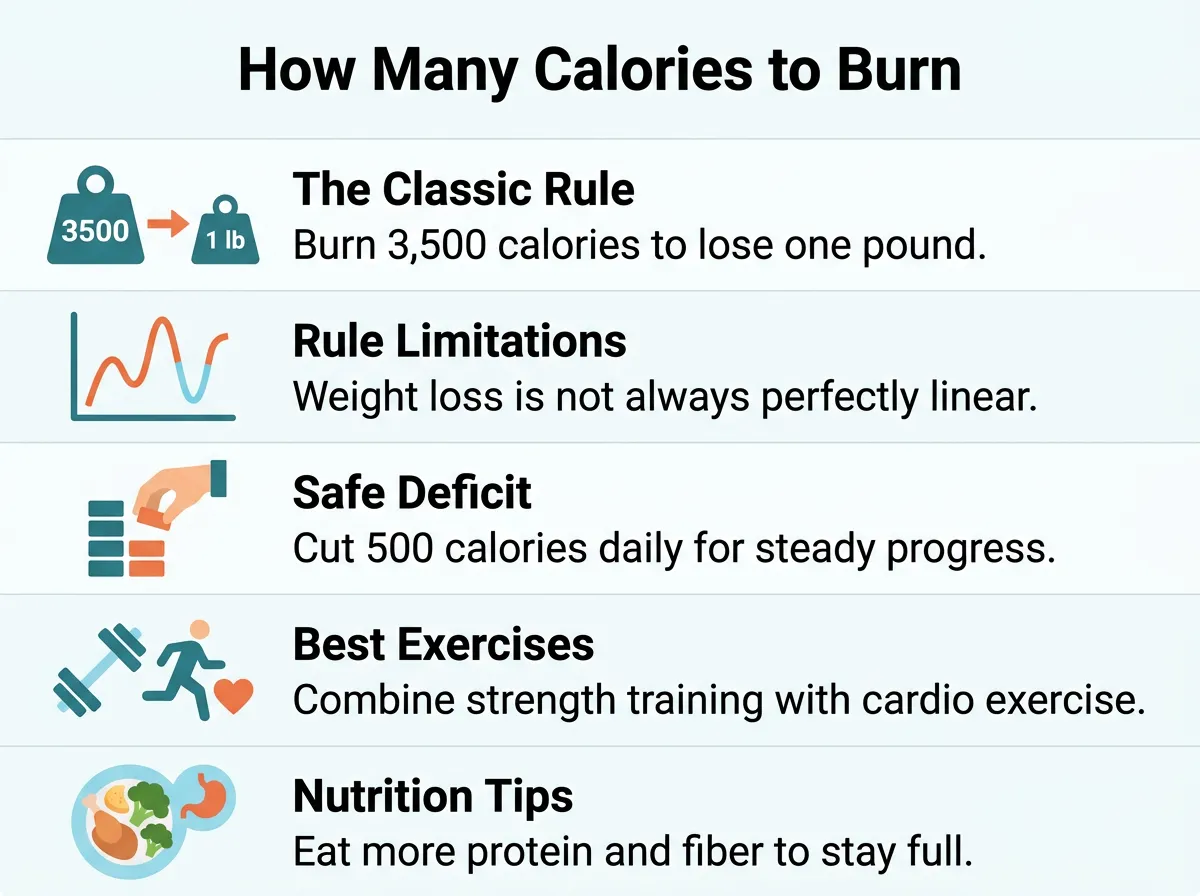
How Many Calories to Burn a Pound of Fat? — key points at a glance
The Myth vs. Reality of Fat Loss
Many experts now call the old rule the 3,500-calorie weight loss myth because weight loss is not a straight line. In the first few weeks, you might lose weight very fast. Much of this early weight loss is water, not fat. As time goes on, your progress may slow down. This is completely normal. Your body is just adjusting to its new weight.
As you lose weight, you also become smaller. A smaller body needs less energy to move. This means your daily calorie needs will go down. If you keep eating the same amount, your weight loss will eventually stop. You must adjust your plan as you get lighter to keep seeing results.
How to Create a Safe Calorie Deficit
Finding Your Daily Energy Needs
Before you start cutting calories, you must know your baseline. This is the amount of energy your body needs to stay the same weight. It is called your Total Daily Energy Expenditure. It depends on your age, sex, weight, and how much you move. Once you know this number, you can plan your path. You will finally understand How Many Calories to Burn a Pound of Fat? based on your own body.
Aim for a Moderate Deficit
Do not make the mistake of eating too little. Starving your body will only backfire. It makes you lose muscle instead of fat. It also ruins your energy levels. A safe goal is a small deficit of 500 to 700 calories per day. This allows you to lose weight slowly but surely. For a safe and steady approach, you can read the Mayo Clinic guide on calorie deficit practices.
A moderate deficit is easy to maintain. You can still eat foods you love. You will not feel hungry all the time. This makes it much easier to stay on track for months, not just days. Slow weight loss is also much easier to keep off for the rest of your life.
The Best Ways to Burn Calories
Move More Throughout the Day
Exercise is a great tool for fat loss. Cardio workouts burn a lot of calories while you do them. Activities like walking, jogging, and swimming are excellent choices. But do not forget about daily movement. Taking the stairs, gardening, and cleaning your house also burn energy. These small tasks add up to a big difference over time.
Build Muscle with Weight Training
If you want to burn fat, you should lift weights. Strength training builds muscle tissue. Muscle is active tissue. It burns more energy than fat tissue, even when you are asleep. When you have more muscle, your metabolism stays high. This helps you burn fat faster. It also gives you a lean and strong look.
Try to combine both types of exercise. Do some cardio for your heart and some weights for your muscles. This mix is the best way to change your body shape. It also keeps your workouts fun and interesting.
Nutrition Tips for Easy Fat Loss
Eat More Protein Daily
Protein is your best friend when you want to lose weight. It keeps you feeling full for a long time. This means you will naturally eat less food. Protein also has a high thermic effect. This means your body must work harder to digest it. You actually burn calories just by processing protein foods.
Focus on Whole Foods
Processed foods like chips and cookies are full of empty calories. They do not fill you up, and they make you crave more. Instead, fill your plate with whole foods. Choose vegetables, fruits, beans, and lean meats. These foods are packed with nutrients and fiber. They keep you full while keeping your calorie intake low.
Drink plenty of water too. Sometimes, we think we are hungry when we are just thirsty. Drinking water before meals can also help you eat less. It is a simple trick that works wonders.
Keeping the Weight Off Long-Term
Consistency is More Important Than Speed
When thinking about How Many Calories to Burn a Pound of Fat?, do not focus on speed. Quick diets do not last. They are too hard to follow. It is much better to make small, healthy changes. Walk for twenty minutes every day. Swap soda for water. These tiny habits are easy to keep up. Over time, they create amazing results.
Track Your Progress the Right Way
The scale is not the only way to measure success. Your weight can change from day to day due to water and food. Do not let a high scale number ruin your day. Instead, pay attention to how your clothes fit. Take photos of yourself every few weeks. Notice how much more energy you have. These are all signs that you are losing fat and gaining health.
Fat loss is a journey, not a race. Be kind to yourself along the way. If you have a bad day, do not worry. Just get back to your healthy habits the next day. Every step forward counts.
A Simple Plan to Get Started
Are you ready to start your journey? Here is a simple plan you can use today. First, drink a glass of water before every meal. Second, fill half of your plate with colorful vegetables. Third, go for a fast fifteen-minute walk after lunch or dinner. These three steps are easy to do. They do not require complex math or stress. Yet, they will start creating the calorie deficit you need to burn fat safely.
Remember that you do not have to be perfect. You just need to be consistent. Keep moving, eat real food, and enjoy the process. You will soon see the results of your hard work!
Conclusion
So, How Many Calories to Burn a Pound of Fat? While the 3,500-calorie rule is a helpful guide, your body is unique. Real fat loss is about creating a healthy lifestyle that you enjoy. Focus on moving your body, eating nutritious foods, and staying patient. Small daily habits will lead to lasting success. Start making changes today, and celebrate your health every single day!
Frequently Asked Questions
How many calories do I need to cut each day to lose one pound a week?
To lose one pound a week, you generally need to cut about 500 calories from your daily diet. This creates a total weekly deficit of 3,500 calories. However, you can also achieve this by eating 250 fewer calories and burning 250 more calories through movement.
Why am I not losing weight in a calorie deficit?
If you are not losing weight, you might be eating more calories than you think. It is also possible that your body has adapted to your diet, which slows down your metabolism. Try tracking your food intake more carefully and increasing your daily movement.
Does water weight count as fat loss?
No, water weight is not the same as fat loss. When you first cut calories, your body burns stored carbs, which releases a lot of water. This is why you might lose weight very fast during the first week of a new diet.
How does muscle help you burn more fat?
Muscle is highly active tissue that requires energy to maintain. Having more muscle increases your resting metabolic rate, meaning your body burns more calories even when you are not exercising. Strength training is the best way to build and preserve this muscle.
Is it safe to lose more than two pounds a week?
Losing more than two pounds a week is generally not recommended unless supervised by a doctor. Losing weight too fast can cause you to lose muscle mass, feel very fatigued, and suffer from nutrient deficiencies. Slow and steady weight loss is much safer and easier to maintain long-term.
What foods help you burn calories?
High-protein foods like chicken, fish, eggs, and tofu help you burn calories because they require more energy to digest. High-fiber foods like vegetables and whole grains also boost your digestion and keep you feeling full for longer. Drinking cold water can also slightly increase your temporary calorie burn.
