



High-Intensity Interval Training (HIIT) is the most efficient form of cardio for burning fat, as it keeps your metabolism elevated long after your workout. However, a combination of steady-state cardio like running and HIIT yields the best long-term fat loss results. Finding a sustainable routine you enjoy is key to keeping the weight off permanently.
Imagine standing on a treadmill at the gym. You look at the flashing screen in front of you. Buttons for “Fat Burn,” “Cardio,” and “Interval” stare back at you. Your sweat is dripping, your feet are tired, and you want to make sure every single minute counts. You ask yourself a simple question: “What cardio burns the most fat?”
It is a question that millions of fitness seekers ask every single day. We all want the best results in the shortest amount of time. But with so much conflicting advice online, it is easy to get confused. Some fitness gurus swear by sprinting, while others tell you to walk on an incline. How do you separate the facts from the hype?
In this guide, we will break down the science behind fat loss. We will compare high-intensity workouts with slow, steady sessions. We will also rank the best cardio exercises and give you practical tips to build your perfect routine. By the end, you will know exactly how to structure your workouts to get the lean, healthy body you want.
Key Takeaways
- HIIT is highly efficient: High-intensity interval training burns more calories per minute than steady-state cardio.
- The afterburn effect is real: High-intensity workouts keep your body burning calories hours after your session ends.
- LISS has unique benefits: Low-intensity steady-state cardio uses fat as its primary energy source during the exercise.
- Consistency beats intensity: The best cardio workout is the one you can stick to week after week.
- A hybrid approach works best: Combining different styles of cardio prevents injury and keeps your routine fun.
- Diet is still king: You must combine your cardio routine with a healthy calorie deficit to see true fat loss.
📑 Table of Contents
- Understanding the Science: How Your Body Burns Fat
- High-Intensity Interval Training (HIIT): The Ultimate Time-Saver
- Low-Intensity Steady-State (LISS): The Slow and Steady Approach
- Ranking the Top Cardio Workouts for Fat Loss
- The Secret Sauce: Combining Cardio for Maximum Results
- How Nutrition and Strength Training Complete the Puzzle
- Conclusion
Understanding the Science: How Your Body Burns Fat
To truly understand what cardio burns the most fat, we must look at how our bodies use fuel. Your body relies on two main energy sources: carbohydrates and fats. When you exercise, you burn a mix of both. The ratio of fat to carbs depends on how hard you are working.
The Fat-Burning Zone vs. High-Intensity
When you work out at a lower intensity, your body burns a higher percentage of calories from fat. This is often called the “fat-burning zone.” You can learn about your target heart rate to see where this zone lies for you. It usually happens when you work at about 50% to 70% of your maximum heart rate. During a slow walk or light jog, your body has plenty of oxygen available to break down fat cells for fuel.
However, there is a catch. Low-intensity workouts burn fewer total calories per minute. On the other hand, high-intensity workouts burn mostly carbohydrates. But because they are so intense, they burn a massive number of total calories. Even if the percentage of fat burned is lower, the total amount of fat burned can be much higher because the overall calorie burn is so large. To find what cardio burns the most fat, we have to look at the total energy balance.
High-Intensity Interval Training (HIIT): The Ultimate Time-Saver
When researching what cardio burns the most fat, HIIT always tops the list. HIIT involves short bursts of maximum effort followed by quick periods of rest. For example, you might sprint for 30 seconds and then walk for 60 seconds. You repeat this cycle for 15 to 20 minutes.
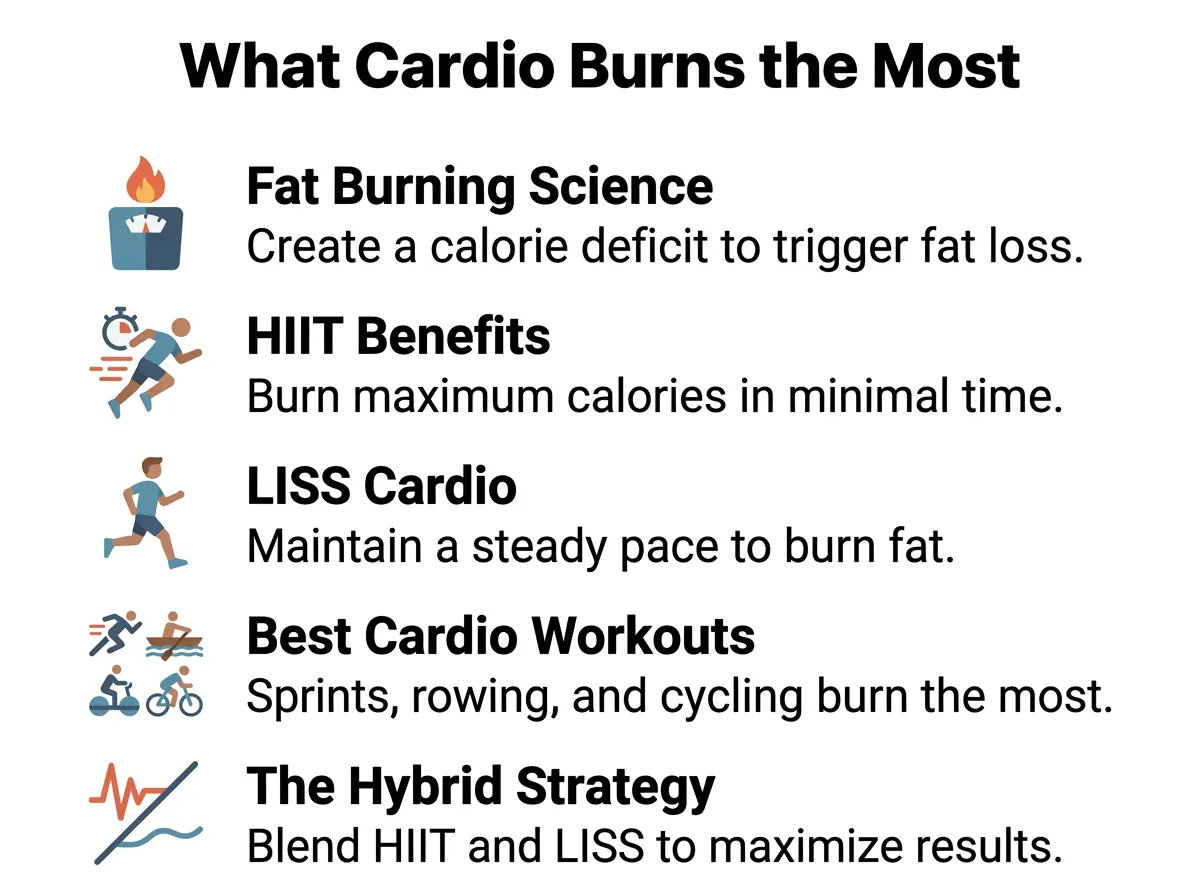
What Cardio Burns the Most Fat? — key points at a glance
Why HIIT Works for Fat Loss
If you ask trainers what cardio burns the most fat in the shortest time, they will say HIIT. This is because HIIT is incredibly efficient. It triggers a process called Excess Post-exercise Oxygen Consumption, or EPOC. This is also known as the “afterburn effect.” After a tough HIIT session, your body has to work extra hard to cool down, repair muscles, and recover. This means you continue to burn calories at an elevated rate for up to 24 hours after your workout is over.
If you are busy and want to get the most bang for your buck, HIIT is the clear winner. It allows you to get a highly effective workout done in half the time of a traditional cardio session. It keeps your workouts short, exciting, and highly effective.
Low-Intensity Steady-State (LISS): The Slow and Steady Approach
This leaves many beginners asking what cardio burns the most fat if they cannot do HIIT. HIIT is tough on the joints and requires a lot of recovery. This is where Low-Intensity Steady-State (LISS) cardio comes in. LISS involves doing a continuous, low-effort activity for a longer period, usually 45 to 60 minutes. Examples include walking, hiking, or light cycling.
Benefits of LISS Cardio
LISS has some major advantages. First, it is very low impact. It does not put a lot of stress on your knees and ankles. Second, you can do it almost every day without burning out. This makes it highly sustainable for beginners or those recovering from injuries.
While LISS does not trigger a massive afterburn effect, it still burns a significant number of calories during the workout itself. It is a fantastic tool for building aerobic endurance and recovering from harder lifting sessions. For many people, a long walk is also a great way to relieve stress, which indirectly helps with weight loss by lowering cortisol levels.
Ranking the Top Cardio Workouts for Fat Loss
When comparing different workouts to see what cardio burns the most fat, the numbers tell an interesting story. Different activities burn different amounts of energy. You can compare how many calories you burn across various exercises to see how they stack up.
Running and Jogging
Running is one of the oldest and most popular forms of cardio. It requires no special equipment, and you can do it anywhere. A moderate run can burn between 500 to 800 calories per hour, depending on your weight and speed. Adding hills or intervals to your runs can boost this number even higher.
Rowing and Swimming
Both rowing and swimming are incredible full-body workouts. They engage your legs, core, back, and arms all at once. Because you are using so many muscle groups, your heart rate climbs quickly. This results in a massive calorie burn while being very gentle on your joints.
Cycling
Whether you prefer outdoor cycling or an indoor spin class, pedaling is a great way to torch fat. A high-energy spin class can burn up to 700 calories in an hour. It is also excellent for building strong, lean leg muscles without the heavy impact of running.
The Secret Sauce: Combining Cardio for Maximum Results
While knowing what cardio burns the most fat is helpful, a mixed approach is usually best. Relying only on HIIT can lead to overtraining, sore joints, and mental burnout. Relying only on LISS can take up too much of your free time.
Creating a Weekly Schedule
The best results happen when you combine different styles of cardio. You can design a balanced cardio routine that keeps things fun and effective. Here is an example of a great weekly schedule:
- Monday: 20-minute HIIT session (sprints or kettlebell swings)
- Wednesday: 45-minute LISS session (brisk walking or cycling)
- Friday: 30-minute moderate-intensity run or swim
- Sunday: Active recovery walk in nature
This balanced approach gives your muscles time to recover while keeping your fat-burning engine running hot all week long. It prevents injury and stops you from getting bored with your routine.
How Nutrition and Strength Training Complete the Puzzle
It is important to remember that cardio is only one piece of the puzzle. You cannot out-exercise a bad diet. If you burn 500 calories doing cardio but eat an extra 600 calories at dinner, you will not lose weight. To lose fat, you must be in a calorie deficit. This means you burn more energy than you consume. Focus on eating whole foods, lean proteins, vegetables, and healthy fats.
Additionally, do not ignore strength training. Lifting weights builds muscle. Muscle tissue is active tissue, meaning it burns calories even when you are sitting on the couch. Combining regular cardio with a couple of weight-lifting sessions each week is the ultimate formula for a toned, fit body.
Conclusion
Ultimately, finding what cardio burns the most fat depends on what you can do consistently. The absolute best workout is the one you actually look forward to doing. If you hate running, do not force yourself to run. If you love dancing, cycling, or swimming, do those instead. Start small, listen to your body, and build up your intensity over time. Consistency, combined with a healthy diet, will always lead you to your weight loss goals.
Frequently Asked Questions
Is HIIT better than walking for fat loss?
HIIT burns more calories per minute and creates an afterburn effect, making it more time-efficient. However, walking is easier on the joints, requires less recovery, and is highly sustainable for long-term consistency. A mix of both is the best approach for overall fat loss.
How many times a week should I do cardio to lose weight?
Aim for 3 to 4 sessions of cardio per week for the best results. This allows you to burn a significant number of calories while giving your body enough time to recover. Always pair your workouts with rest days to prevent overtraining.
Can I lose belly fat by doing cardio?
Yes, cardio helps you lose belly fat, but you cannot choose where you lose fat first. Cardio burns overall body fat, and over time, your body will naturally lean out in all areas, including your midsection. Consistency and a clean diet are key to seeing these results.
Is it better to do cardio before or after weights?
It is generally better to do cardio after weights if your main goal is fat loss and strength. Lifting weights first ensures you have maximum energy to build muscle, which elevates your metabolism. Doing cardio afterward helps burn off remaining glycogen stores.
Does fasted cardio burn more fat?
Fasted cardio can burn a slightly higher percentage of fat during the workout, but studies show it does not make a difference in total fat loss over 24 hours. The total number of calories burned by the end of the day is what matters most. Choose whichever method fits your personal preference and energy levels.
Can you do too much cardio?
Yes, doing too much cardio can lead to muscle loss, joint pain, and chronic fatigue. Overtraining also raises your stress hormones, which can actually cause your body to hold onto fat. Balance your cardio sessions with rest days and strength training.
_
