


High-Intensity Interval Training (HIIT) is the most efficient workout for burning fat in a short amount of time, thanks to the post-workout afterburn effect. However, combining strength training with cardiovascular exercises like running or swimming creates the ultimate long-term fat-burning routine. Consistency and a healthy diet remain the true keys to sustainable weight loss success.
Picture this scenario. You are standing in a busy gym. You look at the long rows of shiny machines. The treadmills are full of runners. The stationary bikes are spinning fast. You want to get the best results from your limited workout time. You do not want to waste your energy. A very simple question pops into your mind. What exercise burns the most fat? It is a question that millions of people ask every single day.
The truth is that not all workouts are equal. Some exercises burn a mountain of calories while you sweat. Others turn your body into a metabolic furnace hours after you leave the gym. In this guide, we will break down the science of weight loss. We will look at high-intensity training, steady cardio, and weightlifting. By the end, you will know exactly how to structure your week for the best results.
Key Takeaways
- HIIT is highly efficient: High-Intensity Interval Training burns a massive number of calories in a short period and keeps your metabolism elevated after the workout.
- Strength training builds muscle: Lifting weights helps you build lean muscle, which naturally increases the number of calories your body burns at rest.
- Cardio provides reliable burn: Traditional steady-state cardio like running and swimming is great for heart health and consistent calorie expenditure.
- The hybrid approach is best: Combining strength training with short HIIT sessions yields the best overall fat-loss results.
- Diet and lifestyle matter: You cannot out-exercise a poor diet, so prioritize protein, sleep, and daily movement to maximize your results.
📑 Table of Contents
The Science of Fat Loss and the Fat-Burning Zone
To understand what exercise burns the most fat, we must look at how our bodies use energy. When you work out, your body draws energy from two main sources. These sources are carbohydrates and fats. Many people talk about a magical fat-burning zone. This refers to low-intensity exercise where your body burns a higher percentage of energy from fat rather than carbs.
While this zone is real, it is often misunderstood. During low-intensity activities like walking, you do burn a higher percentage of fat. However, you burn fewer total calories overall. High-intensity exercises burn far more total calories in less time. This leads to greater overall fat loss. So, when asking what exercise burns the most fat, the total number of calories you burn is always the most important factor to consider.
High-Intensity Interval Training (HIIT): The Speed Champion
If you ask fitness experts what exercise burns the most fat in the shortest amount of time, they will almost always point to High-Intensity Interval Training. This is commonly known as HIIT. HIIT involves short bursts of intense exercise followed by quick periods of rest. For example, you might sprint for 30 seconds, walk for 60 seconds, and repeat this cycle for 20 minutes.
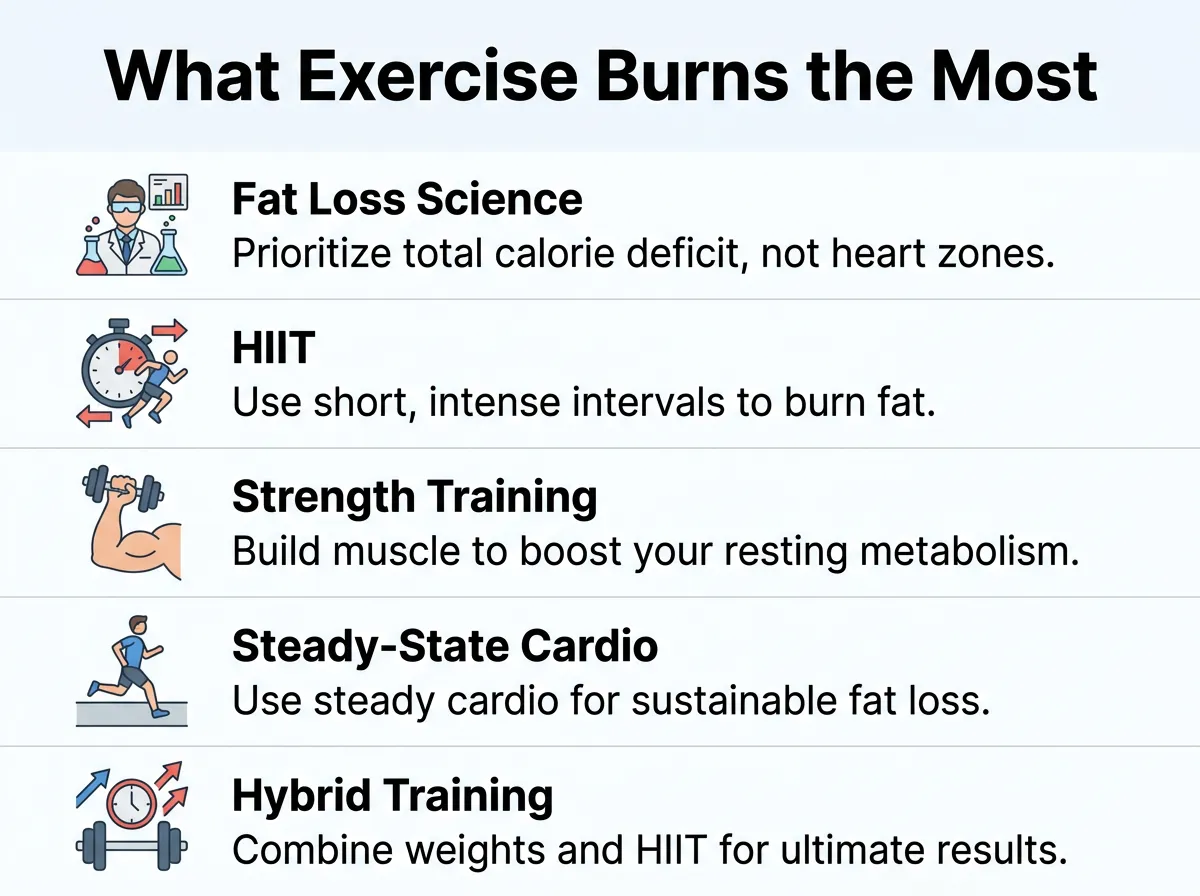
What Exercise Burns the Most Fat? — key points at a glance
HIIT is incredibly effective because of a process called Excess Post-Exercise Oxygen Consumption, or EPOC. This is often called the afterburn effect. After a tough HIIT session, your body has to work extra hard to recover. This keeps your metabolism elevated for hours. According to research on what exercise burns the most calories, high-intensity intervals can keep your body burning fat long after you have finished your workout and gone to bed.
Strength Training: The Long-Term Fat Burner
Many people overlook weightlifting when searching for what exercise burns the most fat. They think cardio is the only way to melt away body fat. However, lifting weights is a secret weapon for long-term weight loss. When you lift weights, you build lean muscle mass.
Muscle is active tissue. This means it requires energy just to exist on your body. The more muscle you have, the higher your resting metabolic rate becomes. This means you will burn more calories every day, even when you are sitting on the couch. To learn more about how strength training changes your body composition, you can read about the benefits of exercise for weight loss from trusted medical sources. By lifting weights two or three times a week, you build a metabolic engine that burns fat around the clock.
Steady-State Cardio: The Reliable Classic
When we think about what exercise burns the most fat, classic aerobic exercises always come to mind. These are known as steady-state cardio. Unlike HIIT, steady-state cardio involves keeping a steady, moderate pace for a longer period. This usually lasts 30 to 60 minutes.
Activities like running burn a very high number of calories per minute. If you enjoy hitting the open road, running is one of the most accessible and effective fat-burning exercises available. In fact, checking out the guide on the best cardio for fat burn can help you understand how to structure your runs to maximize your results. Swimming and cycling are also excellent options because they engage every major muscle group while being very gentle on your joints.
Combining HIIT and Weights: The Ultimate Hybrid Plan
So, if you want the absolute best answer to what exercise burns the most fat, the secret is a hybrid approach. You do not have to choose between cardio and strength training. In fact, combining them yields the best results.
How to Build a Hybrid Routine
You can create a powerful routine by mixing these elements throughout your week. For example, you could lift weights on Mondays, Wednesdays, and Fridays. Then, you can perform a 20-minute HIIT workout on Tuesdays and Thursdays. This gives you the metabolic boost of muscle building and the rapid calorie burn of high-intensity training.
Sample Week Schedule
- Monday: Full-body strength training (squats, push-ups, rows)
- Tuesday: 20 minutes of HIIT (sprinting or jumping jacks)
- Wednesday: Active recovery (light walking or stretching)
- Thursday: Full-body strength training (deadlifts, overhead presses, lunges)
- Friday: 20 minutes of HIIT or a steady-state jog
- Saturday: Fun outdoor activity (hiking, cycling, or swimming)
- Sunday: Complete rest and recovery
Practical Tips to Maximize Your Fat Burn
While finding what exercise burns the most fat is important, your daily habits outside the gym play a huge role in your success. Here are three simple tips to speed up your progress.
Focus on NEAT (Non-Exercise Activity Thermogenesis)
NEAT refers to the energy you burn during normal, non-exercise activities. This includes walking to your car, cleaning your house, and standing. You can burn hundreds of extra calories a day simply by taking the stairs instead of the elevator. Try going for a short walk after lunch to keep your body moving.
Prioritize Your Nutrition
You cannot out-exercise a poor diet. Even the most intense workouts will not lead to fat loss if you eat more calories than you burn. Focus on whole foods, lean proteins, vegetables, and healthy fats. Protein is especially important because it helps preserve your muscle mass while you lose weight.
Get Quality Sleep and Manage Stress
When you do not sleep enough, your body produces more cortisol. This is a stress hormone. High levels of cortisol can make your body hold onto fat, especially around your belly. Aim for seven to nine hours of quality sleep every night to keep your hormones balanced and your energy levels high.
Conclusion
When looking for what exercise burns the most fat, there is no single magic movement. HIIT is the winner for fast calorie burning and the afterburn effect. Strength training is the champion for boosting your metabolism over the long run. Classic cardio like running and swimming keeps your heart healthy and burns calories efficiently.
The best workout plan is the one that you actually enjoy and can stick to consistently. By combining strength training with high-intensity intervals and a healthy diet, you will create a sustainable routine that melts away fat and helps you feel your absolute best.
Frequently Asked Questions
What exercise burns the most fat?
High-Intensity Interval Training (HIIT) is widely considered the best exercise for burning fat quickly. It combines short bursts of intense activity with brief rest periods, boosting your metabolism for hours after the workout. Combining HIIT with strength training provides the most sustainable, long-term fat loss.
Is cardio or lifting weights better for burning fat?
Both are highly effective, but they work in different ways. Cardio burns more calories during the actual workout session, while lifting weights builds muscle to increase your metabolism so you burn more calories at rest. For the best fat-burning results, you should include both in your weekly routine.
How many days a week should I exercise to lose fat?
Aiming for three to five workouts per week is ideal for sustainable fat loss. This schedule allows you to mix strength training days with cardio or HIIT days while leaving enough time for recovery. Consistency over several weeks and months is much more important than working out every single day.
Does running burn belly fat?
Running is an excellent way to burn calories and reduce overall body fat, which will eventually lead to a slimmer belly. However, it is impossible to target fat loss from one specific area of your body. Your body burns fat systematically from head to toe as you maintain a consistent calorie deficit.
Can I lose fat by just walking?
Yes, walking is a highly effective, low-impact exercise that can help you lose fat. It is easy on your joints, burns a surprising number of calories over time, and can be done daily without causing excessive fatigue. Walking is a perfect foundation for any weight loss journey.
Should I do cardio before or after weights for fat loss?
It is generally best to do weights before cardio if you are doing them in the same session. Lifting weights first ensures you have maximum energy to build muscle and maintain proper form. Doing your cardio afterward will then help burn off remaining energy stores without fatiguing your muscles beforehand.
